The Science of
Perfect Grilling
Temperatures, techniques, and thermodynamics — master every grilling method from reverse sear to direct heat. Written by Dr. Claire Whitfield, food scientist with a PhD in meat science.
Featured Guides
In-depth, science-backed articles on grilling techniques — from thermal physics to Maillard chemistry.
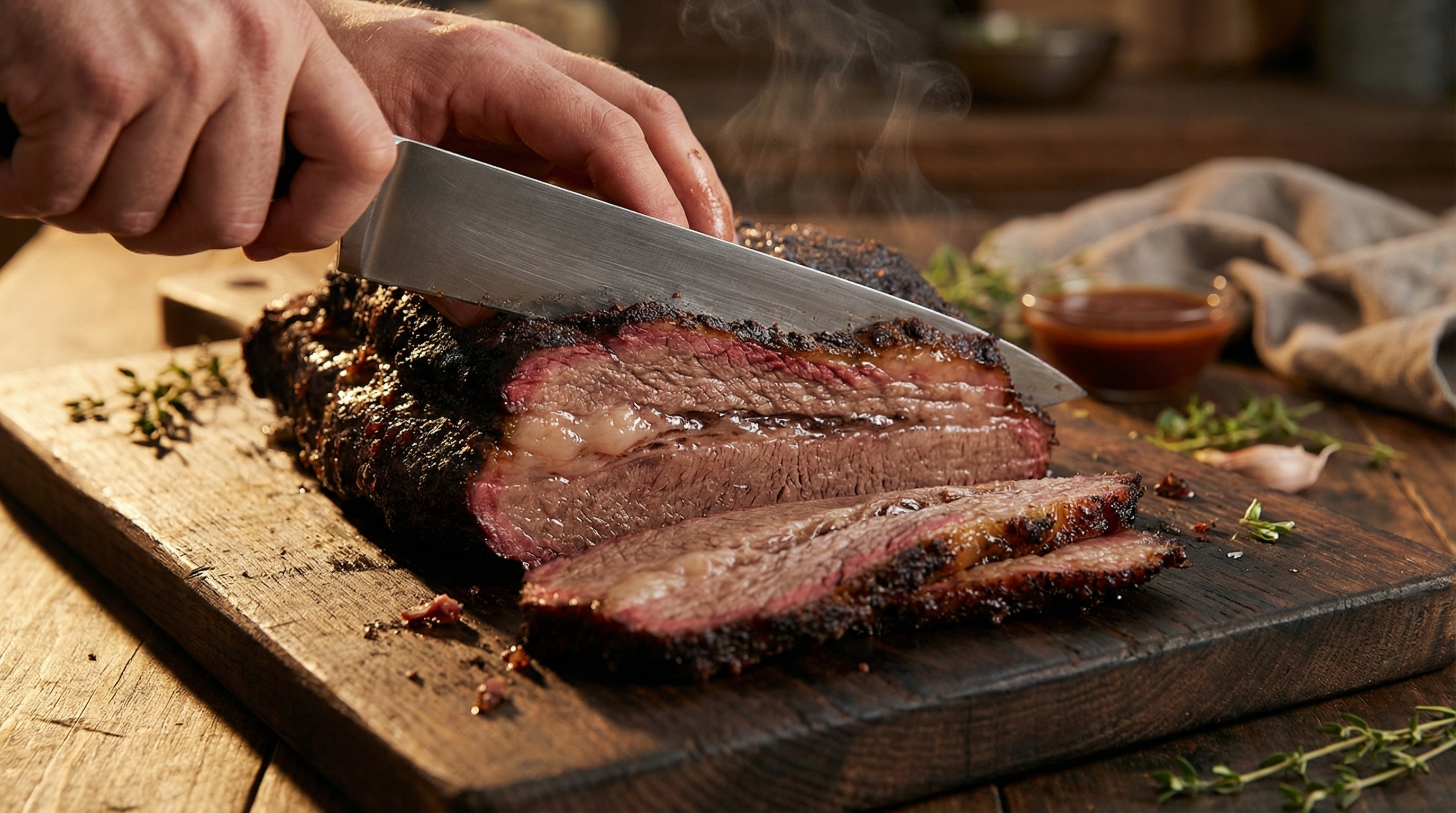
Collagen Breakdown in BBQ: The Science of Tender, Melt-in-Your-Mouth Meat
Collagen is the reason tough cuts like brisket and pork shoulder become tender masterpieces after hours of low-and-slow cooking. Here is exactly how the conversion works — and how to control it.
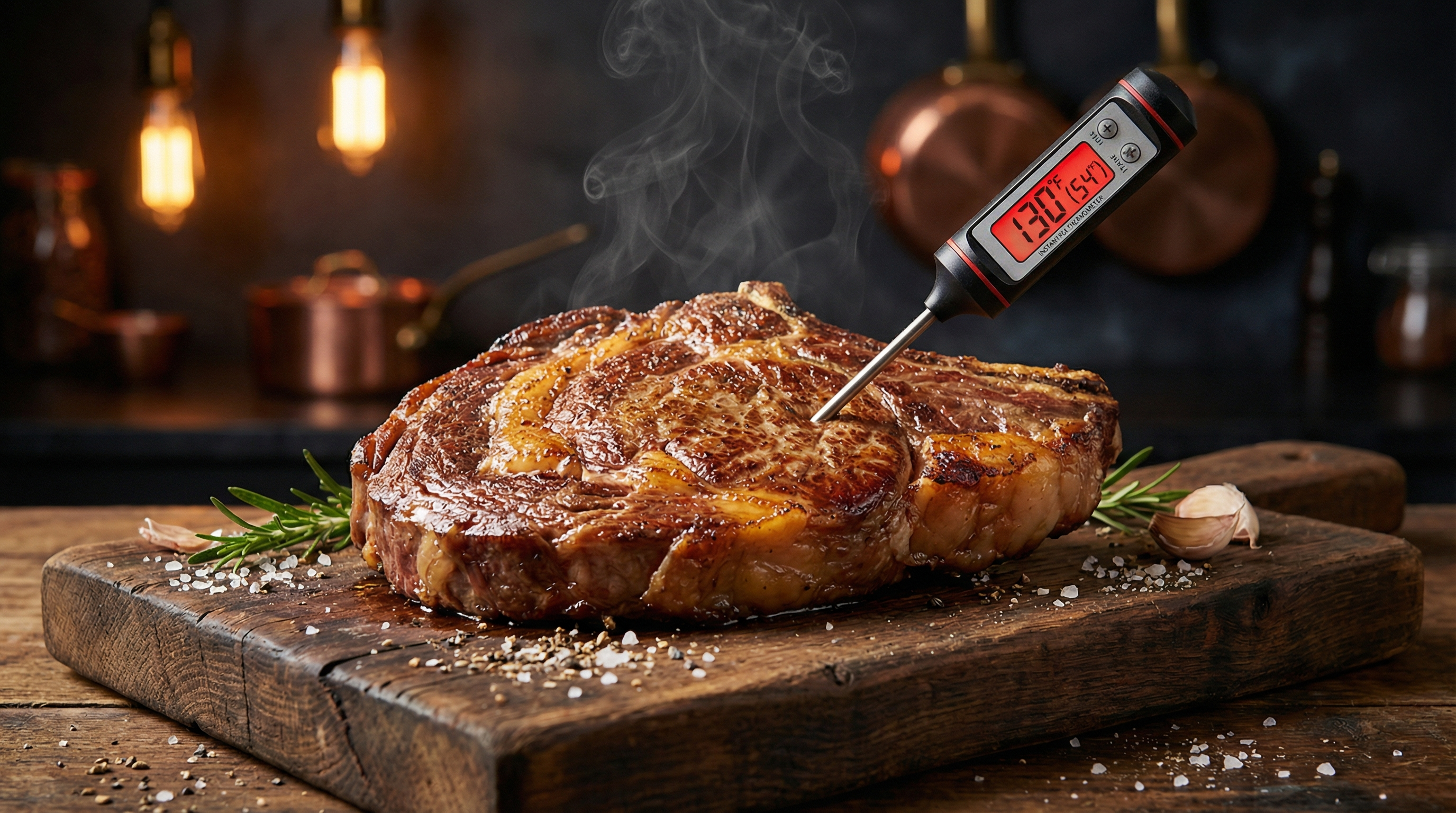
Carryover Cooking: Why Your Meat Keeps Cooking After You Remove It from Heat
Carryover cooking is the reason your steak goes from perfect to overdone in minutes. Learn the thermal physics behind it, how much temperature rise to expect for every cooking method, and the exact pull temperatures that guarantee your target doneness.
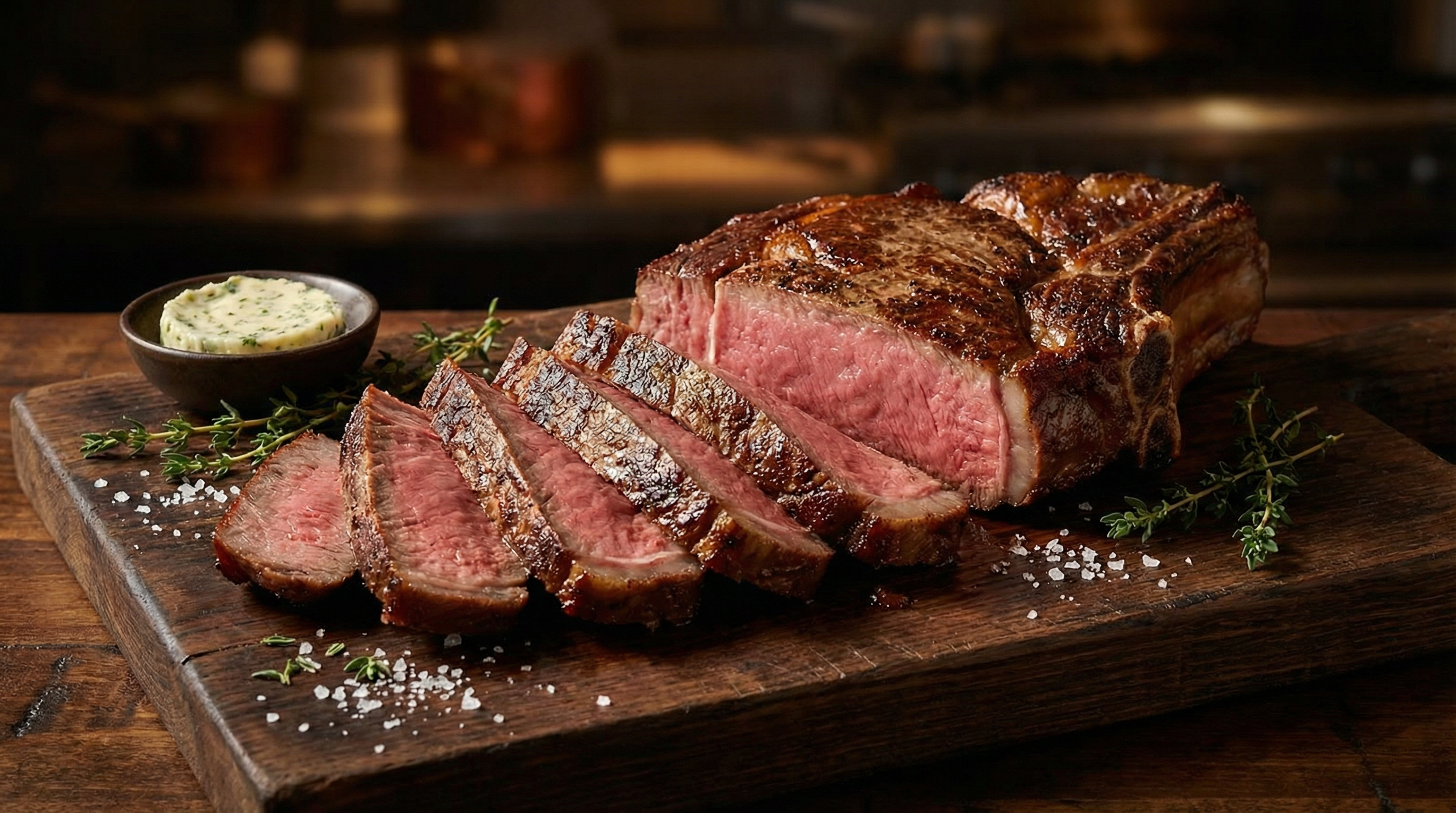
Reverse Sear Ribeye: The Science Behind the Perfect Steak
The reverse sear ribeye isn't just another cooking method—it's the method that changed everything I understood about steak. Edge-to-edge medium-rare with a steakhouse crust.
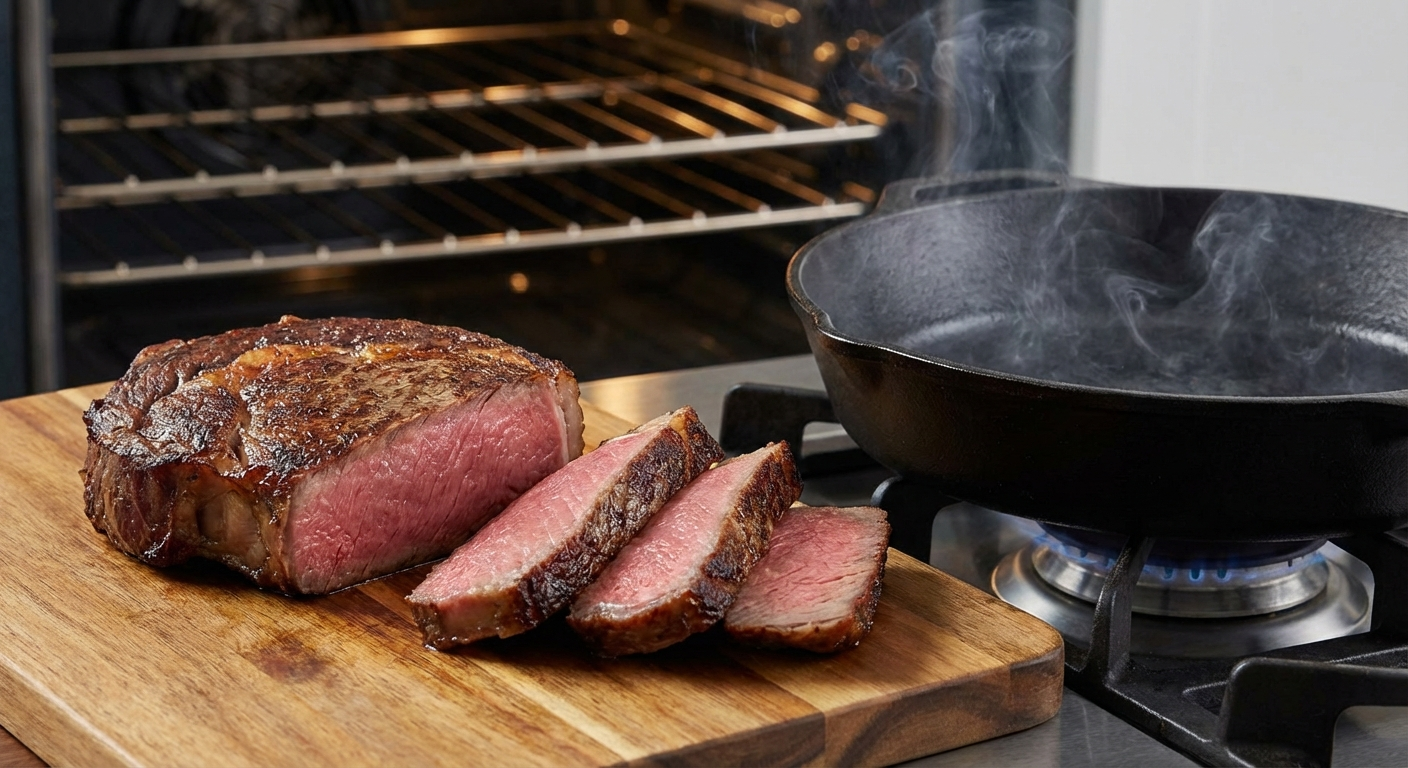
The Reverse Sear Method: A Complete Scientific Guide
The reverse sear produces the most evenly cooked steak possible. Here's the complete science behind the method — thermal gradients, timing, and exactly how to execute it.
About Dr. Claire Whitfield
Food scientist with a PhD in meat science from Texas A&M. Spent 10 years in USDA research labs studying heat transfer in protein cooking. Now translating that research into guides that help you cook better steak.
Read My StoryAll Expert Guides
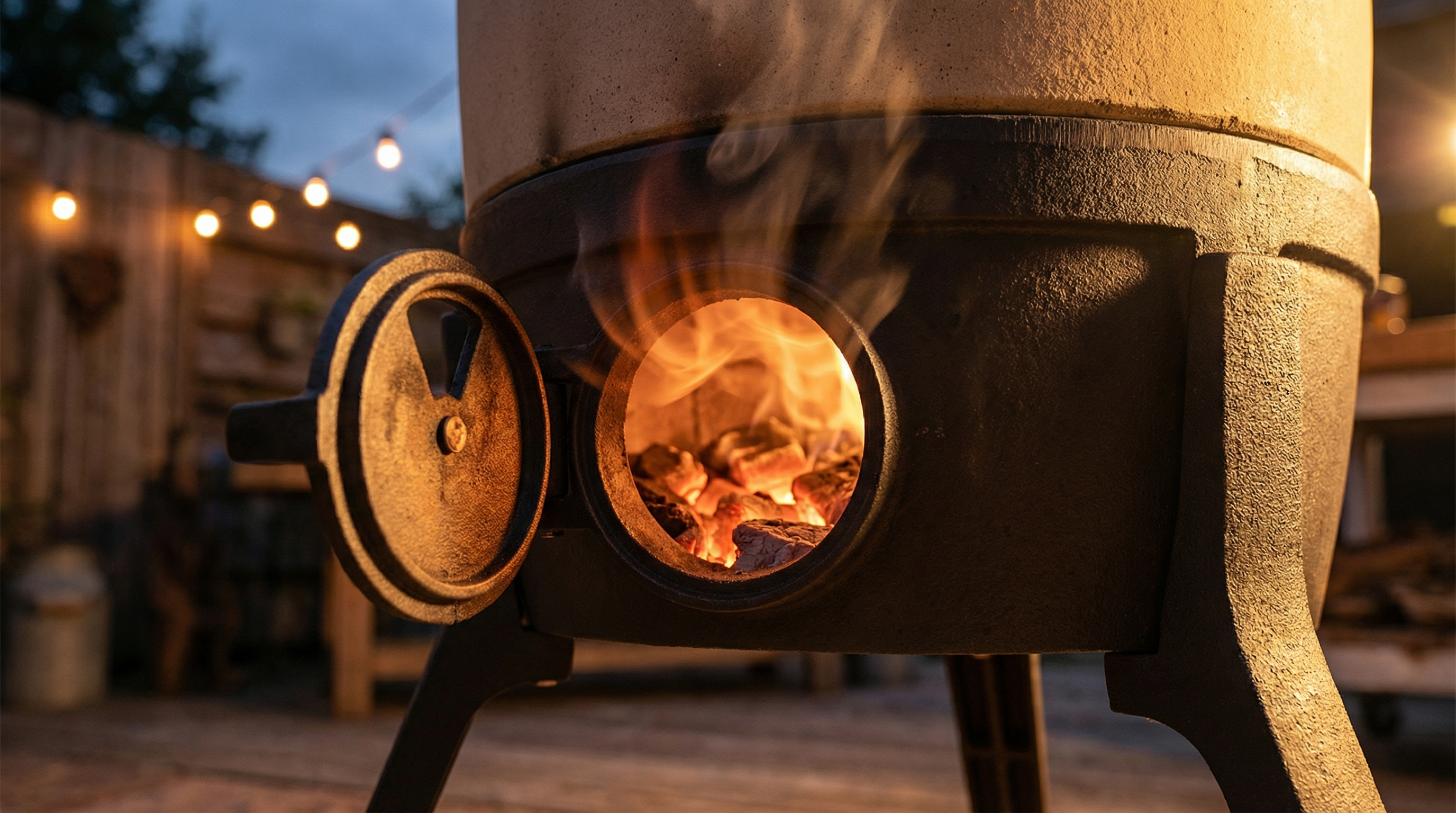
Grill Vent Management: The Science of Airflow and Temperature Control
Oxygen controls fire. Fire controls temperature. Vents control oxygen. Master your vents and you master your grill.
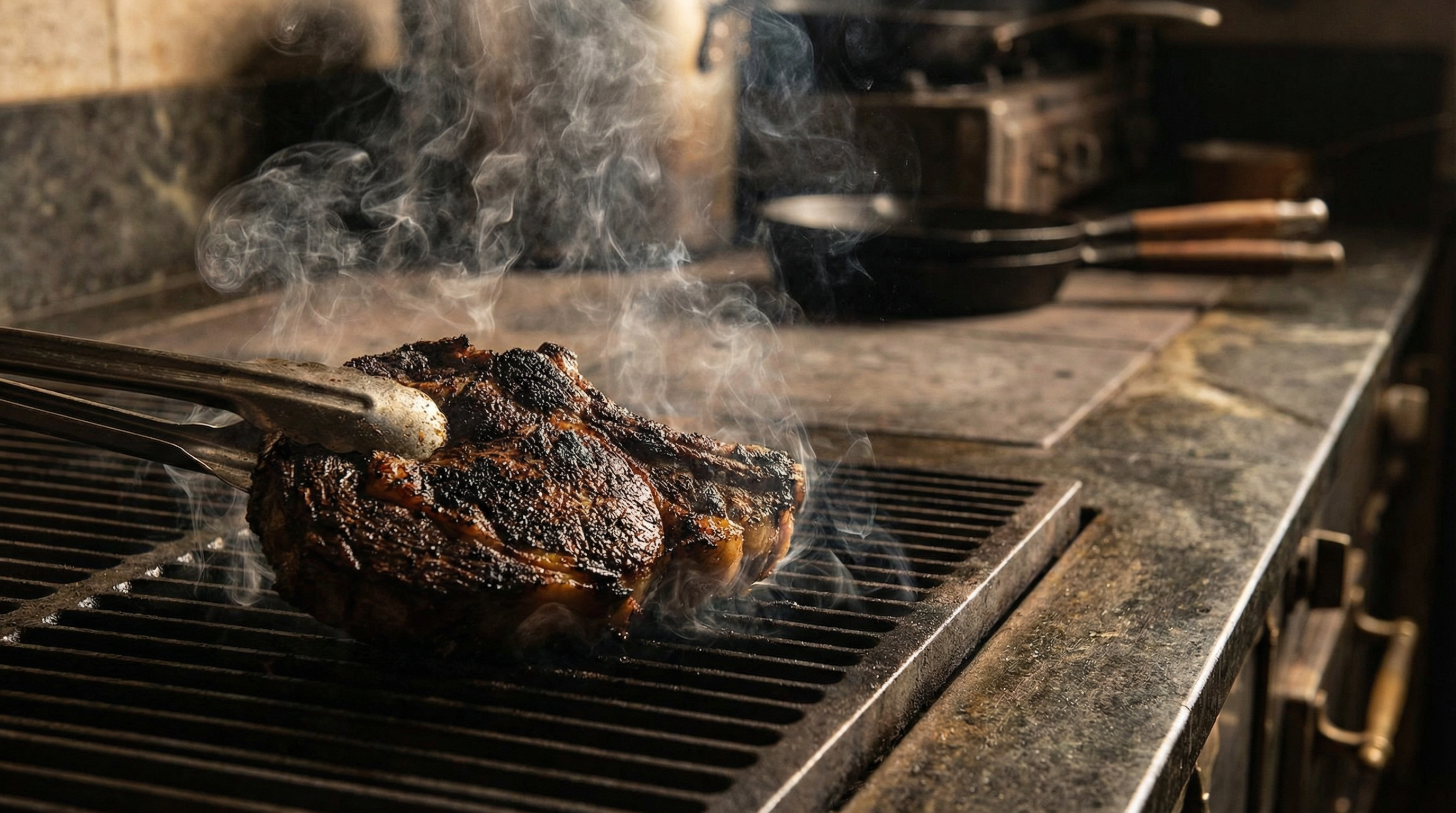
How Often to Flip Steak: The Science of Multiple Flips vs Single Flip
The traditional advice to flip your steak only once is wrong. Science shows that flipping every 30 seconds produces better crust, more even doneness, and 30% faster cooking through improved heat transfer.
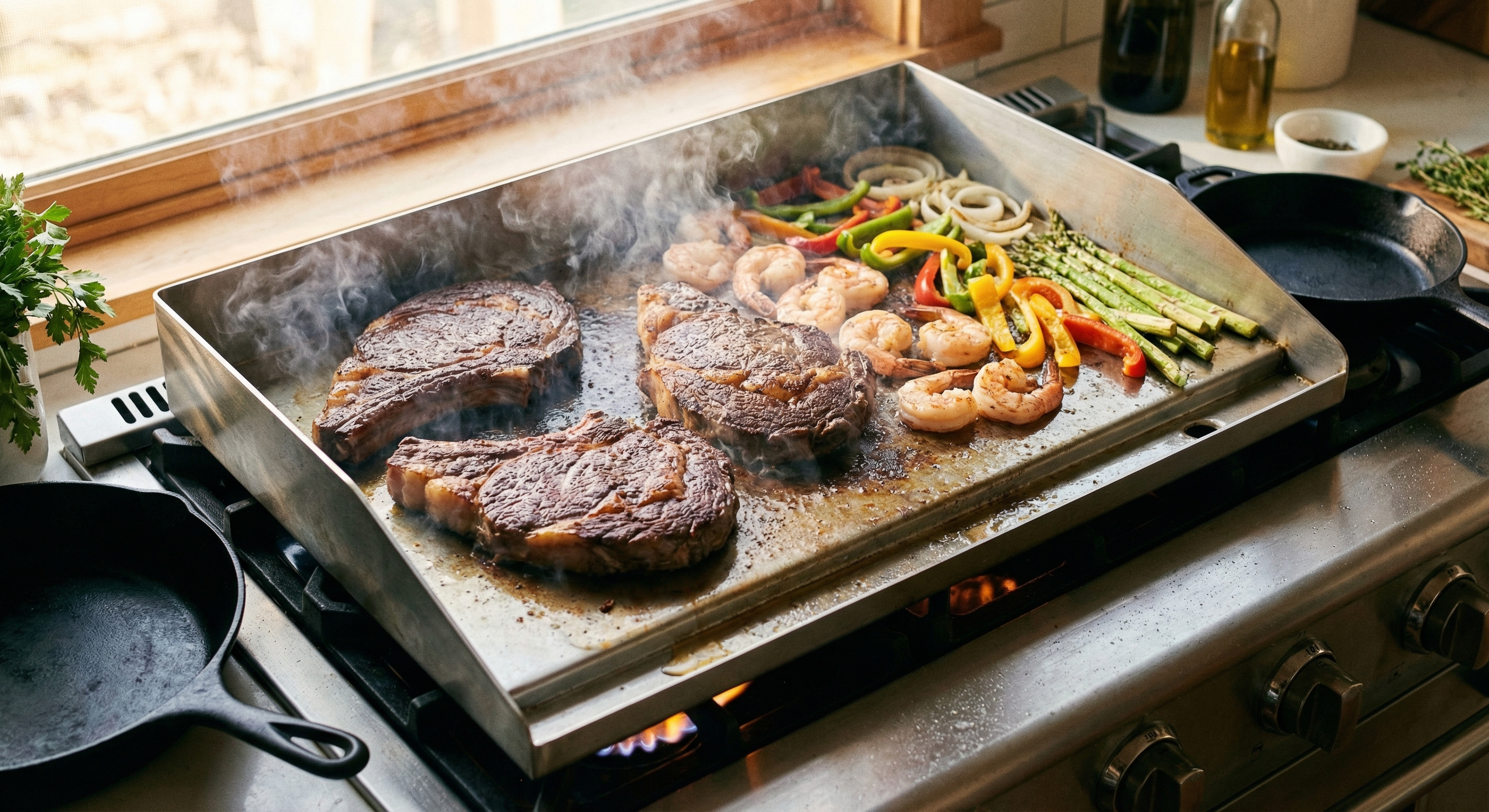
The Science of Plancha Grilling: How High Heat and Flat Surfaces Create Superior Crust
Plancha grilling delivers more surface contact, higher heat, and better crust than traditional grates. Here is the science behind why flat-top cooking produces superior results.
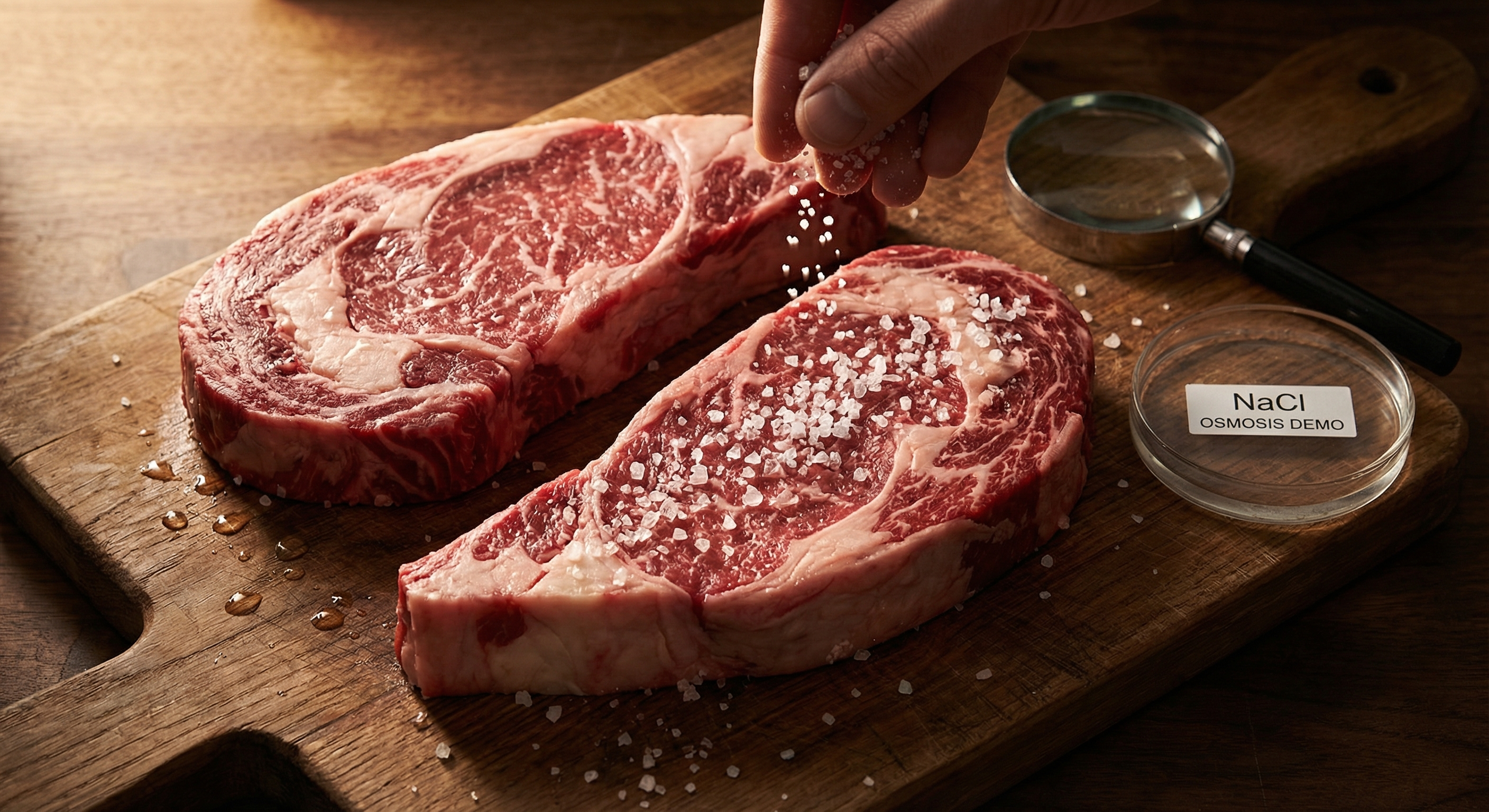
When to Salt Steak: The Science of Timing, Osmosis, and Flavor Development
Salt your steak 40+ minutes before cooking, or salt it right before it hits the pan. Never salt it 3-40 minutes before. The difference is osmosis, diffusion, and water activity — and understanding the science turns every steak into a perfectly seasoned, deeply flavored piece of meat.
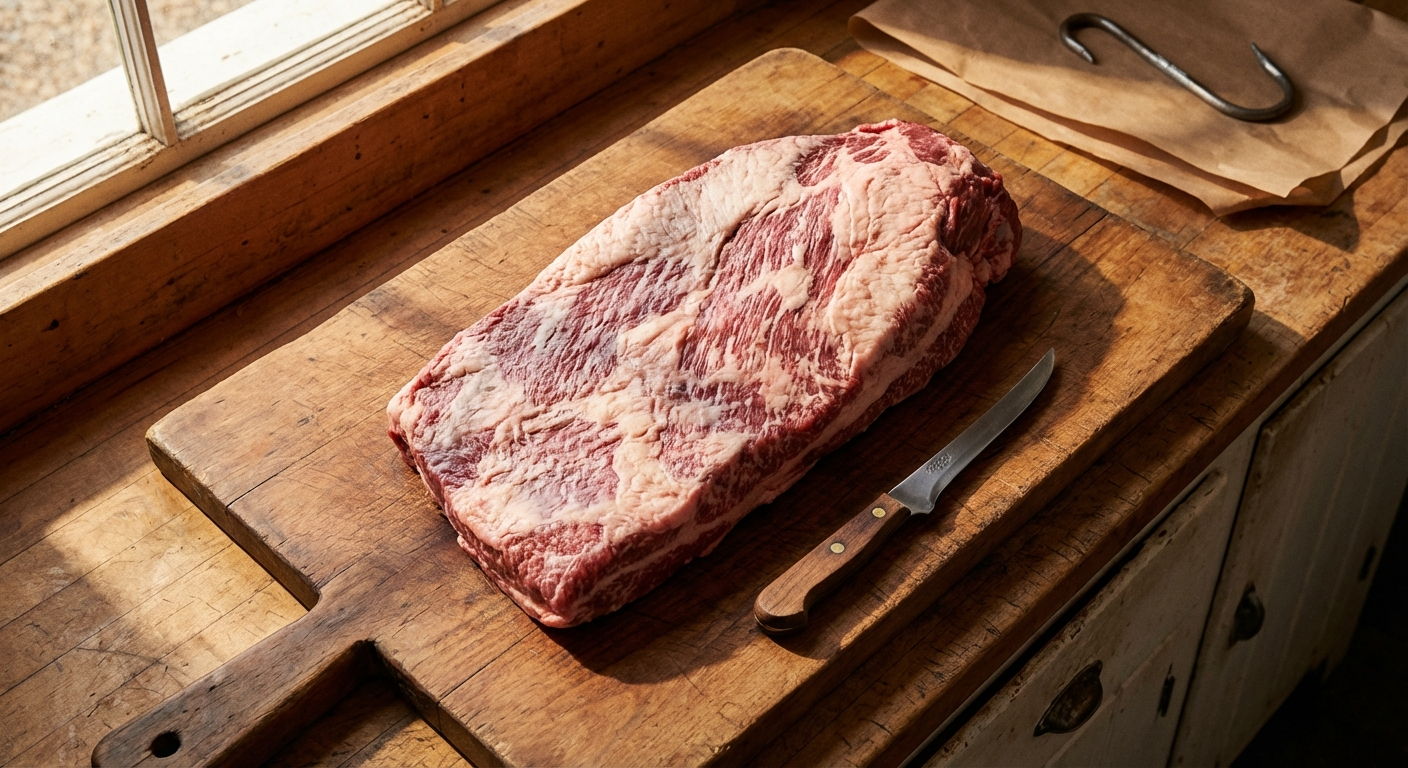
How to Trim a Brisket: The Science of Fat, Airflow, and Even Cooking
Trimming a brisket is not about removing fat — it is about controlling heat transfer, airflow, and rendering. Every cut you make with the knife determines how the smoker treats your meat for the next 12 hours.
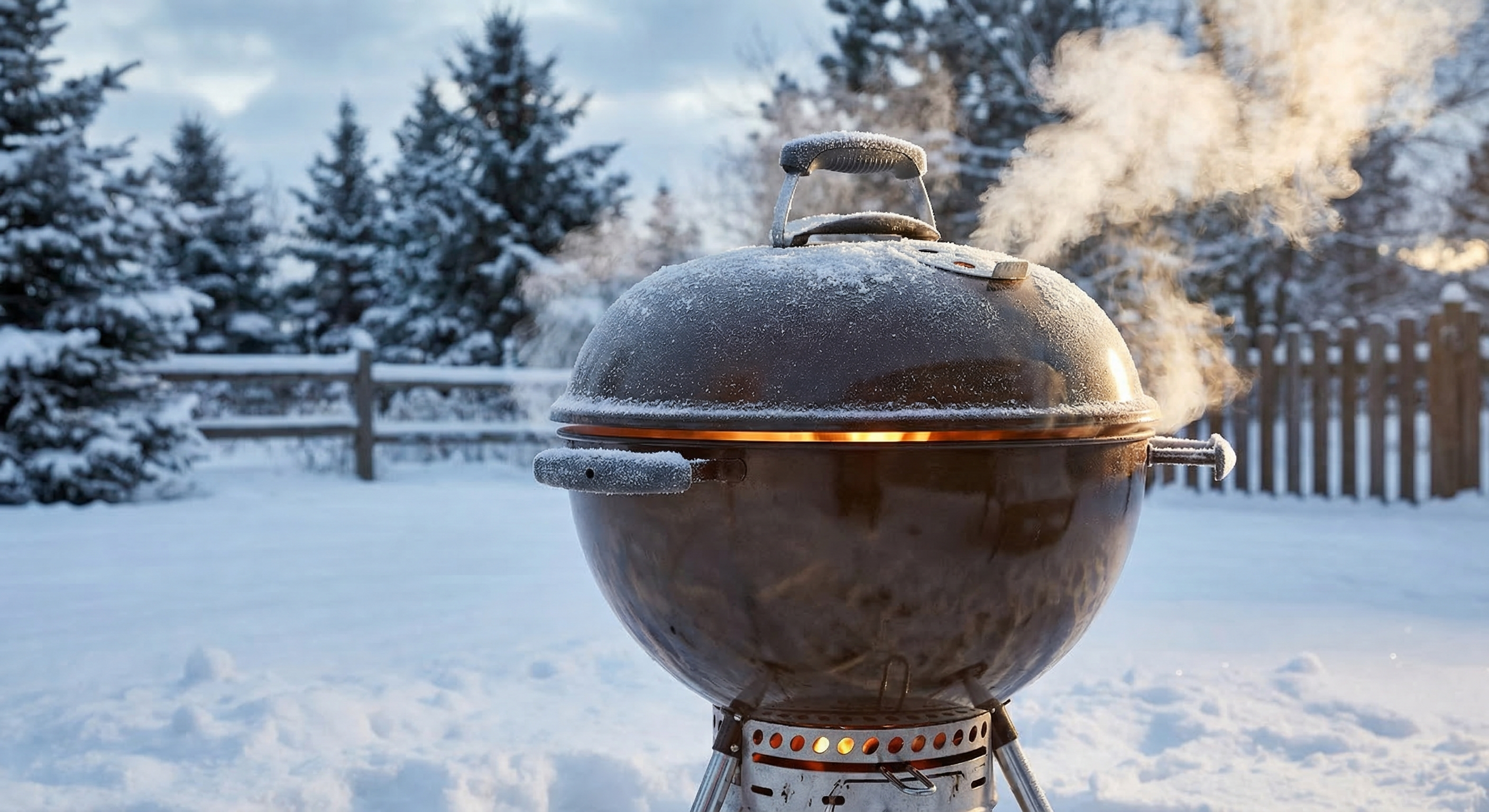
Cold Weather Grilling: The Science of Why Your Grill Behaves Differently in Winter
Cold air changes everything about how your grill performs. Here is the physics behind winter grilling and exactly how to compensate for ambient temperature drops.
Grilling Science Glossary
30 terms defined by a food scientist — from Maillard reaction to thermal equilibrium.
From the Blog
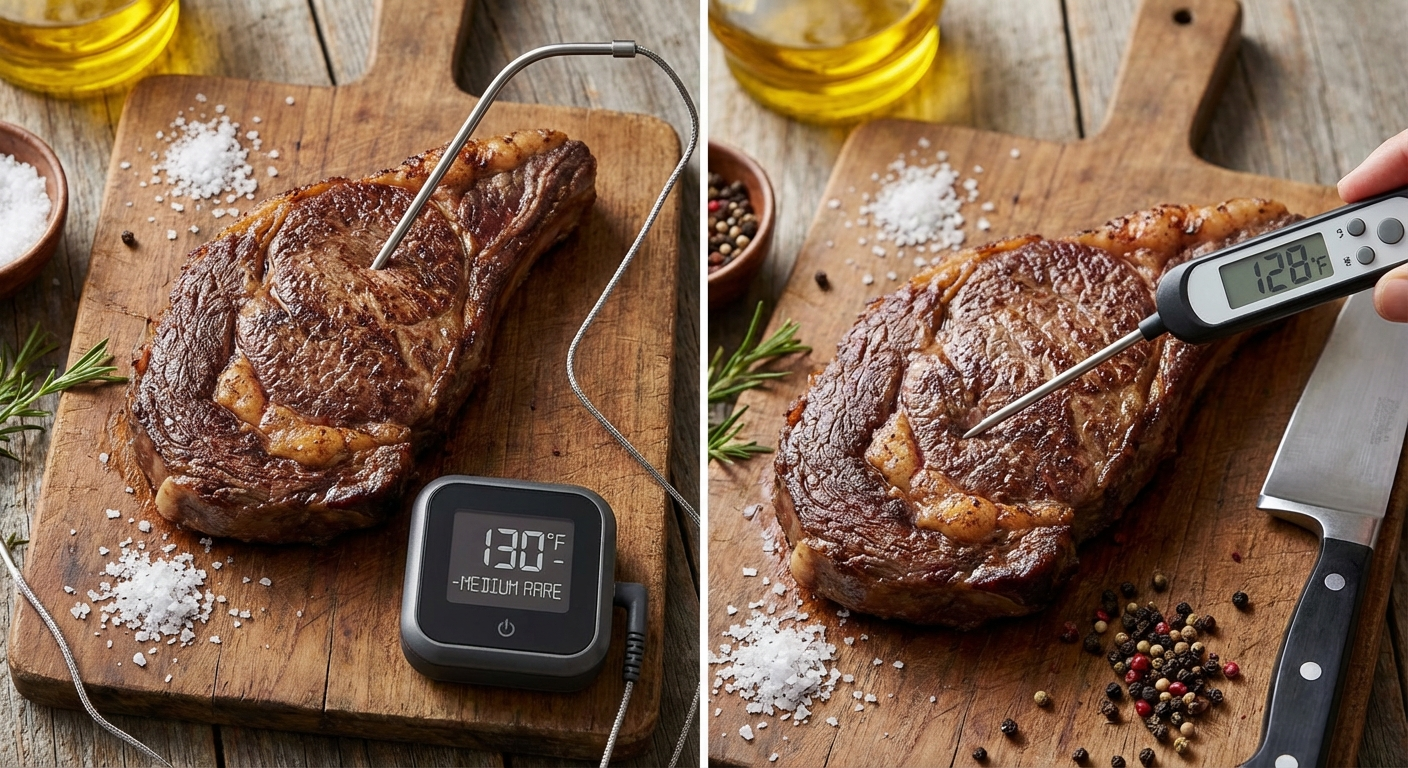
Why I Stopped Using Instant-Read Thermometers (And What I Use Instead)
Instant-read thermometers are great — but they require you to open the oven, poke the steak, and react. Leave-in probes let the data come to you.
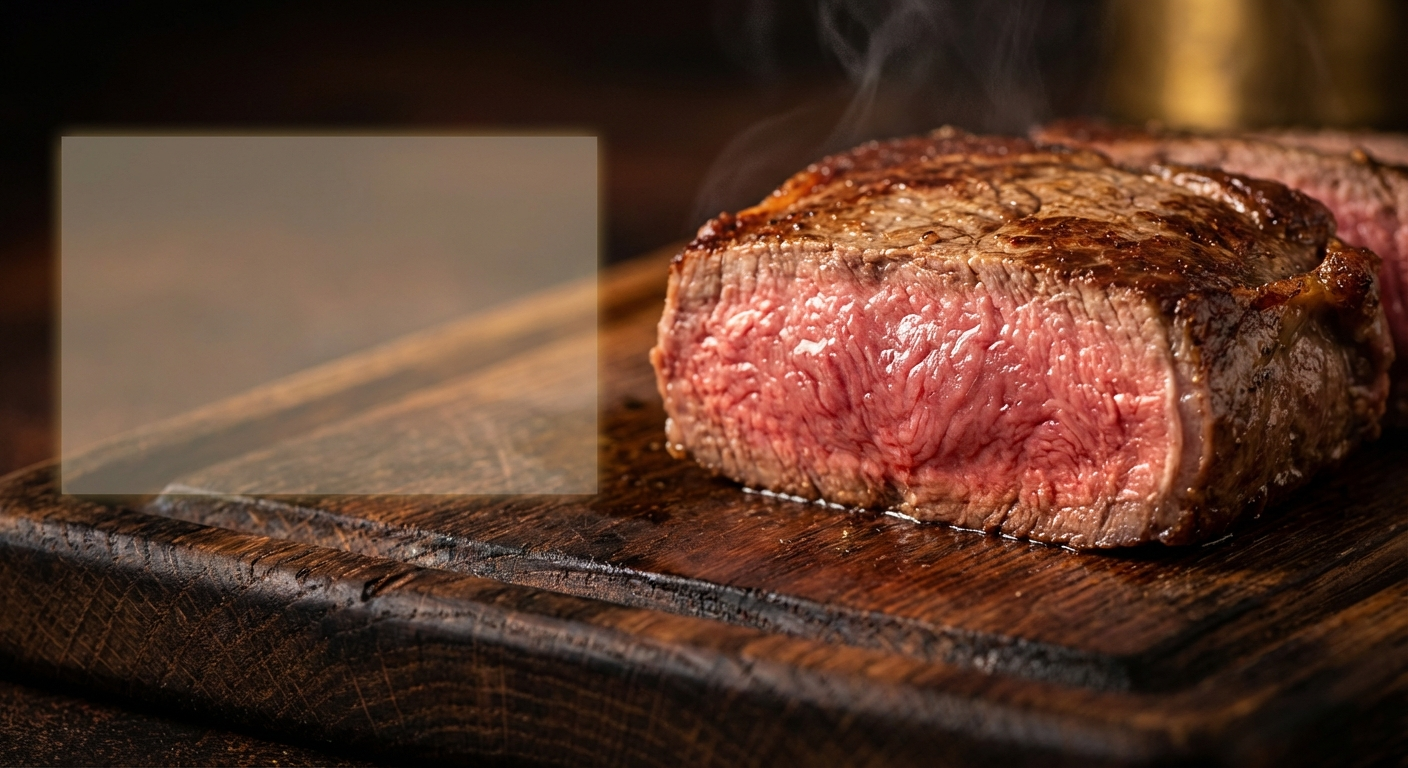
The 130°F Myth: Why Medium-Rare Isn't One Temperature
Every recipe says "cook to 130°F for medium-rare" — but 129°F and 134°F produce noticeably different steaks. Here's what's happening at each degree.
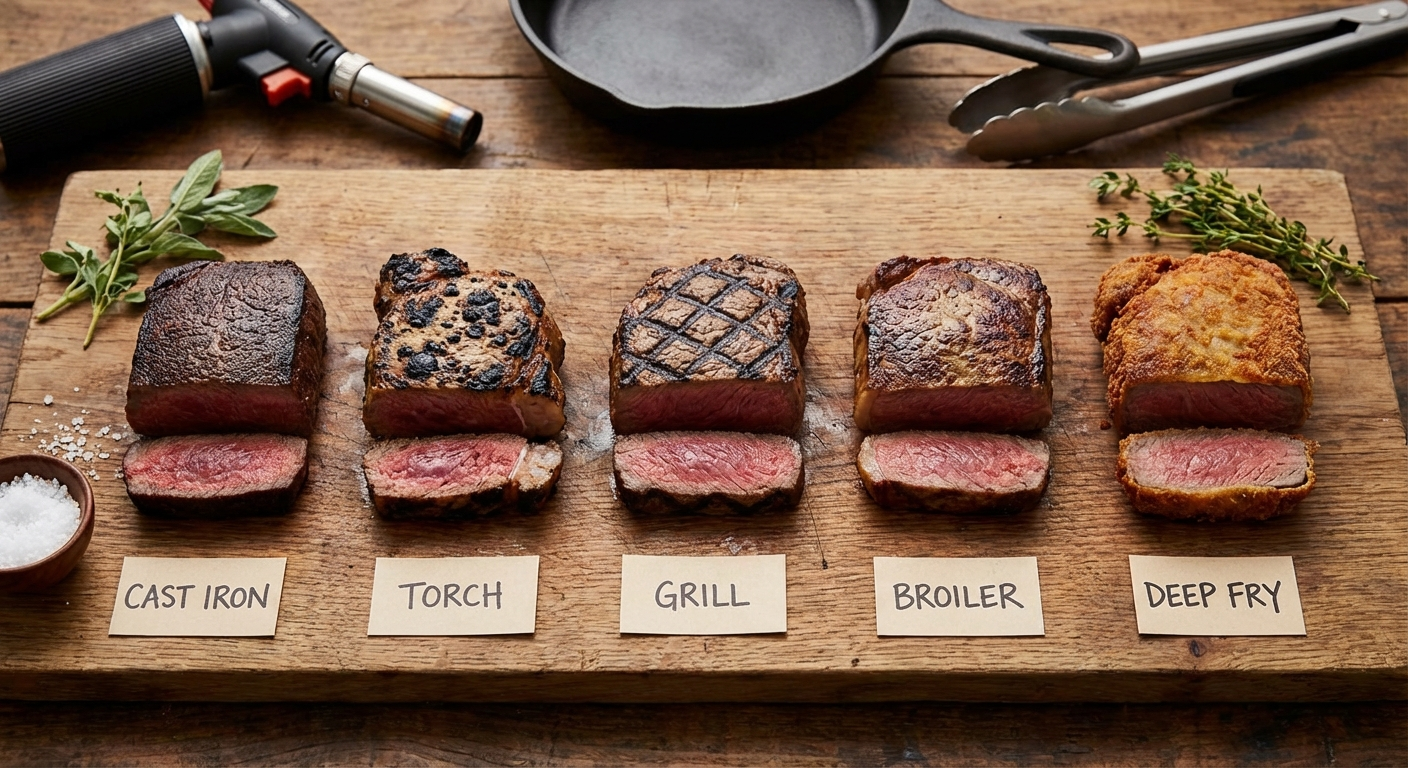
I Tested 5 Searing Methods — Here's What the Data Shows
Five searing methods, identical steaks, measured results. Cast iron, chimney sear, torch, infrared, and deep-frying — here's what performed best.