The 130°F Myth: Why Medium-Rare Isn't One Temperature
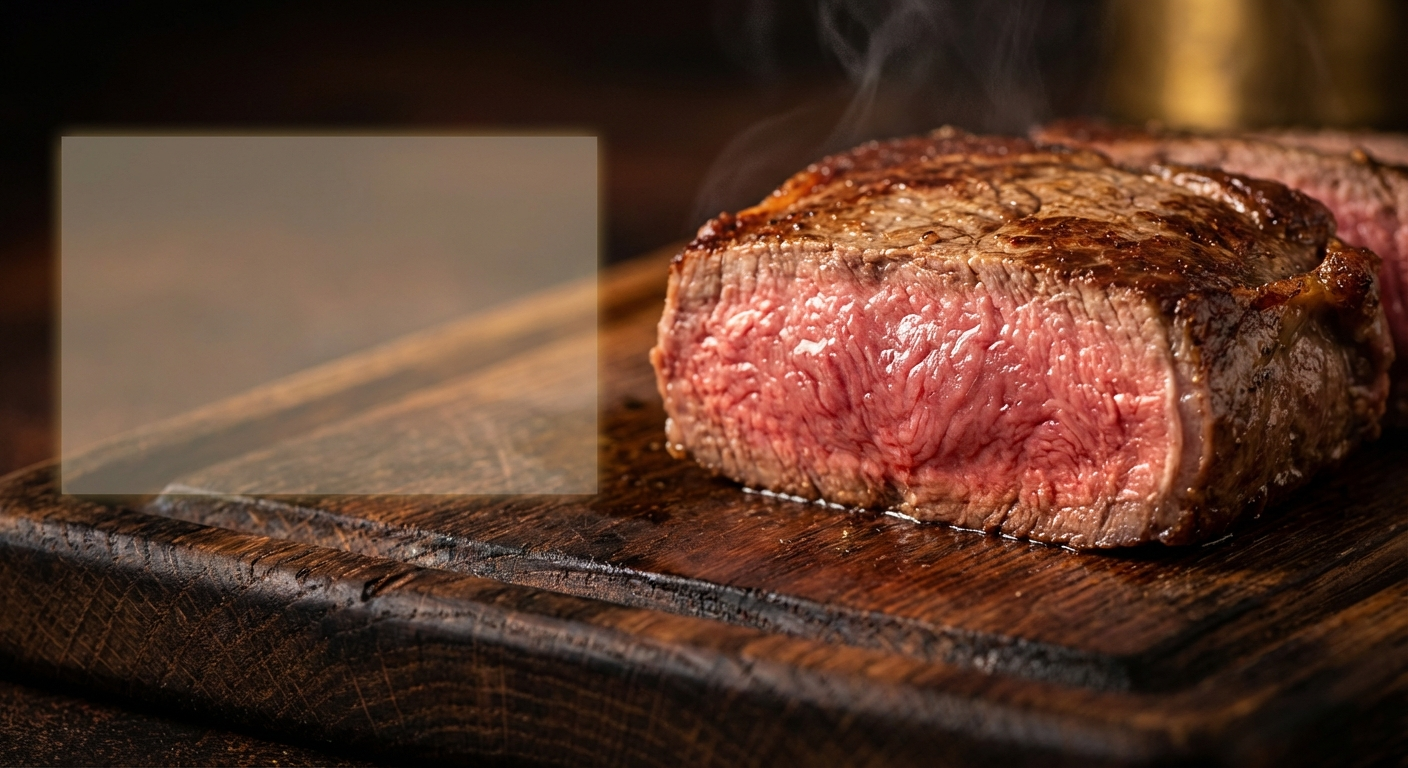
Search "medium-rare steak temperature" and you'll get a number. Usually 130°F, sometimes 135°F, occasionally 125°F. The internet treats medium-rare as a single point — hit this number and you're done. That's not how it works.
Medium-rare is a range: approximately 129–134°F at the geometric center. And there's a real, measurable difference between the bottom and top of that range. At 129°F, you're closer to rare — softer, redder, cooler in the center. At 134°F, you're approaching medium — firmer, pinker, warmer. Both are "medium-rare," but the eating experience is different.
What's Happening at Each Degree
The key protein is myosin, the motor protein in muscle fibers. Myosin begins denaturing (unfolding and coagulating) around 122°F and is roughly 50% denatured at 131°F. The degree of myosin denaturation directly determines the steak's firmness and moisture-squeezing behavior.
- 129°F: About 40% myosin denaturation. The center is quite soft — closer to rare in texture. Color is deep pink-red. Maximum juiciness. Some people find this "underdone" if they're used to the firmer feel of 133°F.
- 131°F: The midpoint. Approximately 50% myosin denaturation. Tender with a clean, yielding bite. Warm pink-red center. This is what I consider the ideal medium-rare — maximum flavor with the right balance of tenderness and structure.
- 133°F: About 60% denaturation. Noticeably firmer. The color shifts toward pink (less red). Still very good — many steakhouses target this temperature because it reads as "cooked" without approaching medium.
- 134°F: The upper boundary. You're one degree from the medium zone. Firm center, decisively pink (not red). Slightly less juicy than 131°F due to increased protein contraction. Some diners prefer this — it's still within the range, and preference is personal.
Why This Matters
A 5°F range sounds small, but consider: the difference between 129°F and 134°F is the same as the difference between rare and medium-rare. In protein cooking, small temperature changes produce significant textural shifts. This is why a quality thermometer matters more than any other tool — you need to measure to the degree, not to the ballpark.
It also means that when you tell someone "cook to medium-rare," you haven't given them enough information. Which medium-rare? If you like a softer, juicier center, tell them 129–130°F. If you prefer more structure, say 133–134°F. The doneness label is a category. The temperature is the specification.
The "Perfect" Temperature Is Personal
I eat my steaks at 131°F because that's where my testing shows maximum juiciness with adequate myosin coagulation for a pleasant texture. My partner prefers 134°F — she finds 131°F "too soft." Neither of us is wrong. We're just sitting at different points on the same spectrum.
If you've never paid attention to which specific temperature you prefer, here's an experiment: sous vide three steaks at 129°F, 131°F, and 134°F. Taste them blind. You'll find your personal preference within that 5°F range, and from then on, you'll know exactly what to ask for.
What About the USDA's 145°F?
The USDA recommends 145°F for whole-muscle beef. That's medium to medium-well territory — well outside the medium-rare range. This is a safety guideline with a substantial margin, not a quality target. For whole-muscle cuts where bacteria exist only on the surface (killed during searing), temperatures in the 129–134°F range carry extremely low risk for healthy adults. See my full breakdown in the doneness temperature guide.
Know your number. Cook to your number. Medium-rare is a range, not a point — and the best steak you'll ever eat is the one cooked to YOUR preferred degree within that range.
More from the Blog
Why I Stopped Using Instant-Read Thermometers (And What I Use Instead)
Instant-read thermometers are great — but they require you to open the oven, poke the steak, and react. Leave-in probes let the data come to you.
I Tested 5 Searing Methods — Here's What the Data Shows
Five searing methods, identical steaks, measured results. Cast iron, chimney sear, torch, infrared, and deep-frying — here's what performed best.