Grill Lid Open or Closed? The Science of When Each Method Works Best
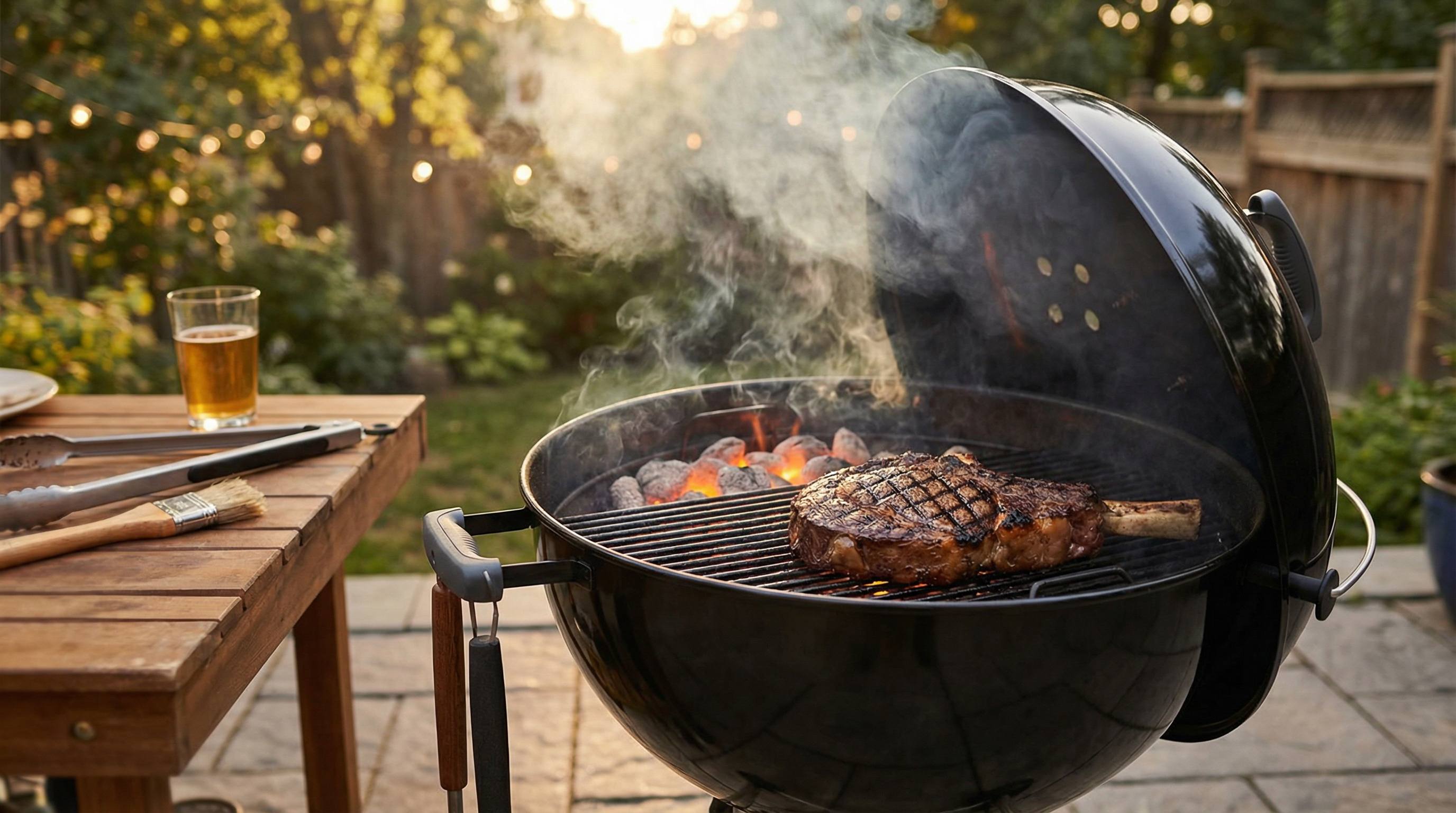
Grill Lid Open or Closed? The Science of When Each Method Works Best
Should you grill with the lid open or closed? It is the most asked question in backyard grilling, and most advice online boils down to vague rules of thumb: "lid open for thin, lid closed for thick." That is directionally correct but misses why — and understanding the why lets you make the right call for every food, every time.
The answer comes down to heat transfer physics. A grill with the lid open and a grill with the lid closed are fundamentally different cooking environments. They use different proportions of radiation, convection, and conduction to cook food. Once you understand how each mechanism works, the lid question answers itself.
The Three Heat Transfer Mechanisms on a Grill
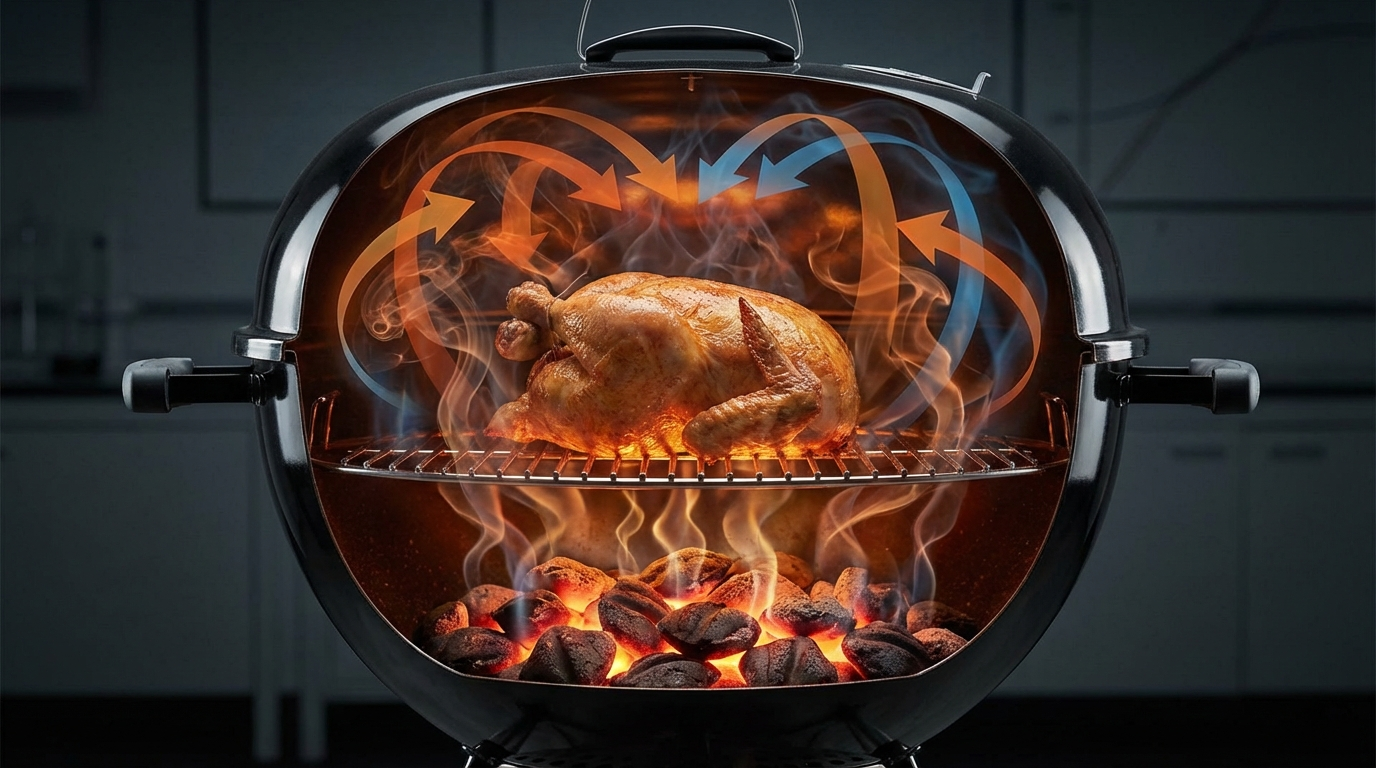
Every grill cooks food through three mechanisms, but the ratio changes dramatically depending on whether the lid is open or closed:
1. Radiation (Infrared Energy)
Glowing charcoal or gas burner flames emit infrared radiation that travels in straight lines from the heat source to the food surface. This is the dominant heat source when grilling with the lid open. Radiation intensity follows the inverse-square law — doubling the distance from the heat source reduces intensity by 75%. This is why grate height matters so much on open grills.
Radiation is surface-focused. It heats the exterior of food rapidly without efficiently penetrating to the center. This makes it ideal for thin foods that cook through quickly, or for developing a seared crust on the surface.
2. Convection (Hot Air Movement)
When you close the lid, trapped hot air circulates around the food. This is convection — the same principle that makes your oven work. The air temperature inside a closed grill typically reaches 300–500°F depending on fuel load and vent position.
Convection heats food from all sides simultaneously. It is less intense than direct radiation but far more even, which is why it works better for thick cuts that need the center to reach temperature without the outside burning.
3. Conduction (Contact Heat)
Metal grill grates conduct heat directly into the food at contact points. This creates grill marks and contributes to crust formation. Conduction happens regardless of lid position, but the grate temperature itself is affected — a closed lid keeps grates hotter by trapping ambient heat.
In practice, conduction accounts for a relatively small percentage of total heat transfer on a grill (roughly 5–15%), but it is disproportionately important for flavor because those contact points reach the highest temperatures and drive the strongest Maillard reaction.
Lid Open: When and Why
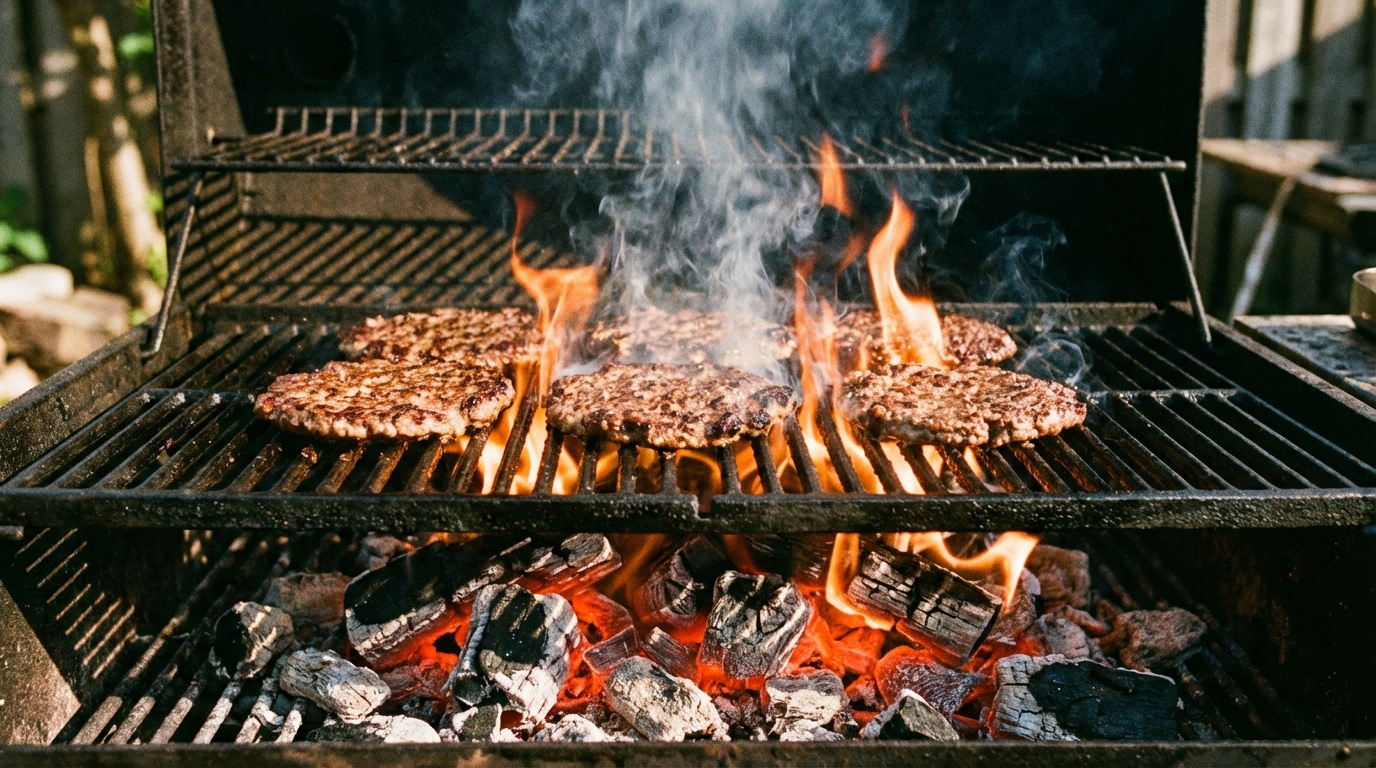
Grilling with the lid open means your food cooks primarily by infrared radiation from below and conduction from the grates. There is minimal convection because hot air rises straight up and away from the food instead of circulating around it.
This creates a one-sided, high-intensity heat environment. The bottom of the food gets very hot very fast, while the top stays relatively cool until you flip.
Best for Lid-Open Grilling
- Burgers (¾ inch or thinner): Cook through quickly from direct radiation. Lid closed would overcook the exterior before you get a good crust.
- Hot dogs and sausages: Small diameter means radiation penetrates to center fast. Lid open gives you control over charring.
- Thin steaks (under 1 inch): Need high-heat searing more than ambient cooking. Lid closed risks overshooting internal temp.
- Shrimp and fish fillets: Delicate proteins that cook in 2–4 minutes per side. Convection would dry them out.
- Vegetables: Most sliced vegetables (peppers, onions, asparagus, zucchini) cook quickly from radiation and benefit from caramelization without steaming.
- Toast and flatbreads: Pure surface cooking — you want radiation and conduction only.
The Science of Why Lid-Open Works for Thin Foods
When food is thin (under ¾ inch), the thermal gradient from surface to center is small. Radiation from the heat source can drive the center temperature up to doneness before the surface burns — as long as you flip once halfway through.
Adding convection (closing the lid) would increase the total heat input without being needed for center penetration. The result: the food cooks faster overall but the exterior gets overdone relative to the interior. For a ½-inch burger, lid-open direct heat gives you a better crust-to-center ratio than lid-closed.
Temperature Control with Lid Open
Without a lid, your only temperature control tools are:
- Fuel quantity: More charcoal or higher burner setting = more radiant heat
- Grate height: Moving food closer to or farther from the heat source (if your grill allows adjustment)
- Zone positioning: Moving food to cooler zones of the grill
You lose the ability to control airflow through vents (since the lid is off), which is why lid-open grilling is inherently a high-heat, short-duration method. You cannot simulate a 300°F oven environment without the lid.
Lid Closed: When and Why
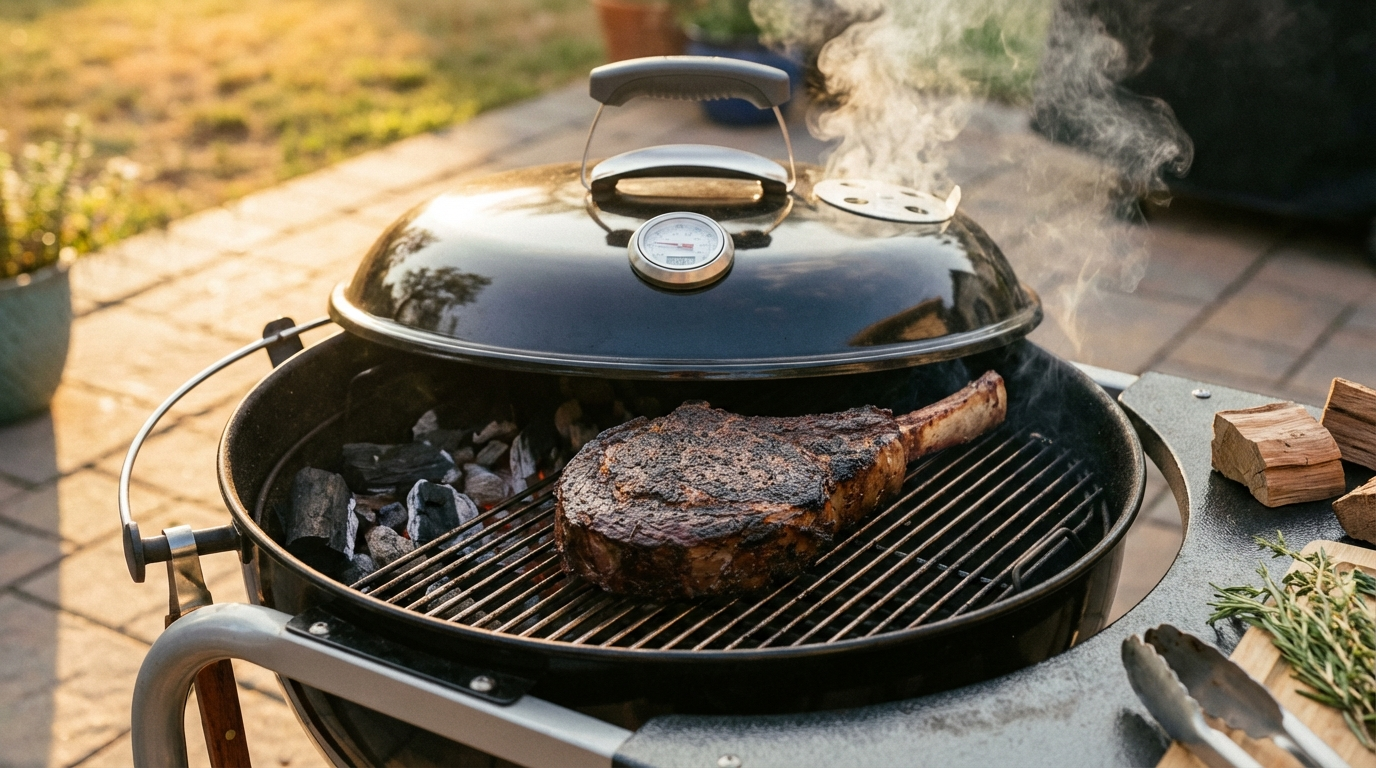
Closing the lid transforms your grill into a convection oven with a radiant heat source at the bottom. Food now receives heat from three directions: radiation from below, convection from circulating hot air, and conduction from the grates. The total heat transfer rate increases, but more importantly, it becomes more even.
Best for Lid-Closed Grilling
- Thick steaks (1.5 inches and above): Need ambient heat to bring the center to temperature without destroying the exterior. The reverse sear method depends on this.
- Whole chickens and bone-in poultry: Require 45–90 minutes of even cooking. Lid-open would char the underside and leave the top raw.
- Pork shoulders and brisket: Low-and-slow cooking at 225–275°F for hours. Impossible without a closed lid to maintain stable temperature.
- Ribs: Need 3–6 hours of controlled heat. The lid creates the oven environment required for collagen breakdown.
- Roasts and large cuts: Anything over 2 pounds needs convection to cook evenly.
- Pizza: Requires 500°F+ ambient temperature to cook the top while the bottom crisps on the stone or grate.
The Science of Why Lid-Closed Works for Thick Foods
When food is thick (over 1.5 inches), the thermal gradient from surface to center is large. If you rely only on radiation from below (lid open), the surface must absorb an enormous amount of energy and transfer it inward through conduction within the meat. By the time the center reaches target temperature, the outer ½ inch is overcooked.
Closing the lid adds convection heating from all sides. This means the top, sides, and bottom of the food all receive heat simultaneously. The temperature gradient is less steep — the center comes up to temperature while the surface temperature remains more moderate. The result is better edge-to-edge doneness.
This is the same physics behind the reverse sear: cook with low convection heat (lid closed, indirect) to bring the center close to target, then finish with high radiant heat (lid open or direct zone) for the crust.
Temperature Control with Lid Closed
A closed lid gives you precision temperature control through the vent system:
- Bottom vents (intake): Control oxygen supply to the fire. More open = hotter. More closed = cooler.
- Top vents (exhaust): Control how fast hot air exits. Partially closing these traps more heat inside.
- Fuel management: Amount and arrangement of charcoal (or burner settings for gas).
With practice, you can hold a kettle grill at a stable 225°F for 8+ hours or push it to 600°F+ for pizza. This level of temperature control is only possible with the lid closed.
The Hybrid Approach: When to Use Both
Most experienced grillers do not pick one or the other for an entire cook. They use both methods in sequence, matching the technique to the phase of cooking:
Reverse Sear (Lid Closed → Lid Open)
- Phase 1 — Lid closed, indirect heat (225–275°F): Bring thick steak to 10–15°F below target internal temp. Convection does the heavy lifting evenly.
- Phase 2 — Lid open, direct heat (high): Sear both sides for 60–90 seconds each. Radiation creates the crust. The center barely moves because it is already close to target.
Sear and Move (Lid Open → Lid Closed)
- Phase 1 — Lid open, direct heat: Sear chicken thighs skin-side down for 3–4 minutes to render fat and crisp the skin.
- Phase 2 — Lid closed, indirect heat: Move to the cool side and close the lid. Convection finishes cooking to 165°F internal without burning the skin.
Multi-Item Grilling
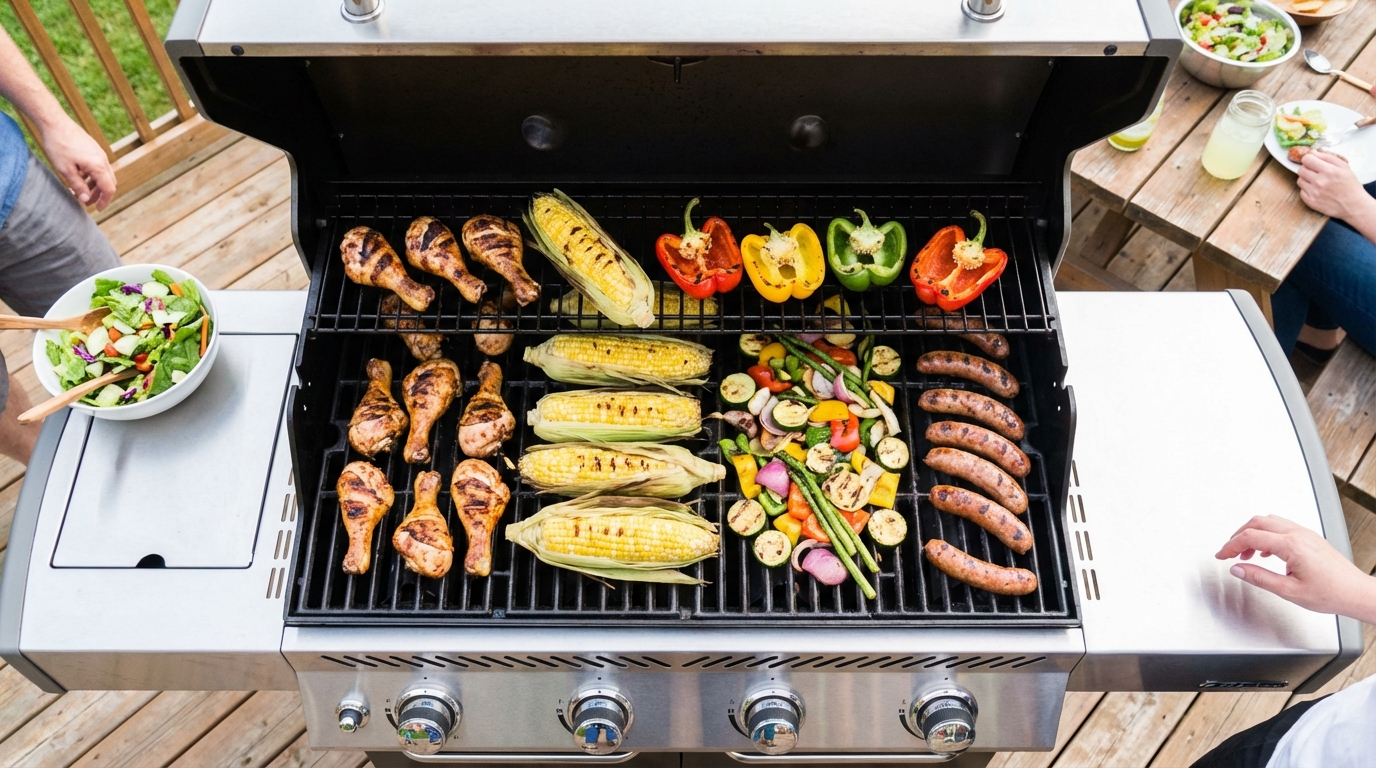
When grilling a full meal, you often have thick and thin items on the grill simultaneously. The solution: use two-zone fire setup. Thick items go on the indirect (cool) side with the lid closed. When thin items are ready to cook, open the lid, place them over the direct zone, and cook them quickly while the thick items continue with residual convection.
Common Mistakes and the Science Behind Them
"Peeking" — Lifting the Lid Repeatedly
Every time you open the lid on a long cook, you dump the convection environment. Hot air escapes instantly. Depending on the grill type, it takes 5–15 minutes to recover the target temperature. On a charcoal grill, the sudden oxygen rush also causes a temporary temperature spike before settling back down.
The old saying — "if you're lookin', you ain't cookin'" — is thermodynamically accurate. Each lid lift on a 4-hour brisket cook can add 15–20 minutes to total cook time. Use a remote probe thermometer instead of lifting the lid to check temperature.
Closing the Lid on Flare-Ups
Some grillers close the lid to suffocate flare-ups by cutting oxygen. This works on charcoal grills (closing the lid and shutting all vents starves the fire). But on gas grills, the burners supply their own oxygen — closing the lid just traps the flames closer to the food and can make it worse. For gas grills, move the food away from the flare-up zone instead.
Lid Closed for Everything
Some grillers default to lid-closed for all cooks because it is "more efficient." While true that convection adds heat transfer, thin foods suffer. A ¼-inch asparagus spear cooked lid-closed at 450°F will steam and go limp rather than getting the dry, charred exterior you want from direct radiant grilling. The convection moisture environment works against you for foods that need surface drying and caramelization.
Quick Reference: Lid Position by Food
Use this as a starting reference, then adjust based on thickness and your specific grill setup:
- Burgers (thin): Lid open, direct heat, 3–4 min per side
- Burgers (thick, ¾ inch+): Lid closed, 4–5 min per side
- Steaks under 1 inch: Lid open, direct heat, 3–4 min per side
- Steaks 1–1.5 inch: Lid closed, direct heat, 4–5 min per side
- Steaks over 1.5 inch: Lid closed indirect → lid open sear (reverse sear)
- Chicken breasts (boneless): Lid closed, 6–8 min per side
- Chicken thighs (bone-in): Lid open sear → lid closed indirect finish
- Whole chicken: Lid closed, indirect, 60–90 min
- Ribs: Lid closed, indirect, 3–6 hours
- Pork shoulder/brisket: Lid closed, indirect, 8–16 hours
- Hot dogs/sausages: Lid open, direct heat, 2–3 min per side
- Shrimp: Lid open, direct heat, 2 min per side
- Fish fillets: Lid open (thin) or lid closed (thick like salmon steaks)
- Vegetables: Lid open, direct heat, 3–5 min per side
- Corn on the cob (in husk): Lid closed, 15–20 min, turning occasionally
- Pizza: Lid closed, high heat, 5–8 min
Gas vs. Charcoal: Does It Change the Answer?
The lid-open vs. lid-closed physics apply to both fuel types, but there are practical differences:
Charcoal grills: Produce more infrared radiation per unit of fuel because the glowing coals are exposed. Lid-open charcoal grilling delivers more intense radiant heat than lid-open gas grilling. Closing the lid on charcoal also traps smoke flavor — an important consideration that gas grills largely lack.
Gas grills: Produce less infrared radiation (the flame heats metal burner covers, which then radiate). This means lid-open gas grilling is less intense than charcoal, and you may need to close the lid more often to maintain adequate cooking temperature — even for thinner foods. Many gas grill manufacturers recommend lid-closed as the default for this reason.
The key difference: a charcoal grill with the lid open is a high-radiant-heat environment. A gas grill with the lid open is a moderate-radiant-heat environment. Adjust your timing accordingly.
Frequently Asked Questions
Does closing the lid make the grill hotter?
Yes, but not because the fire gets hotter. The fire temperature stays the same (or actually drops slightly due to reduced oxygen). What changes is the ambient air temperature around the food. With the lid closed, hot air recirculates and the food receives heat from all directions instead of just below. The food cooks faster even though the fire itself is not hotter.
Should I close the lid when preheating?
Yes. Always preheat with the lid closed. This brings the grates, the air inside, and the grill body up to temperature. Preheating with the lid open wastes heat — the grates may be hot from direct radiation, but you have no stored thermal energy in the system. A proper 10–15 minute preheat with the lid closed means more stable temperatures once you start cooking.
Why does my food taste better on charcoal with the lid closed?
Smoke. When you close the lid on a charcoal grill, vaporized fat drippings, wood smoke, and combustion byproducts circulate around the food instead of rising straight up into the atmosphere. This deposits flavor compounds on the food surface. With the lid open, those compounds escape before contacting the food. This is why charcoal grilling lid-closed produces the most distinctly "grilled" flavor.
Frequently Asked Questions
Should you grill with the lid open or closed?
It depends on the food thickness. Grill thin foods (under ¾ inch) like burgers, hot dogs, shrimp, and vegetables with the lid open using direct radiant heat. Grill thick foods (over 1.5 inches) like whole chickens, roasts, ribs, and brisket with the lid closed to create convection heat that cooks evenly from all sides.
Does closing the grill lid make it hotter?
Closing the lid increases the ambient air temperature around the food by trapping hot air, but the fire itself stays the same temperature. The food cooks faster because it receives heat from all directions (radiation from below plus convection from circulating air) instead of just from below.
Why does opening the grill lid add cook time?
Opening the lid dumps the entire convection environment instantly. It takes 5–15 minutes for a grill to recover to target temperature after each lid lift. On a long cook like brisket, each peek can add 15–20 minutes to the total cook time.
Should you close the grill lid to stop flare-ups?
On charcoal grills, yes — closing the lid and shutting all vents starves the fire of oxygen. On gas grills, no — the burners supply their own oxygen, so closing the lid just traps flames closer to the food. Move the food away from the flare-up zone instead.
More Expert Guides
Steak Doneness Temperature Guide: The Science of Every Level from Rare to Well Done
Every degree matters. This science-backed guide covers the exact internal temperatures for every steak doneness level, why each temperature produces a different texture, and how to nail your target every time.
14 min readDirect vs Indirect Heat Grilling: The Science of Two-Zone Cooking
Direct heat sears. Indirect heat roasts. Understanding the physics of each — and when to combine them — is the foundation of every great grilling technique.
14 min readResting Meat After Cooking: The Science of Why It Makes Every Steak Juicier
Resting meat after cooking is not optional — it is physics. Here is exactly what happens inside the steak during those crucial minutes and how long to rest every cut.