Grill Marks vs Full Sear: The Science of Which Method Produces Better Steak
Grill Marks vs Full Sear: The Science of Which Method Produces Better Steak
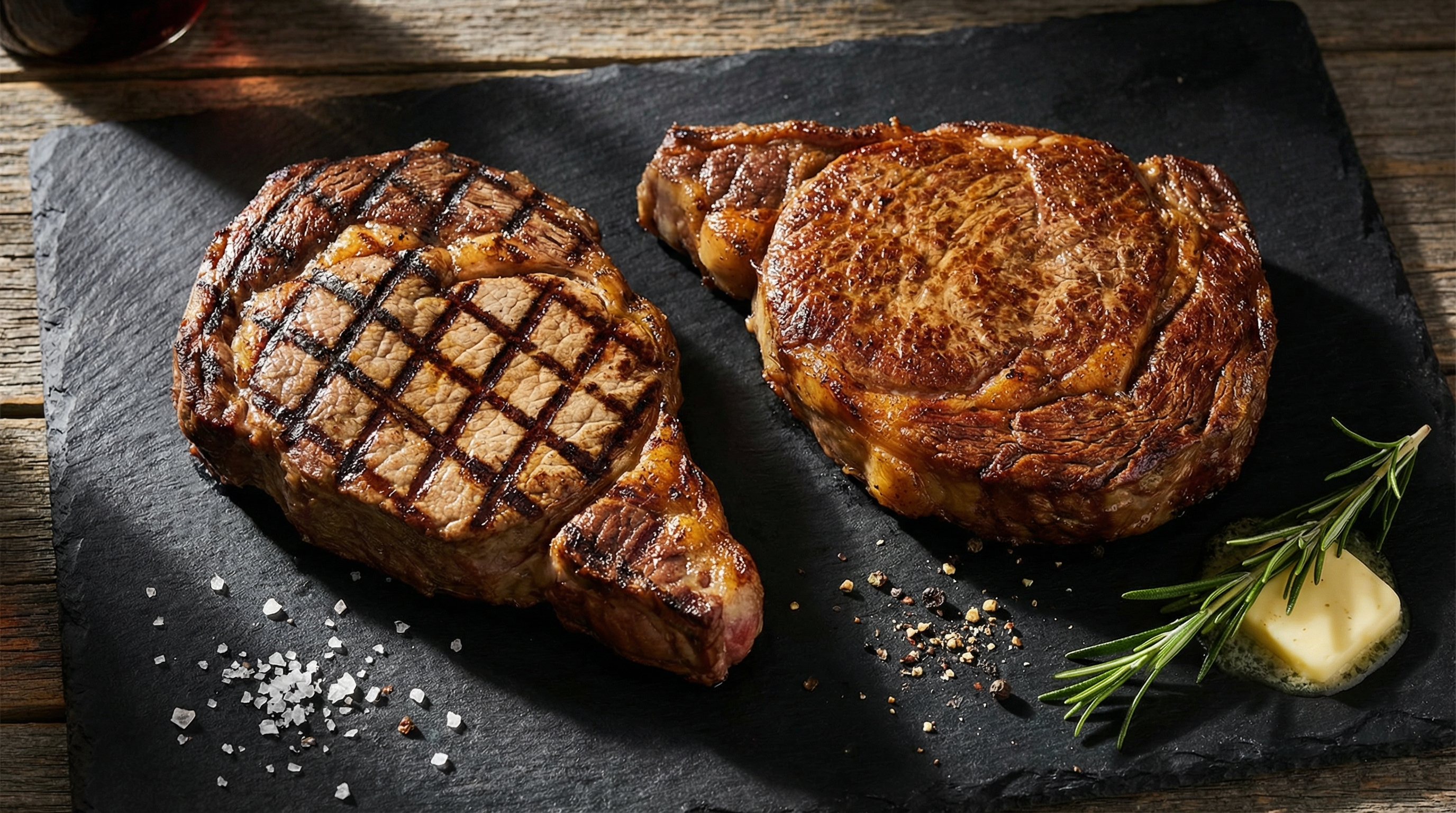
Grill marks are the universal badge of outdoor cooking. Those dark crosshatched lines on a steak signal to everyone at the table that this meat was cooked over real fire, by someone who knows what they are doing. Restaurants print grill marks on chicken breasts that were actually cooked in an oven. Food stylists paint them on with blowtorches. The entire visual language of grilled food is built around those parallel lines.
But here is the uncomfortable truth that competition pitmasters, professional chefs, and food scientists have known for years: grill marks produce less flavor than a full sear. Significantly less. The science is not ambiguous. And once you understand why, you will never look at those photogenic lines the same way again.
The Geometry Problem: Surface Contact Area
A standard grill grate consists of round metal bars spaced roughly half an inch apart. When you place a steak on these bars, the meat only contacts the top of each bar — a narrow strip maybe 3-4 millimeters wide. Add up all those contact strips across the surface of a typical ribeye, and you are looking at approximately 10-15% of the total steak surface making direct contact with hot metal.
The remaining 85-90% of the steak surface sits in the gaps between the bars. It receives radiant heat from below and convective heat from the surrounding hot air, but it does not touch any hot surface directly. This matters enormously because of how the Maillard reaction works.
The Maillard Reaction Requires Direct Contact Heat
The Maillard reaction — the chemical process that creates the brown crust, the complex flavors, and the aromatic compounds we associate with perfectly cooked meat — is a surface reaction. It occurs when amino acids and reducing sugars on the meat surface are heated above approximately 280°F (138°C). The reaction accelerates dramatically above 350°F and becomes rapid above 400°F.
Here is the critical detail: the Maillard reaction requires the meat surface itself to reach these temperatures. Ambient air temperature alone is not sufficient. Hot air at 500°F transfers heat to the meat surface far more slowly than direct contact with a 500°F metal surface. This is the difference between convective and conductive heat transfer, and it is why the distinction between grill marks and a full sear is not cosmetic — it is chemical.
On a grill grate, only the narrow contact strips reach Maillard temperatures quickly. The gaps between the marks may eventually brown slightly from radiant and convective heat, but by the time that happens, the steak interior has cooked well past the target temperature. You cannot get uniform browning from a grill grate without overcooking the interior.
Quantifying the Flavor Difference
Food scientists have measured the volatile compounds produced by the Maillard reaction under controlled conditions. A steak seared on a flat cast iron surface at 500°F for 90 seconds per side produces measurably higher concentrations of pyrazines (nutty, roasted flavors), thiophenes (meaty, savory aromas), furanones (caramel notes), and Strecker aldehydes (complex malty and chocolate-like flavors) compared to the same steak cooked on a grill grate for the same duration.
The difference is not subtle. In blind taste tests, panels consistently prefer the flavor of fully seared steaks over grill-marked steaks, even when both are cooked to identical internal temperatures. The preference is especially strong with fattier cuts like ribeye, where the rendered fat on the surface participates in additional Maillard reactions when it contacts a hot flat surface.
What Grill Marks Actually Are
Each grill mark is a concentrated zone of intense Maillard browning — temperatures exceeding 500°F where the metal bar presses into the meat. The proteins and sugars in these narrow bands undergo the same chemistry as a full sear, but only in those tiny strips. Between the marks, the surface is essentially steamed by its own moisture and gently heated by radiation from the coals or burners below.
The result is a steak with dramatic visual contrast — dark brown marks against a lighter, grayish surface — but inconsistent flavor. Each bite that hits a grill mark tastes different from a bite that catches the pale area between marks. A fully seared steak, by contrast, delivers uniform crust flavor in every single bite.
The Physics of Conduction vs Convection vs Radiation
Understanding why full sears beat grill marks requires understanding three types of heat transfer:
Conduction is direct contact heat transfer. Metal touching meat. This is the most efficient method for surface browning because there is no air gap, no insulating layer. The energy transfer rate is determined by the temperature difference and the thermal conductivity of the materials. Cast iron against beef transfers heat roughly 20 times faster than hot air against beef at the same temperature.
Convection is heat transfer through moving air or liquid. On a grill, the hot air circulating around the meat provides convective heating. This cooks the interior effectively but is too slow for rapid surface browning. A steak sitting in 500°F air takes several minutes to brown its surface, during which time the interior overcooks.
Radiation is electromagnetic heat transfer from the coals or gas flames below. This is significant on a grill — infrared radiation from glowing charcoal can deliver considerable energy. But radiation heats the entire underside of the steak somewhat evenly, which means it cannot create the intensely concentrated browning that direct metal contact provides.
On a grill grate, your steak gets conduction only on the 10-15% contact strips, convection from the surrounding air, and radiation from below. On a flat cast iron surface, conduction covers nearly 100% of the steak face. The math overwhelmingly favors the flat surface for Maillard browning.
The Moisture Problem
There is another factor working against grill marks: moisture. When meat cooks, the surface releases water vapor. On a flat pan, this moisture is squeezed out from between the meat and the metal, allowing the surface to dry and brown rapidly. On a grill grate, moisture released from the gaps between the bars has nowhere to go — it sits on the meat surface, keeping the temperature at 212°F (the boiling point of water) and actively preventing the Maillard reaction.
This is why steaks on a grill often develop a grayish, steamed appearance between the marks. The surface never gets hot enough to brown because it is continuously being cooled by evaporating moisture. Only the compressed strips directly under the grate bars get hot enough to overcome this moisture barrier through sheer conductive force.
When Grill Marks Win
Full sears are not universally superior. Grill marks have genuine advantages in several scenarios:
Thin or delicate foods. A piece of fish, a thin chicken breast, or sliced vegetables will overcook on a screaming hot flat surface before developing good color. Grill marks provide enough browning for flavor while limiting total heat transfer to prevent overcooking. The reduced contact area is actually a feature here, not a bug.
Smoke flavor. On a grill, drippings fall through the grate and vaporize on the coals or heat deflectors below, sending flavorful smoke back up through the food. This smoke contribution is a significant part of what makes grilled food taste grilled. A flat pan captures the drippings (which is great for pan sauces) but eliminates the smoke flavor pathway.
Fat rendering. Thick fat caps on steaks or chops benefit from the radiant heat coming from below the grate, which renders the fat from both sides simultaneously. On a flat surface, only the side touching the pan renders at any given time.
High volume cooking. For feeding a crowd, grill grates are more practical than flat surfaces. You can cook 12 steaks on a grill simultaneously. Achieving the same flat-surface sear would require multiple large cast iron pans or a commercial flat-top griddle.
Presentation. In professional kitchens and at home alike, grill marks simply look more appealing to most people. Visual presentation matters. If you are cooking for guests who eat with their eyes first, pristine crosshatch marks win over a uniform brown crust every time, even if the crust tastes better.
The Best of Both Worlds: Hybrid Methods
The smartest approach combines both techniques. Several methods achieve this:
Reverse sear with grill finish. Cook the steak low and slow (indirect heat, oven, or smoker) to 10-15°F below your target internal temperature. Then sear on a blazing hot cast iron pan or flat-top for 60-90 seconds per side. You get the uniform crust of a full sear with the even interior of slow cooking. If you want grill marks for presentation, finish with 30 seconds on a hot grill grate after the pan sear.
GrillGrate panels. These aftermarket accessories replace standard round grate bars with flat aluminum rails that increase the contact area to roughly 40-50% of the steak surface. They do not provide the full 100% contact of a flat pan, but they significantly increase browning compared to standard grates while maintaining some smoke flavor from the gaps.
Cast iron on the grill. Place a cast iron skillet or plancha directly on your grill grates. You get the conductive searing advantage of flat metal plus the ambient smoke and heat management of the grill. Many competition barbecue teams use this exact setup for their steak entries.
Press and sear. Use a heavy grill press or another preheated cast iron pan on top of the steak while it cooks on the grill grate. The weight presses more of the meat surface into contact with the grate bars, increasing browning. This technique also works on a flat surface to ensure maximum contact with steaks that are not perfectly flat.
Temperature Management for Maximum Crust
Regardless of which method you choose, surface temperature management determines crust quality:
Preheat aggressively. Whether using a grill grate or cast iron, the cooking surface must be at least 450°F before the steak goes on. For cast iron, 500-600°F is ideal. Use an infrared thermometer to verify. Placing a steak on a surface that is not hot enough leads to steaming instead of searing.
Dry the surface. Pat the steak completely dry with paper towels immediately before cooking. Surface moisture is the enemy of browning. Some cooks go further, salting the steak and leaving it uncovered in the refrigerator for 12-24 hours to dry the surface through evaporation — the dry brine method.
Use high smoke point oil. A thin coat of avocado oil (smoke point 520°F) or refined safflower oil (smoke point 510°F) on the steak creates a thin lipid layer that improves thermal contact between the meat and the cooking surface, accelerating browning. Avoid butter or olive oil for the initial sear — they smoke and burn below optimal searing temperatures.
Do not move the steak. Whether on a grate or a flat surface, leave the steak untouched for at least 60 seconds after placing it. Moving it breaks the developing crust, releases moisture, and drops the surface temperature. The steak will release naturally from the cooking surface when the crust has properly formed.
The Science Is Clear — But Cooking Is Not Just Science
If your only goal is maximum flavor, a full sear on a flat surface beats grill marks every time. The physics of heat transfer and the chemistry of the Maillard reaction are unambiguous on this point. More surface browning equals more flavor compounds equals better tasting steak.
But cooking is also about experience, presentation, tradition, and enjoyment. The smell of a steak sizzling over charcoal, the smoke curling up through the grate, the satisfaction of lifting the lid to see perfect diamond crosshatch marks — these things matter too. They are not measurable in a laboratory, but they are real.
The best approach is to understand the science and then make an informed choice. Sometimes you want maximum flavor and you reach for the cast iron. Sometimes you want the full grill experience and you embrace the marks. And sometimes you do both, because now you know how.
Frequently Asked Questions
Are grill marks just for looks or do they add flavor?
Grill marks do add flavor — but only on the narrow strips where the metal grate contacts the meat. Those strips undergo intense Maillard browning and some caramelization. However, the pale areas between the marks receive almost no direct contact heat and remain essentially un-seared. A full sear browns the entire surface, producing roughly 5-7 times more total Maillard reaction products than grill marks alone.
Why does a cast iron sear taste better than grill marks?
Cast iron provides flat, full-contact heat transfer across the entire steak surface. Every square millimeter of meat touches the hot metal simultaneously, triggering uniform Maillard browning. Grill grates only contact about 10-15% of the surface. More browned surface area means more flavor compounds — hundreds of distinct molecules including pyrazines, thiophenes, and furanones that create the complex savory taste we associate with a great sear.
What temperature do you need for a proper full sear?
The Maillard reaction accelerates significantly above 300°F (149°C) and becomes rapid above 400°F (204°C). For a full sear on cast iron or a flat-top griddle, preheat the surface to 500-600°F (260-316°C). At these temperatures, a steak develops a deep brown crust in 60-90 seconds per side. Going above 600°F risks burning the exterior before the Maillard reaction completes.
Can you get a full sear on a regular grill?
Yes, but it requires modification. A cast iron grate, GrillGrate panels, or placing a cast iron skillet directly on the grill grates all provide the flat contact surface needed for a full sear. Some high-end grills include sear stations with infrared burners or solid plates designed specifically for full-contact searing. The key is replacing the round bars of a standard grate with a flat cooking surface.
When are grill marks actually better than a full sear?
Grill marks are preferable for delicate proteins like fish fillets, thin vegetables, and items that would overcook with prolonged flat-surface contact. The reduced contact area means less total heat transfer, which helps thin foods stay tender. Grill marks also provide the smoky char flavor from drippings hitting the flames below — something a flat pan cannot replicate. For presentation-focused cooking like restaurant plating or food photography, grill marks remain the standard.
More Expert Guides
Steak Doneness Temperature Guide: The Science of Every Level from Rare to Well Done
Every degree matters. This science-backed guide covers the exact internal temperatures for every steak doneness level, why each temperature produces a different texture, and how to nail your target every time.
14 min readDirect vs Indirect Heat Grilling: The Science of Two-Zone Cooking
Direct heat sears. Indirect heat roasts. Understanding the physics of each — and when to combine them — is the foundation of every great grilling technique.
14 min readResting Meat After Cooking: The Science of Why It Makes Every Steak Juicier
Resting meat after cooking is not optional — it is physics. Here is exactly what happens inside the steak during those crucial minutes and how long to rest every cut.