Reverse Sear Ribeye Internal Temp Guide: The Science of Doneness
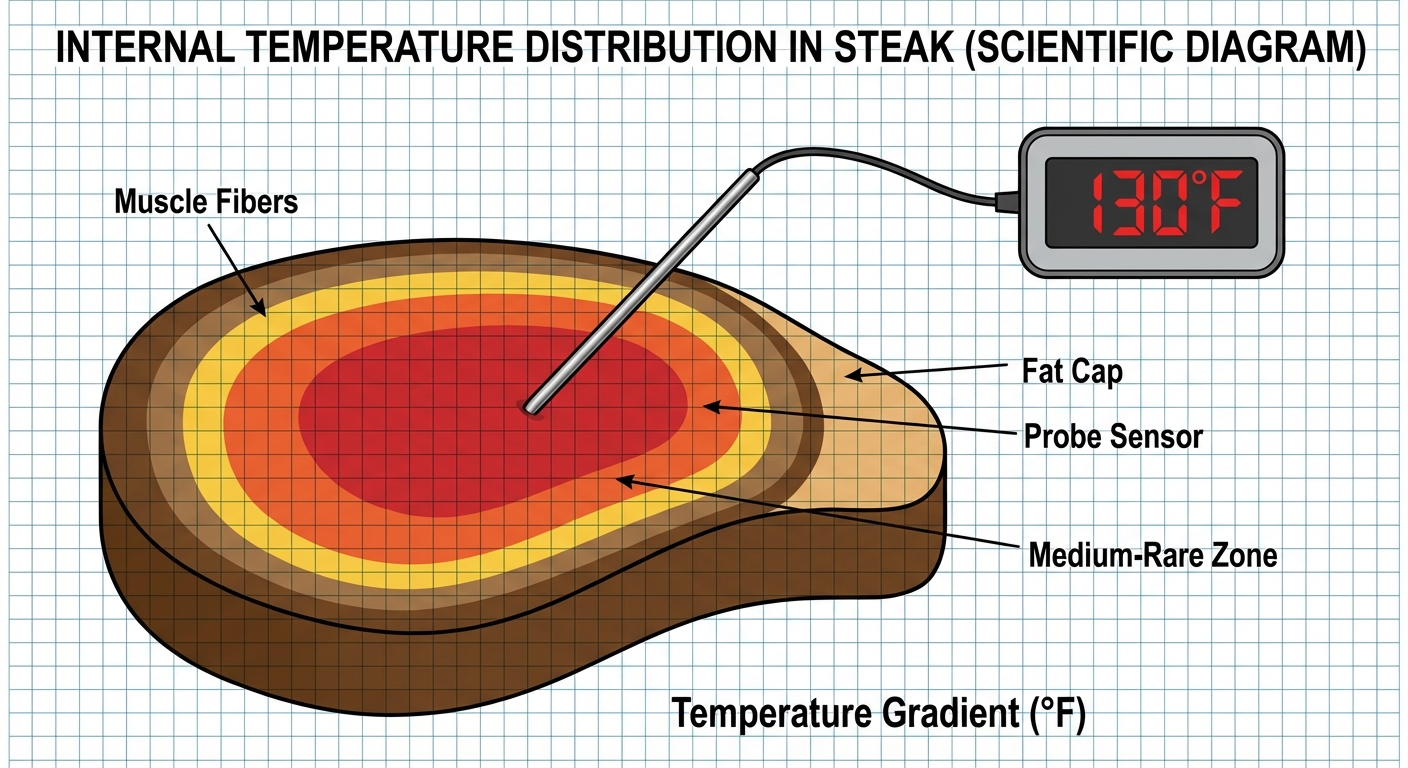
Cooking a steak isn't art; it's thermodynamics. The single most common mistake home cooks make with the reverse sear method is failing to account for carryover cooking and thermal momentum.
Most people know they want to eat a medium-rare steak at 130°F. So they cook it in the oven until the thermometer says 130°F. Then they sear it. Then they rest it.
By the time they cut into it, that steak is 142°F. It's Medium-Well. They ruined it.
Here is the physics of why that happens, and the precise temperature chart you need to follow.
The Thermal Physics of Reverse Searing
When you reverse sear, you are building thermal mass slowly. The entire steak reaches equilibrium. When you move it to the searing pan (which is 500°F+), you are injecting a massive amount of energy into the outer 2mm of the meat.
That energy doesn't just stay on the crust. It travels inward via conduction. Even after you remove the steak from the pan, that heat energy continues to travel toward the center. This is called "Carryover Cooking."
The Reverse Sear Temperature Chart
These are the temperatures to PULL the steak from the low-temp oven (Phase 1), assuming a 1.5-inch ribeye and a 2-minute total sear time.
| Target Doneness | PULL from Oven At | Final Rested Temp |
|---|---|---|
| Blue Rare | 95°F | 110-115°F |
| Rare (Cool Red Center) | 105-110°F | 120-125°F |
| Medium-Rare (Warm Red) | 115-120°F | 130-135°F |
| Medium (Warm Pink) | 125-130°F | 140-145°F |
| Medium-Well (Slight Pink) | 135-140°F | 150-155°F |
| Well Done | 145°F+ | 160°F+ |
The Golden Rule: Always pull your steak 10–15°F below your target final temperature. Whether you're cooking a USDA Prime ribeye or a wagyu ribeye from The Meatery, this rule is non-negotiable.
Why Ribeyes are Tricky
Ribeyes have high intramuscular fat content (marbling) and a large spinalis cap separated by a layer of fat. Fat insulates. It heats up slower than lean muscle but holds onto heat longer.
For a ribeye, I recommend aiming for the higher end of Medium-Rare (135°F final). Why? Because the fat doesn't fully render or soften until about 130°F. A Rare (120°F) ribeye will have a waxy, unrendered mouthfeel. A 135°F ribeye will be juicy and buttery.
The Searing Variable
The variable that messes up your math is Sear Time.
- Sear 1 min/side: Adds ~5-7°F to internal temp.
- Sear 2 min/side: Adds ~10-15°F to internal temp (and risks gray band).
If you like a dark, heavy crust and plan to sear for longer, pull the steak from the oven 5 degrees earlier (e.g., at 110°F for Med-Rare).
Frequently Asked Questions
Does the thickness of the steak matter?
Yes. A thinner steak (1 inch) heats up faster during the sear. Pull a thin steak 15-20°F below target. A thick steak (2+ inches) has more thermal mass protecting the center, so pull it 10-12°F below target.
Should I rest the steak between the oven and the sear?
Yes! Resting for 10-15 minutes after the oven allows the surface to cool slightly and dry out. This prevents the "gray band" of overcooked meat under the crust. It acts as a thermal buffer.
What is the perfect temp for Ribeye?
Scientifically, 133°F to 135°F is optimal for Ribeye. This is warm enough to render the soft lipids in the marbling, maximizing flavor and juiciness, without contracting the muscle fibers enough to lose moisture.
More Expert Guides
Steak Doneness Temperature Guide: The Science of Every Level from Rare to Well Done
Every degree matters. This science-backed guide covers the exact internal temperatures for every steak doneness level, why each temperature produces a different texture, and how to nail your target every time.
14 min readDirect vs Indirect Heat Grilling: The Science of Two-Zone Cooking
Direct heat sears. Indirect heat roasts. Understanding the physics of each — and when to combine them — is the foundation of every great grilling technique.
14 min readResting Meat After Cooking: The Science of Why It Makes Every Steak Juicier
Resting meat after cooking is not optional — it is physics. Here is exactly what happens inside the steak during those crucial minutes and how long to rest every cut.