Two-Zone Grilling: The Setup That Makes Everything Better
Two-Zone Grilling: The Setup That Makes Everything Better
If you are cooking everything over one uniform layer of coals, you are grilling with one hand tied behind your back.
Two-zone grilling is the single most important technique that separates people who grill from people who understand grilling. It is dead simple to set up, costs nothing, and instantly gives you the heat control that most backyard cooks think requires a $2,000 smoker.
Here is the concept: one side hot, one side not. That is it. But the science behind why this transforms your results is worth understanding.
What Is Two-Zone Grilling?
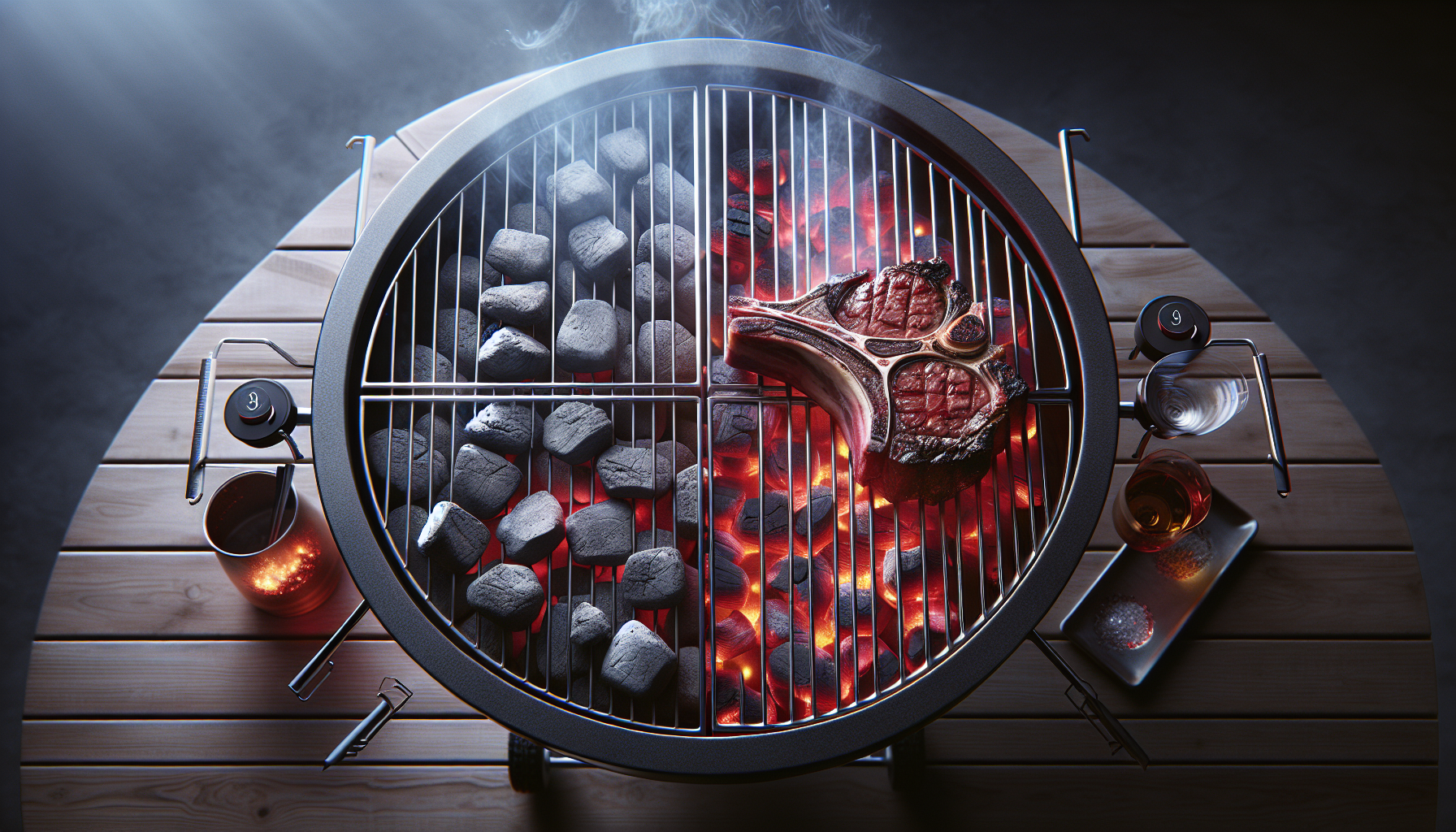
Two-zone grilling means creating two distinct temperature areas in your grill:
- Direct zone: Directly over the heat source (coals or burners). Temperatures range from 450°F to 700°F+ depending on fuel and airflow.
- Indirect zone: No heat source underneath. The food cooks by convection — hot air circulating around it — at temperatures typically between 250°F and 400°F.
This gives you a searing station and an oven in the same piece of equipment. You can move food between zones at any time, giving you real-time temperature control that a single-zone setup simply cannot provide.
The Science: Why Two Zones Beat One
Heat Transfer Modes
When food sits directly over coals, it receives heat through three mechanisms simultaneously:
- Radiation: Infrared energy radiating from the glowing coals. This is the dominant heat source in direct grilling and is what creates char and crust.
- Conduction: Heat transferring through the metal grates into the food at the contact points. This creates grill marks.
- Convection: Hot air rising from the coals and circulating around the food. This contributes the least in direct grilling but matters most in indirect.
On the indirect side, convection becomes the primary heat transfer mechanism. The hot air from the direct zone rises, circulates under the lid, and envelops the food evenly — exactly like a convection oven.
This distinction matters because radiation cooks surfaces fast while convection cooks interiors gradually. A single-zone grill forces you to manage both with the same heat source. Two zones let you separate them.
The Temperature Gradient Problem
Remember the gray band problem from the reverse sear? Single-zone grilling creates the same issue. When you grill a thick steak over high direct heat only, the exterior reaches 400°F+ while the center is still at 60°F. The result: a well-done outer ring surrounding a rare center.
Two-zone grilling solves this. Start the steak on the indirect side to bring the internal temperature up gradually (minimizing the gradient), then move it to the direct side for a quick, hard sear. Or reverse it — sear first, then move to indirect to finish gently.
Either way, you get edge-to-edge even doneness with a properly developed crust.
How to Set Up Two-Zone Grilling
Charcoal Grill (Weber Kettle)
- Light your charcoal (chimney starter, 3/4 full for most cooks)
- Pour all the lit coals onto one half of the charcoal grate
- Leave the other half completely empty
- Replace the cooking grate
- Put the lid on with the top vent over the indirect side (this pulls heat and smoke across the food)
Pro tip: Place a disposable aluminum pan on the empty side under the grate. It catches drippings (preventing flare-ups) and you can fill it with water to add humidity and stabilize temperatures.
Gas Grill
- Turn one or two burners to your desired heat level
- Leave the remaining burners off
- Close the lid and preheat for 10-15 minutes
Gas grills make two-zone even easier, but you lose the flavor benefits of charcoal. The radiant heat from gas burners is also less intense than glowing coals, so your sear will not be quite as aggressive.
Temperature Targets
| What You Are Cooking | Direct Zone | Indirect Zone | Lid Position |
|---|---|---|---|
| Steaks (sear + finish) | 550-700°F | 250-300°F | Open for sear, closed for indirect |
| Chicken pieces | 450-500°F | 350-375°F | Closed |
| Whole chicken | 450-500°F | 350-375°F | Closed, bird on indirect |
| Pork chops | 500-600°F | 300-350°F | Closed |
| Burgers (thick) | 450-500°F | 300-350°F | Open for sear |
| Vegetables | 400-500°F | N/A | Open or closed |
| Fish fillets | 400-450°F | 300°F | Closed |
When Two-Zone Grilling Changes Everything
Thick Steaks (1.5 Inches and Up)
This is where two-zone grilling pays the biggest dividends. Any steak over 1.5 inches thick should not be cooked entirely over direct heat. The math does not work — by the time the center reaches your target temp, the outside is overcooked.
Method: Start on indirect at 250°F until the internal temperature hits 10-15°F below your target (accounting for carryover cooking). Then move to the screaming-hot direct side for 60-90 seconds per side. You will get a perfect medium-rare from edge to edge with a Maillard-crusted exterior.
This technique works beautifully with high-quality cuts like American Wagyu ribeyes from The Meatery.
Bone-In Chicken
Chicken pieces are the nightmare scenario for single-zone grilling. Breasts cook faster than thighs. Skin renders fat that causes flare-ups. The sugar in BBQ sauce burns before the meat is cooked through.
Method: Start all pieces on indirect heat with the lid closed. Once the internal temp hits 155°F, move pieces to direct heat to crisp the skin and caramelize any sauce. The indirect phase cooks the meat through safely; the direct phase is only for texture.
Flare-Up Insurance
Flare-ups happen when fat drips onto hot coals or burners. On a single-zone grill, you have nowhere to move the food — you either close the lid (smothering the fire but steaming your food) or pull the food off entirely.
With two zones, you just slide the food to the indirect side. The flare-up burns out in seconds with no fuel source, and your food stays on the grill the whole time.
Common Mistakes
1. Not Preheating the Indirect Side
The indirect zone needs time to come to temperature. With the lid closed, it takes 10-15 minutes for the air temperature to stabilize. Do not put food on the indirect side until the ambient temperature (measured at grate level) is where you want it.
2. Peeking Too Much
Every time you lift the lid, you dump all the hot air from the indirect zone. On a charcoal grill, it takes 5-10 minutes to recover. The old saying is right: "If you are lookin', you ain't cookin'." This applies specifically to the indirect zone — direct grilling with the lid open is fine for thin cuts.
3. Overcrowding the Direct Zone
If you pack the direct zone with food, you block radiant heat and create steam from the moisture released. The result: gray, steamed meat instead of seared, crusted meat. Work in batches on the direct side.
4. Ignoring Vent Position
On a charcoal grill, the top vent position determines airflow direction. Position the top vent over the indirect side to pull heat and smoke from the direct side across your food before exiting. This maximizes the convection effect and adds smoke flavor.
Two-Zone vs. Other Setups
| Setup | Best For | Limitation |
|---|---|---|
| Two-zone | Most grilling situations | One zone runs hotter on the edge nearest the coals |
| Three-zone (hot/medium/cool) | Large cooks with multiple items | Harder to maintain on small grills |
| Ring of fire (coals around edges) | Beer can chicken, whole roasts | Cannot sear without rearranging |
| Snake method (C-shaped coal line) | Low-and-slow smoking (6+ hours) | No direct heat zone |
| Single-zone | Thin cuts only (burgers, hot dogs, veggies) | No temperature escape route |
The Bottom Line
Two-zone grilling is not an advanced technique. It is a fundamental one. Once you start cooking this way, you will wonder how you ever managed with a single wall of heat.
Set up two zones every single time you grill. Even if you think you will not need the indirect side, you will. Whether it is a flare-up escape, a holding zone for finished pieces, or the key to perfectly cooking a thick cut — that empty side of the grill is the most useful space in your entire outdoor cooking setup.
The best part? It costs nothing. No special equipment. No gadgets. Just push your coals to one side and start cooking smarter.
Frequently Asked Questions
What is two-zone grilling?
Two-zone grilling means creating two distinct heat areas in your grill: a direct zone (directly over coals or burners, 450-700°F) for searing, and an indirect zone (no heat source underneath, 250-400°F) for gentle cooking. This gives you a searing station and an oven in one piece of equipment.
How do you set up a two-zone fire on a charcoal grill?
Light your charcoal in a chimney starter, then pour all the lit coals onto one half of the charcoal grate. Leave the other half completely empty. Replace the cooking grate and put the lid on with the top vent positioned over the indirect (empty) side to pull heat and smoke across the food.
Why is two-zone grilling better than single-zone?
Single-zone grilling forces you to cook with one temperature. Two-zone gives you real-time control: sear over direct heat for crust, then move to indirect for gentle cooking. This prevents the overcooked exterior and raw center problem with thick cuts, and gives you an escape zone for flare-ups.
Do you need two-zone grilling for thin steaks?
Not usually. Steaks under 1 inch cook so quickly that the temperature gradient does not have time to become a problem. Direct heat only works fine for thin cuts like skirt steak, flank steak, and burgers. Two-zone becomes essential for steaks 1.5 inches and thicker.
Should the lid be open or closed with two-zone grilling?
For the direct searing phase on thin cuts, the lid can be open. For indirect cooking, always close the lid — the closed lid traps hot air and creates the convection oven effect that cooks the food evenly. Every time you open the lid, you lose 5-10 minutes of built-up heat in the indirect zone.
More Expert Guides
Steak Doneness Temperature Guide: The Science of Every Level from Rare to Well Done
Every degree matters. This science-backed guide covers the exact internal temperatures for every steak doneness level, why each temperature produces a different texture, and how to nail your target every time.
14 min readDirect vs Indirect Heat Grilling: The Science of Two-Zone Cooking
Direct heat sears. Indirect heat roasts. Understanding the physics of each — and when to combine them — is the foundation of every great grilling technique.
14 min readResting Meat After Cooking: The Science of Why It Makes Every Steak Juicier
Resting meat after cooking is not optional — it is physics. Here is exactly what happens inside the steak during those crucial minutes and how long to rest every cut.