Fat Cap Up or Down? The Science That Settles the BBQ Debate
Fat Cap Up or Down? The Science That Settles the BBQ Debate
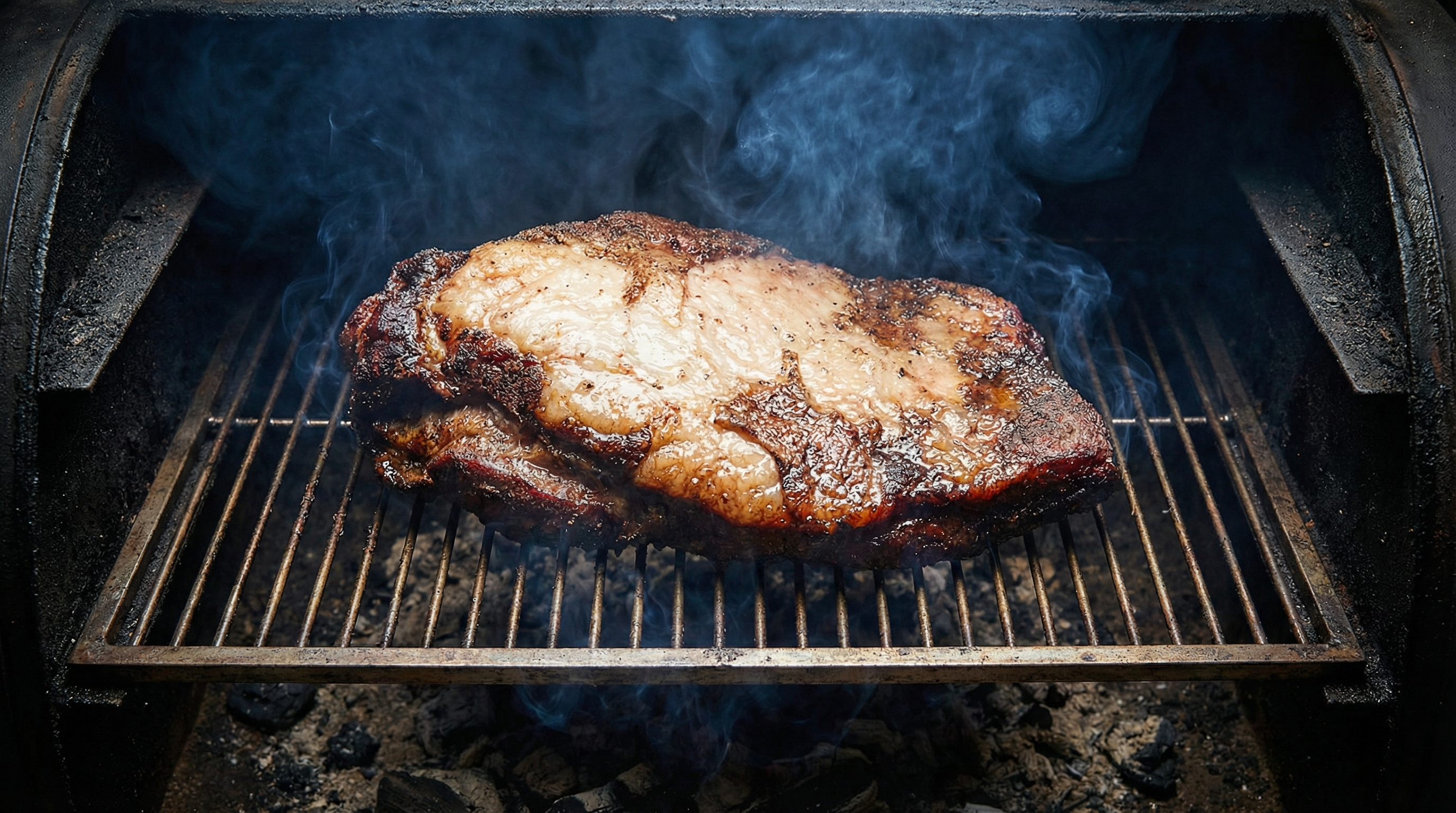
Ask ten pitmasters whether you should smoke brisket fat cap up or fat cap down, and you'll get ten passionate answers — most of them contradictory. It's one of the oldest arguments in barbecue, and people on both sides are absolutely convinced they're right.
Here's the thing: they're both right. And they're both wrong. The correct answer depends entirely on one variable that most people never consider — where the heat comes from in your specific smoker.
Once you understand the physics of heat transfer, fat rendering, and bark formation, the fat cap debate stops being an argument and becomes a straightforward engineering decision.
The Fat Cap: What It Actually Is
The fat cap is a thick layer of subcutaneous fat — the fat that sits between the hide and the muscle — on one side of a beef brisket. On a whole packer brisket, this cap ranges from ¼ inch to over 1 inch thick depending on the animal and how the packer trimmed it.
This fat is fundamentally different from intramuscular fat (marbling). Intramuscular fat is distributed throughout the muscle fibers and renders during cooking, contributing directly to moisture and flavor inside the meat. The fat cap sits on top of the muscle. It's a solid slab of adipose tissue that behaves very differently during a long cook.
Understanding this distinction is critical because the fat cap up crowd's main argument — "the fat melts down through the meat, basting it" — depends on the fat cap working like intramuscular fat. It doesn't.
The "Self-Basting" Myth: Why Fat Doesn't Penetrate Meat
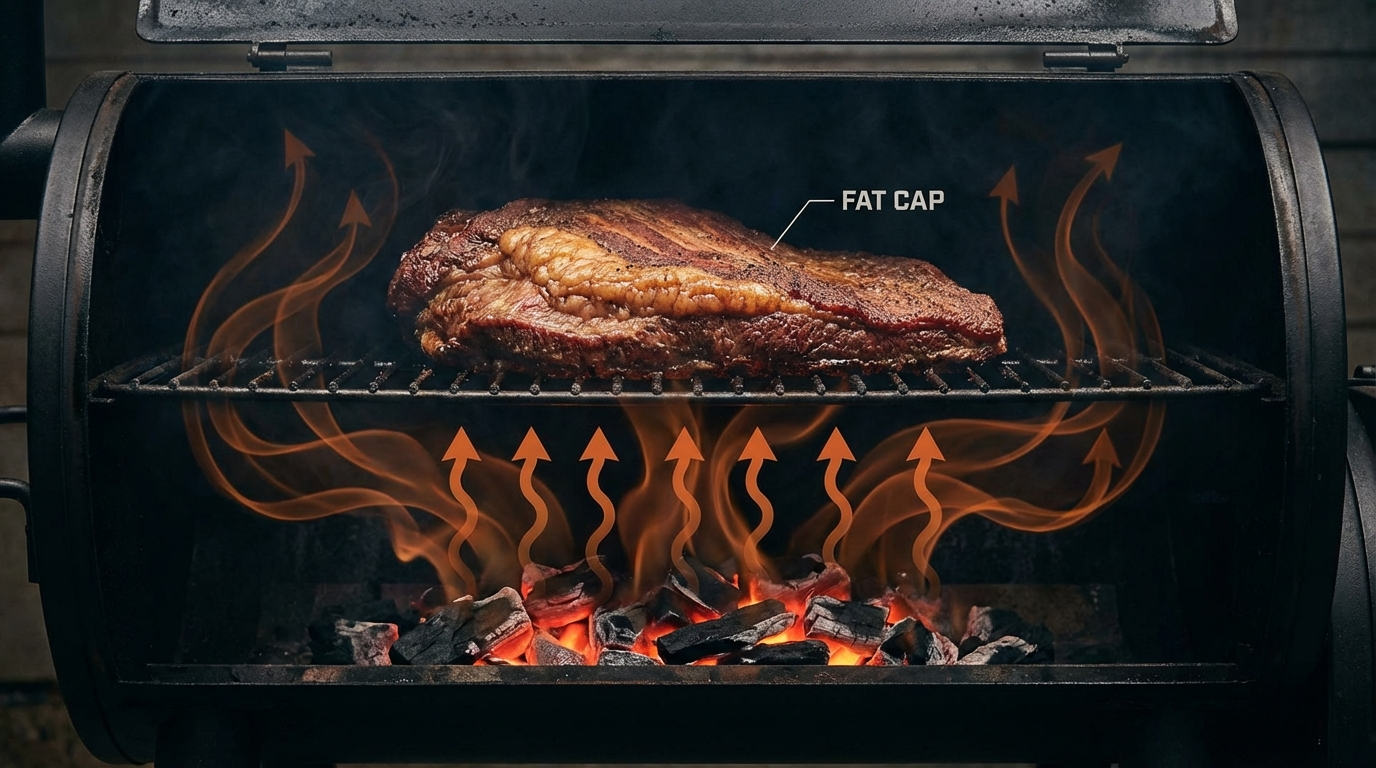
The most persistent myth in BBQ is that placing the fat cap up allows rendered fat to drip down through the meat, basting it from within. This sounds logical. It's also physically impossible.
Muscle fiber is not a sponge. Meat is made of tightly bundled protein fibers surrounded by connective tissue. When fat renders on the surface, it flows over the meat and off the sides — it doesn't penetrate into the muscle structure. The same way water runs off a tightly woven fabric rather than soaking through it, rendered fat slides across the meat's surface.
This has been tested extensively. Food scientist Dr. Greg Blonder (genuineideas.com) conducted controlled experiments placing dyed fat on top of cooking meat and tracking where it went. The result: rendered fat flows laterally across the surface and drips off. Virtually none penetrates more than a few millimeters into the muscle.
The moisture inside your brisket comes from two sources: the water already present in the muscle fibers (about 70% of raw meat's weight is water) and the rendered intramuscular fat within the meat itself. The fat cap doesn't meaningfully contribute to internal moisture regardless of which direction it faces.
Heat Source Location: The Only Variable That Matters
If the fat cap doesn't baste the meat, what does it do? It acts as a heat shield. And this is where the real science comes in.
Fat is a thermal insulator. It has a lower thermal conductivity than lean muscle (about 0.17 W/m·K for fat vs. 0.45 W/m·K for lean beef). That means heat passes through fat roughly 2.5 times slower than through lean meat. A thick fat cap absorbs and slows incoming heat before it reaches the muscle fibers beneath it.
This insulating property is the entire basis for the fat cap decision:
- Fat cap toward the heat source = the fat shields the meat from the most intense heat, preventing the side closest to the heat from drying out or overcooking.
- Fat cap away from the heat source = the lean muscle is exposed directly to the hottest zone, risking drying and uneven cooking on that side.
This means the correct orientation depends entirely on your smoker's design.
Smoker Type Determines Fat Cap Position
Every smoker delivers heat differently. Here's the breakdown by smoker type:
Offset Smokers — Fat Cap Down
In a traditional offset smoker, the firebox is to the side and the heat flows across the bottom of the cooking chamber. The hottest zone is directly below the grate. In this configuration, fat cap down positions the fat between the meat and the most intense heat source, protecting the flat from drying out.
This is why most competition pitmasters using offset smokers cook fat cap down. It's not tradition — it's thermodynamics.
Bullet/Vertical Smokers (Weber Smokey Mountain, Pit Barrel) — Fat Cap Down
Vertical smokers place the heat source (charcoal, wood, or gas burner) directly below the cooking grate. Heat rises straight up. Again, fat cap down shields the meat from the direct heat below.
The Pit Barrel Cooker is an exception worth noting — briskets hang vertically, so the fat cap orientation matters less than the hook placement.
Kamado Grills (Big Green Egg, Kamado Joe) — Fat Cap Down
Kamado grills have a bottom-fire design with a heat deflector plate. Even with the deflector, radiant heat is strongest from below. Fat cap down is the standard recommendation.
Pellet Grills (Traeger, RecTeq, Green Mountain) — Fat Cap Down (Usually)
Most pellet grills have a firepot on the bottom with a heat deflector/drip tray. Heat circulates via a fan but is still hottest near the bottom. Fat cap down works for most models. However, some pellet grills with aggressive fan convection distribute heat more evenly — in those cases, fat cap position matters less.
Top-Down Heat (Some Cabinet Smokers, Overhead Burners) — Fat Cap Up
If your smoker delivers heat primarily from above (some electric cabinet smokers, or if you're cooking under a gas broiler), fat cap up is the correct choice. The fat shields the meat from the overhead heat source.
What About Bark Formation?
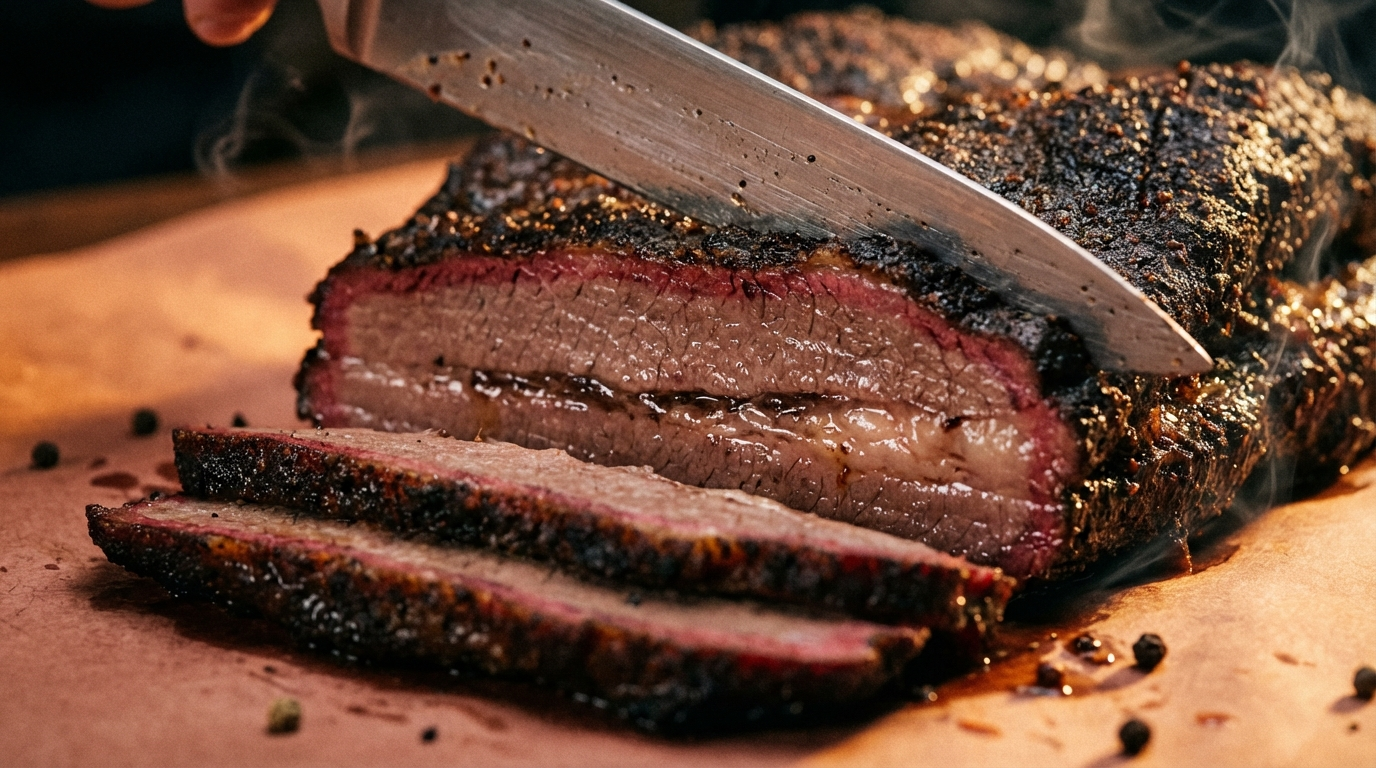
Bark — that dark, flavorful, slightly crunchy exterior — is formed by the Maillard reaction and the dehydration of the meat's surface combined with your rub. Bark forms best on lean, exposed surfaces where moisture can evaporate and the surface temperature can exceed 250°F.
Fat doesn't form bark. The fat cap side of a brisket will never develop the same crusty, seasoned exterior that the lean side does. Rendered fat creates a slick, wet surface that resists the dehydration needed for bark formation.
This creates a secondary argument for fat cap down: with the fat side facing down (toward the heat), the entire lean top surface is exposed to smoke and dry heat, maximizing bark development across the surface you'll actually see and taste when you slice.
When you cook fat cap up, some of the rendered fat flows over the sides and lean surfaces, washing away rub and inhibiting bark formation. You end up with a beautiful fat cap on top that you'll trim off before serving, and less bark on the meat everyone actually eats.
The Fat Cap as a Sacrificial Layer
Here's a concept that reframes the entire debate: think of the fat cap as a sacrificial heat shield.
In a long cook (10-16 hours for brisket), the side closest to the heat source takes the most thermal punishment. Without the fat cap protecting it, that side dries out first. The muscle fibers on the heat-facing side contract more, squeeze out more moisture, and overcook relative to the opposite side.
By placing the fat cap toward the heat, you're deliberately sacrificing the fat (which you'll trim off anyway) to protect the lean muscle. The fat absorbs the brunt of the radiant heat, renders slowly, and drips away — all while keeping the lean meat underneath more evenly cooked.
When the cook is done, you trim the remaining fat cap and serve the protected, evenly cooked lean meat. The fat did its job and gets discarded.
How to Trim the Fat Cap Before Smoking
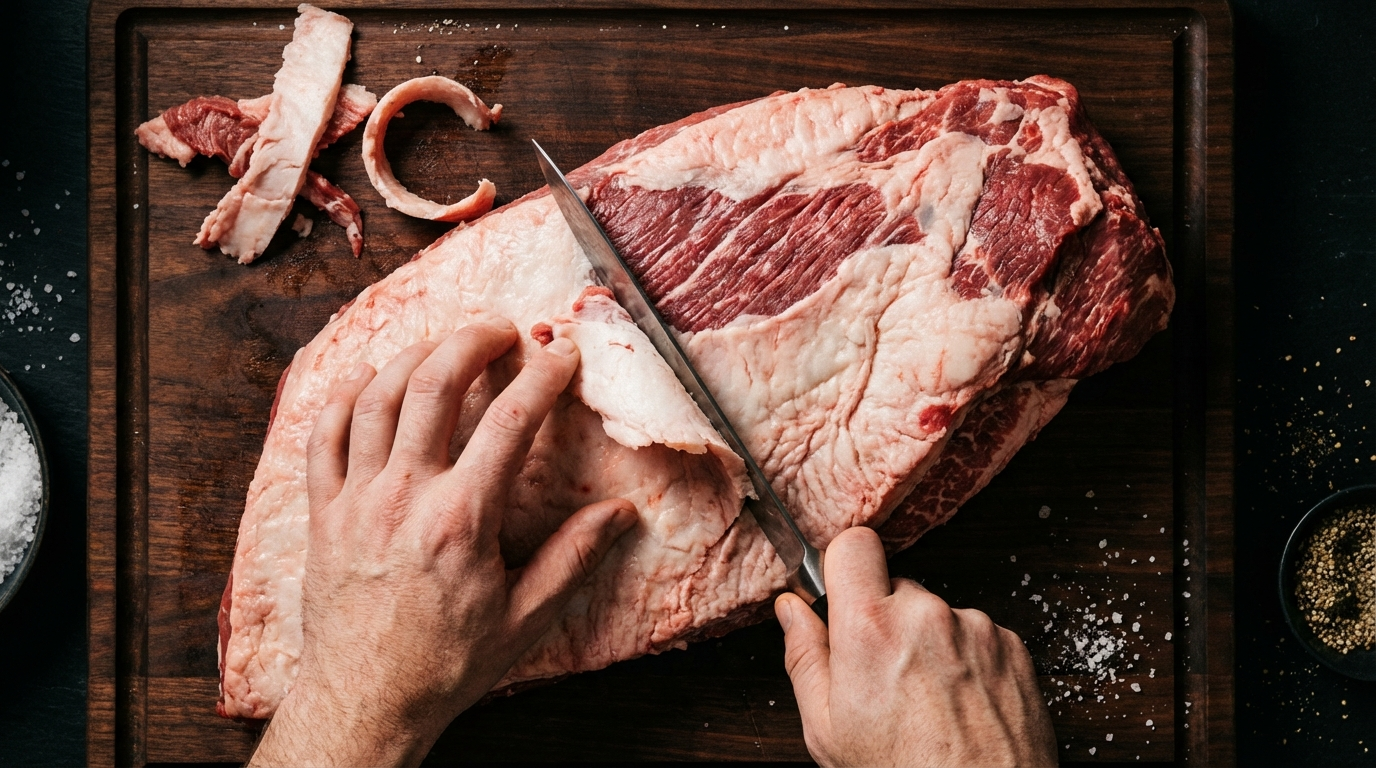
Regardless of which direction you place it, fat cap thickness matters. Too thick, and it won't fully render during the cook — you'll be left with a rubbery, unpleasant layer. Too thin, and it won't provide meaningful insulation.
The sweet spot is ¼ inch (6mm). Here's why:
- Rendering rate: Beef fat begins to render at approximately 130°F and renders progressively faster as temperature increases. At smoking temperatures (225-275°F), a ¼-inch layer renders almost completely over a 10-14 hour cook.
- Insulation: Even at ¼ inch, the fat's lower thermal conductivity provides meaningful heat shielding — reducing heat flux to the underlying meat by roughly 30% compared to exposed lean surface.
- Rub adhesion: A thin, smooth fat cap holds rub better than a thick, lumpy one. Trim it smooth and even.
Use a sharp, flexible boning knife. Work in long, smooth strokes rather than sawing. Remove any hard, waxy fat (kidney fat or hard seam fat) completely — these fats have higher melting points and won't render during smoking.
The Flip Method: A Compromise
Some pitmasters split the difference by flipping the brisket partway through the cook. Start fat cap down for the first 4-6 hours (protecting the flat during the initial high-moisture-loss phase), then flip to fat cap up for the remainder.
The theory is sound: the initial phase is when the most surface moisture evaporates, and protecting the lean side during this period makes sense. By flipping later, you allow the fat cap to finish rendering on top while the already-developed bark on the bottom continues to set.
The downside? You lose heat every time you open the smoker. In an offset or stick burner, opening the lid drops chamber temperature by 50-100°F and adds 15-30 minutes to the cook. In a kamado, heat recovery is faster but you still disrupt the thermal equilibrium. And handling a hot, 12-pound brisket mid-cook risks tearing the bark.
For most home cooks, the flip method adds complexity without a proportional improvement. Pick a direction based on your heat source and commit to it.
What the Competition Circuit Teaches Us
Competition BBQ is a results-driven environment. Judges score on appearance, tenderness, and taste. Pitmasters have financial incentive to optimize every variable. What do the best in the world actually do?
The majority cook fat cap down. A survey of KCBS (Kansas City Barbeque Society) grand champions shows fat cap down is the dominant approach, particularly among those using offset and bullet smokers. The reasoning aligns with the physics: protect the meat from below-source heat, maximize bark on the presentation side.
Aaron Franklin — widely considered the best brisket cook alive — smokes fat cap up on his offset smokers. But his reasoning is specific to his setup: his offset smokers have a particularly strong convection current that wraps heat over the top of the meat, making the top as hot as or hotter than the bottom. In his specific thermal environment, fat cap up makes sense.
This reinforces the core principle: the correct answer depends on your smoker. Franklin's advice is perfect for his smoker. It may be wrong for yours.
Testing It Yourself: A Simple Experiment
If you want to settle this for your specific setup, here's a controlled test:
- Buy two similar-sized brisket flats from the same grade and packer.
- Apply identical rub to both. Trim the fat caps to the same thickness.
- Place one fat cap up and one fat cap down on the same smoker, same rack position if possible.
- Cook both to the same internal temperature (203°F probe tender).
- Compare: bark quality, moisture of the lean meat, overall tenderness, and how the side facing the heat source looks on each.
The brisket with the fat cap facing away from the heat will almost certainly show more drying and overcooking on the heat-facing lean side. The one with the fat cap toward the heat will be more evenly cooked, with better bark on the lean (away-from-heat) side.
One cook and you'll stop debating.
The Bottom Line
The fat cap up vs. down debate persists because people are answering a smoker-specific question with universal advice. Here's the definitive answer:
- Identify where your heat comes from. Bottom? Side? Top? A combination?
- Point the fat cap toward the primary heat source. Use it as a thermal shield.
- Trim to ¼ inch so it renders completely and provides insulation without leaving a rubbery layer.
- Don't flip. Commit to your orientation and let the physics work.
For the vast majority of smokers (offsets, bullets, kamados, pellet grills), that means fat cap down. For the minority with top-down heat, it means fat cap up.
Stop arguing about tradition. Follow the heat.
Frequently Asked Questions
Should I smoke brisket fat cap up or down?
Place the fat cap toward your primary heat source. For most smokers (offset, bullet, kamado, pellet), that means fat cap down since heat comes from below. For smokers with top-down heat, go fat cap up. The fat cap acts as a thermal shield protecting the lean meat from the most intense heat.
Does the fat cap baste the meat when facing up?
No. This is a common myth. Rendered fat flows over the surface of meat and drips off the sides — it does not penetrate into the muscle fibers. The moisture in your brisket comes from the water already in the muscle and from intramuscular fat (marbling), not from the fat cap.
How thick should I leave the fat cap when trimming?
Trim the fat cap to approximately ¼ inch (6mm). This thickness provides meaningful heat insulation while being thin enough to render almost completely during a 10-14 hour cook at 225-275°F. Remove any hard, waxy fat completely as it won't render at smoking temperatures.
Should I flip my brisket during the cook?
For most home cooks, flipping adds unnecessary complexity. Each time you open the smoker you lose 50-100°F of chamber temperature and risk tearing the bark. Pick fat cap up or down based on your heat source location and commit to it for the entire cook.
Does fat cap position affect bark formation?
Yes. Bark forms on lean, exposed surfaces where moisture evaporates and the Maillard reaction occurs. Fat doesn't form bark — it creates a slick surface that resists browning. Cooking fat cap down exposes the entire lean top surface to smoke and dry heat, maximizing bark on the side you'll actually serve.
More Expert Guides
Steak Doneness Temperature Guide: The Science of Every Level from Rare to Well Done
Every degree matters. This science-backed guide covers the exact internal temperatures for every steak doneness level, why each temperature produces a different texture, and how to nail your target every time.
14 min readDirect vs Indirect Heat Grilling: The Science of Two-Zone Cooking
Direct heat sears. Indirect heat roasts. Understanding the physics of each — and when to combine them — is the foundation of every great grilling technique.
14 min readResting Meat After Cooking: The Science of Why It Makes Every Steak Juicier
Resting meat after cooking is not optional — it is physics. Here is exactly what happens inside the steak during those crucial minutes and how long to rest every cut.