Offset Smoker Temperature Control: The Science of Fire, Airflow, and Consistency
Offset Smoker Temperature Control: The Science of Fire, Airflow, and Consistency
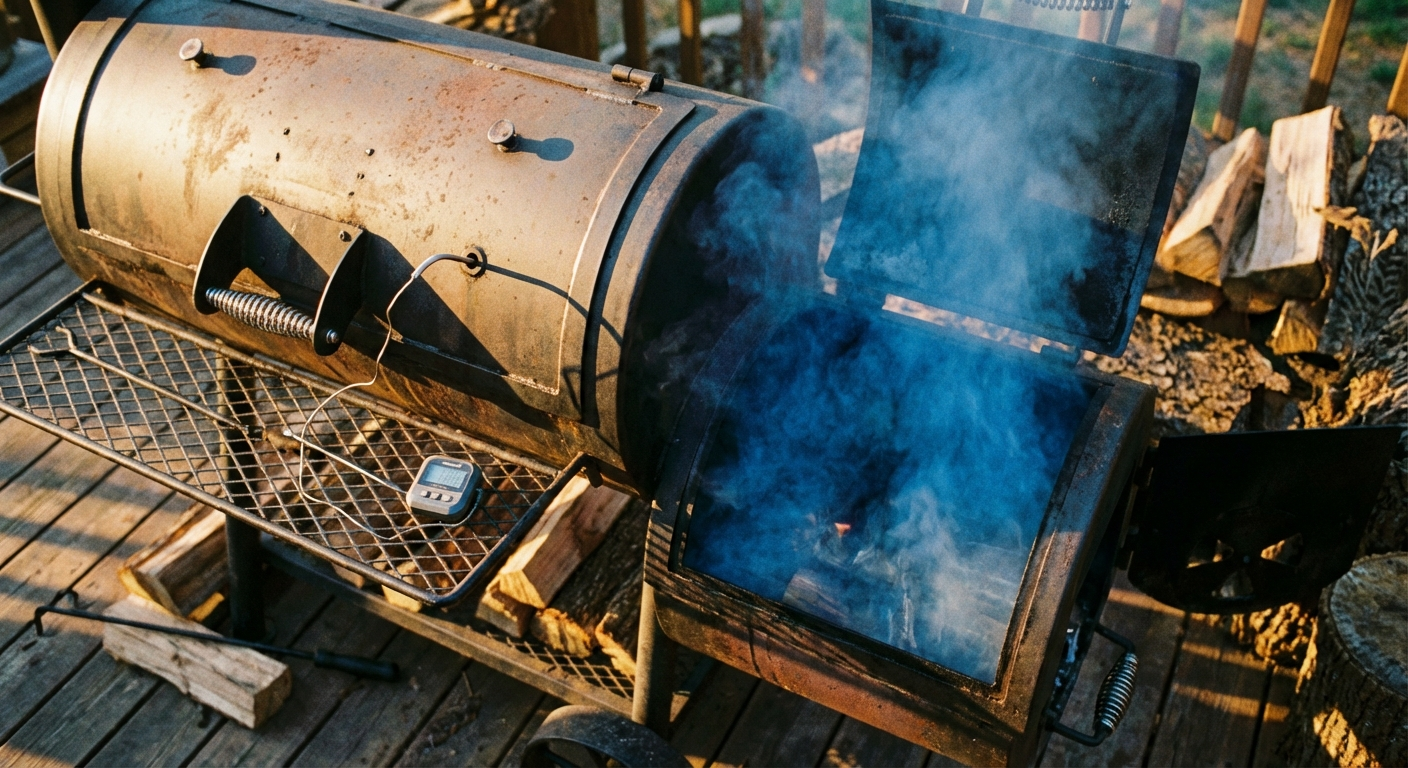
An offset smoker is a thermodynamic system. The firebox generates heat and smoke, which flows horizontally through the cooking chamber and exits the chimney stack. Your job as pitmaster is to regulate that system — managing fuel input, oxygen supply, and exhaust draw to maintain a target temperature, usually between 225°F and 275°F, for hours at a time.
After years of studying combustion physics and heat flow in offset cookers, I can tell you: temperature swings are not random. They are predictable consequences of specific airflow and fuel conditions. Once you understand the science, you can diagnose and correct any temperature problem in under 60 seconds.
How an Offset Smoker Creates and Moves Heat
Every offset smoker operates on a simple principle: hot air rises and moves toward lower pressure. The firebox is the heat source. The chimney stack creates a draft — a pressure differential that pulls air through the entire system. Between those two points, the cooking chamber acts as a heat exchanger where your meat sits in the convective flow.
The physics break down into three heat transfer mechanisms working simultaneously:
- Convection — hot air and smoke flowing across the meat surface, the primary cooking method in an offset
- Radiation — infrared energy radiating from the firebox wall and hot steel of the cooking chamber
- Conduction — direct heat transfer where meat contacts the grill grates
In a well-designed offset, convection accounts for roughly 60–70% of the cooking energy. This is why airflow control is the single most important variable — it determines both how fast the fire burns and how efficiently heat moves through the chamber.
The Combustion Triangle in Your Firebox
Fire needs three things: fuel, oxygen, and heat. In an offset smoker, you control all three, but oxygen is your primary throttle. The intake damper on the firebox controls how much air feeds the fire. More air means hotter combustion. Less air means cooler — but also potentially dirtier — combustion.
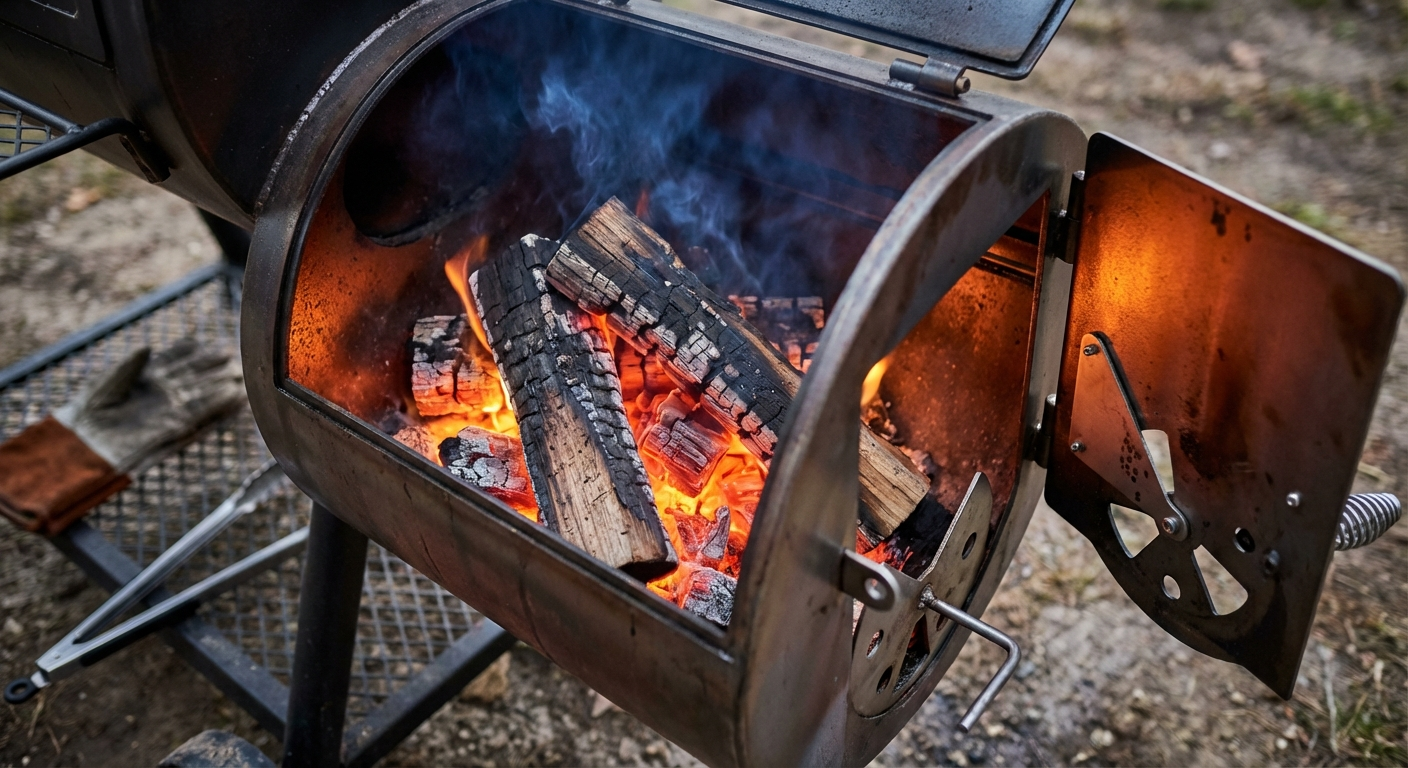
Here is the critical insight most backyard pitmasters miss: you want a clean-burning, efficient fire — not a smoldering one. A smoldering fire produces acrid, bitter smoke (creosote) and unstable temperatures. A clean fire burns hot and produces thin blue smoke, which delivers the sweet, complex flavor compounds you actually want on your meat.
The goal is not to restrict airflow to lower the temperature. Instead, manage the amount of fuel burning and let it burn cleanly with adequate oxygen.
Fuel Selection and Split Size
Hardwood splits are the standard fuel for offset smokers. The size of your splits directly affects burn rate and temperature stability:
- Wrist-sized splits (3–4" diameter) — standard for most offset smokers, burn for 30–45 minutes
- Forearm-sized splits (5–6" diameter) — longer burn time but slower ignition, good for overnight cooks
- Smaller splits and chunks — faster ignition, shorter burn time, useful for fine-tuning
Consistent split size matters more than wood species. If every split is roughly the same diameter, each addition to the firebox produces a predictable temperature response. Mixing large and small splits creates unpredictable burn rates.
The Damper System: Your Primary Temperature Controls
An offset smoker has two damper controls, and understanding their distinct roles is essential:
Intake Damper (Firebox)
The intake damper on the firebox door controls the oxygen supply to the fire. This is your primary temperature adjustment. Opening it increases combustion rate and raises temperature. Closing it restricts oxygen and lowers temperature.
A practical guideline for most offset smokers running at 250°F:
- Intake 100% open — fire burns hot and fast, temps climb above 300°F
- Intake 50–75% open — sweet spot for 225–275°F in most cookers
- Intake 25% open — fire begins to starve, risk of dirty smoke
- Intake fully closed — fire suffocates, temperature drops rapidly, bitter creosote risk
Never fully close the intake. Even when you want lower temps, keep it at least 25% open to maintain clean combustion.
Exhaust Damper (Chimney Stack)
The exhaust damper — usually a sliding plate on the chimney — controls the draft strength through the cooking chamber. Many experienced pitmasters keep this 100% open at all times and control temperature exclusively with the intake.
Here is the science: partially closing the exhaust reduces draft, which slows airflow through the entire system. But it also traps smoke and combustion gases inside the cooking chamber. Those stale gases deposit creosote on your meat. The exhaust should almost always be fully open.
The only exception: extremely windy conditions where the draft is pulling too hard and overfeeding the fire despite a nearly-closed intake. In that case, partially close the exhaust to reduce the wind-driven draft.
Maintaining a Clean Coal Bed
The coal bed is the foundation of temperature stability. A mature coal bed — a 2–3 inch layer of glowing hardwood coals — provides consistent baseline heat. New splits placed on this bed ignite quickly and burn cleanly because the coals supply the ignition energy.
The coal bed management cycle works like this:
- Start with a full chimney of lump charcoal — this creates an initial coal bed without the 45-minute wait for splits to coal over
- Add your first split once coals are fully ashed — the split should ignite within 2–3 minutes
- Add subsequent splits when the previous one has burned down to coals — typically every 30–45 minutes
- Remove excess ash periodically — thick ash insulates coals and reduces their heat output
The most common mistake: adding a new split too early, before the previous one has coaled over. This creates a temperature spike as two pieces of wood burn simultaneously, followed by a crash when both burn out at the same time.
Reading Temperature Trends, Not Numbers
Chasing an exact number — say, 250°F — leads to constant damper adjustments and wild temperature swings. This is called overcorrection, and it is the number one mistake offset smoker beginners make.
Instead, read the trend:
- Temperature slowly rising (1–2°F per minute) — do nothing. The fire is finding its equilibrium.
- Temperature climbing fast (3–5°F per minute) — close the intake damper 10–15%. One small adjustment.
- Temperature dropping slowly — the current split is burning down. Prepare to add a new one.
- Temperature dropping fast — the coal bed may be dying. Check ash buildup and add a split immediately.
The key principle: make one small adjustment, then wait 10–15 minutes before adjusting again. The thermal mass of the steel smoker body means temperature changes lag behind damper changes by several minutes. Rapid adjustments stack up and create oscillating temps.
The Pre-Heat Protocol
Offset smokers have significant thermal mass — 200 to 800+ pounds of steel. That mass must reach equilibrium temperature before you put meat on. Rushing this step guarantees temperature instability for the first 2–3 hours of your cook.
A proper pre-heat protocol:
- Light a full chimney of lump charcoal in the firebox
- Once coals are fully lit, add 2 splits and open intake fully
- Let the smoker climb past your target temperature — if cooking at 250°F, let it hit 275–300°F
- Once it overshoots, begin closing the intake until it settles at your target
- Hold at target for 30 minutes minimum before adding meat
This overshoot-and-settle method works because the steel absorbs heat during the overshoot. Once it reaches equilibrium, the thermal mass actually helps stabilize temperature — acting as a heat buffer that smooths out minor fluctuations.
Wind, Weather, and Ambient Temperature
Environmental conditions affect offset smoker performance more than any other cooker type because the long, horizontal cooking chamber is essentially a wind tunnel.
- Wind — the biggest variable. Wind blowing into the chimney stack can reverse the draft, pushing smoke and heat backward. Wind blowing into the firebox intake overfuels the fire. Position your smoker so the chimney faces into the prevailing wind (wind blows out of the chimney, supporting the natural draft).
- Cold ambient temperature — steel loses heat faster. You will burn 20–30% more fuel cooking at 35°F than at 75°F. Close the intake slightly less than you normally would to compensate.
- Rain — water on the cooking chamber roof steals heat through evaporative cooling (the same physics behind the BBQ stall). Use a welding blanket or purpose-built smoker blanket in wet conditions.
- Humidity — high humidity slightly reduces evaporative cooling from the meat surface, which can speed cooking time. Monitor internal meat temperature, not chamber temperature alone.
Troubleshooting Common Temperature Problems
Temperature Won't Come Up
- Check the coal bed — is there a solid 2–3 inch layer of glowing coals? If not, add lump charcoal to rebuild.
- Check the intake — is it open enough? At least 50% for the 225–275°F range.
- Check the wood — is it seasoned? Green (unseasoned) wood wastes energy evaporating moisture instead of producing heat.
- Check for air leaks — gaps in the firebox door, warped lids, and poorly sealed joints bleed heat and disrupt airflow patterns.
Temperature Swings (Oscillation)
- Stop adjusting — overcorrection is the most likely cause. Set the intake and walk away for 15 minutes.
- Standardize your splits — inconsistent fuel sizes cause inconsistent burn rates.
- Check your thermometer placement — the stock lid thermometer is often 50–75°F off from grate-level temperature. Use a probe at grate level.
Dirty or Bitter Smoke
- Open the intake more — the fire is oxygen-starved and producing creosote.
- Ensure the exhaust is fully open — stale smoke trapped in the chamber turns bitter.
- Let splits catch fire — a smoldering split is a creosote factory. You want visible flames, which produce clean combustion gases.
Advanced: The Stick-Burning Rhythm
Experienced offset pitmasters develop a rhythm — a timed cycle of split additions and damper adjustments that maintains temperature with minimal intervention. The rhythm depends on your specific smoker, but here is a general framework for a medium-sized offset (20-inch cooking chamber) running at 250°F:
- Every 30–40 minutes: Add one wrist-sized split to the firebox
- Every 60–90 minutes: Rake the coal bed to knock off ash
- Every 2–3 hours: Shovel out excess ash from the firebox floor
- Intake damper position: Set once during pre-heat, adjust only if wind changes or ambient temp shifts significantly
Once you find your smoker's rhythm, 12-hour cooks become almost autopilot. The fire tells you when it needs fuel — you will hear the crackle change pitch and see the smoke thin out as the current split burns down to coals.
Offset Smoker Temperature Control: The Bottom Line
Temperature control on an offset smoker comes down to physics: manage your fuel input with consistent split sizes, control oxygen with the intake damper, keep the exhaust open for clean draft, and maintain a healthy coal bed. The steel thermal mass works with you once the smoker reaches equilibrium. Stop chasing exact numbers, read trends, and make small adjustments with patience.
The offset smoker rewards the pitmaster who understands the system. Master these principles and you will hold 225–275°F for as long as you have wood to burn — producing the cleanest smoke and the best barbecue you have ever made.
Frequently Asked Questions
What temperature should I run my offset smoker?
For most barbecue (brisket, pork butt, ribs), run your offset smoker between 225°F and 275°F at grate level. Use a probe thermometer at grate height — the stock lid thermometer is often 50–75°F higher than actual cooking temperature.
How often should I add wood to my offset smoker?
Add one wrist-sized hardwood split every 30–45 minutes. Wait until the previous split has burned down to coals before adding the next one. This prevents temperature spikes from two pieces burning simultaneously.
Should I keep the exhaust damper open or closed on an offset smoker?
Keep the exhaust (chimney) damper fully open at all times. Closing it traps stale smoke and creosote in the cooking chamber, producing bitter flavors. Control temperature with the firebox intake damper instead.
Why does my offset smoker produce bitter smoke?
Bitter smoke comes from incomplete combustion — the fire is smoldering instead of burning cleanly. Open the intake damper to supply more oxygen, make sure the exhaust is fully open, and use properly seasoned (dry) hardwood splits.
How do I stop temperature swings on my offset smoker?
Temperature swings are usually caused by overcorrection — making too many damper adjustments too quickly. Set the intake damper, wait 15 minutes, then reassess. Use consistent split sizes and maintain a solid coal bed for stability.
More Expert Guides
Pulled Pork Temperature Guide: The Science of When Pork Butt Is Actually Done
The difference between stringy pork and melt-in-your-mouth pulled pork comes down to about 8 degrees. Understanding the collagen-to-gelatin conversion window explains why temperature — not time — is the only metric that matters.
13 min readGrilling Frozen Steak: The Science of Why It Actually Works Better
Everything you've been told about thawing steak first might be wrong. The science of heat transfer explains why frozen steaks can outperform thawed ones on a hot grill.
14 min readBone-In vs Boneless Steak: The Grilling Science That Settles the Debate
The bone-in vs boneless debate has divided grillers for decades. Here's what the science actually says — and it's more nuanced than you think.