Lump Charcoal vs Briquettes: The Science of Which Burns Better
Lump Charcoal vs Briquettes: The Science of Which Burns Better
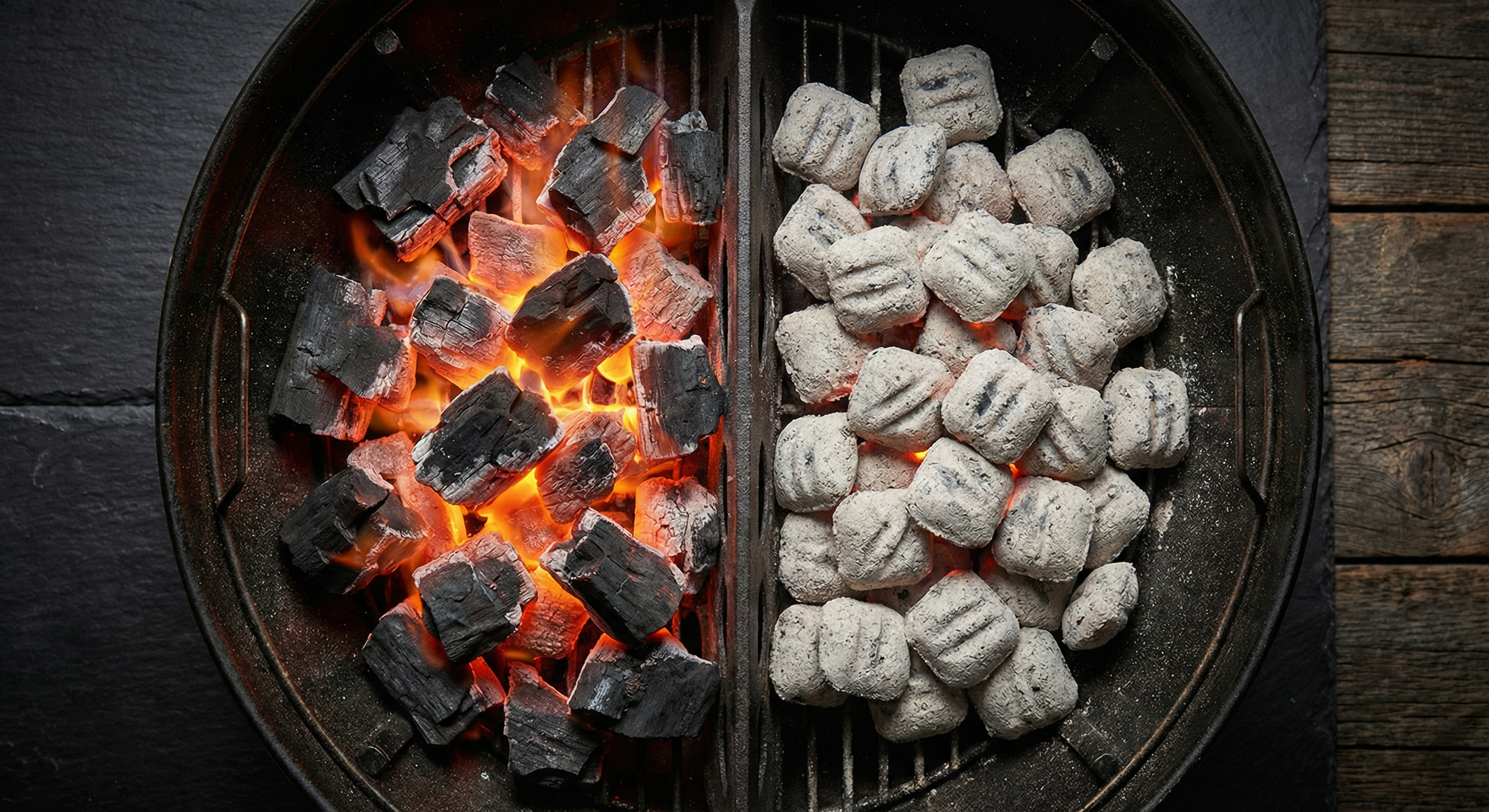
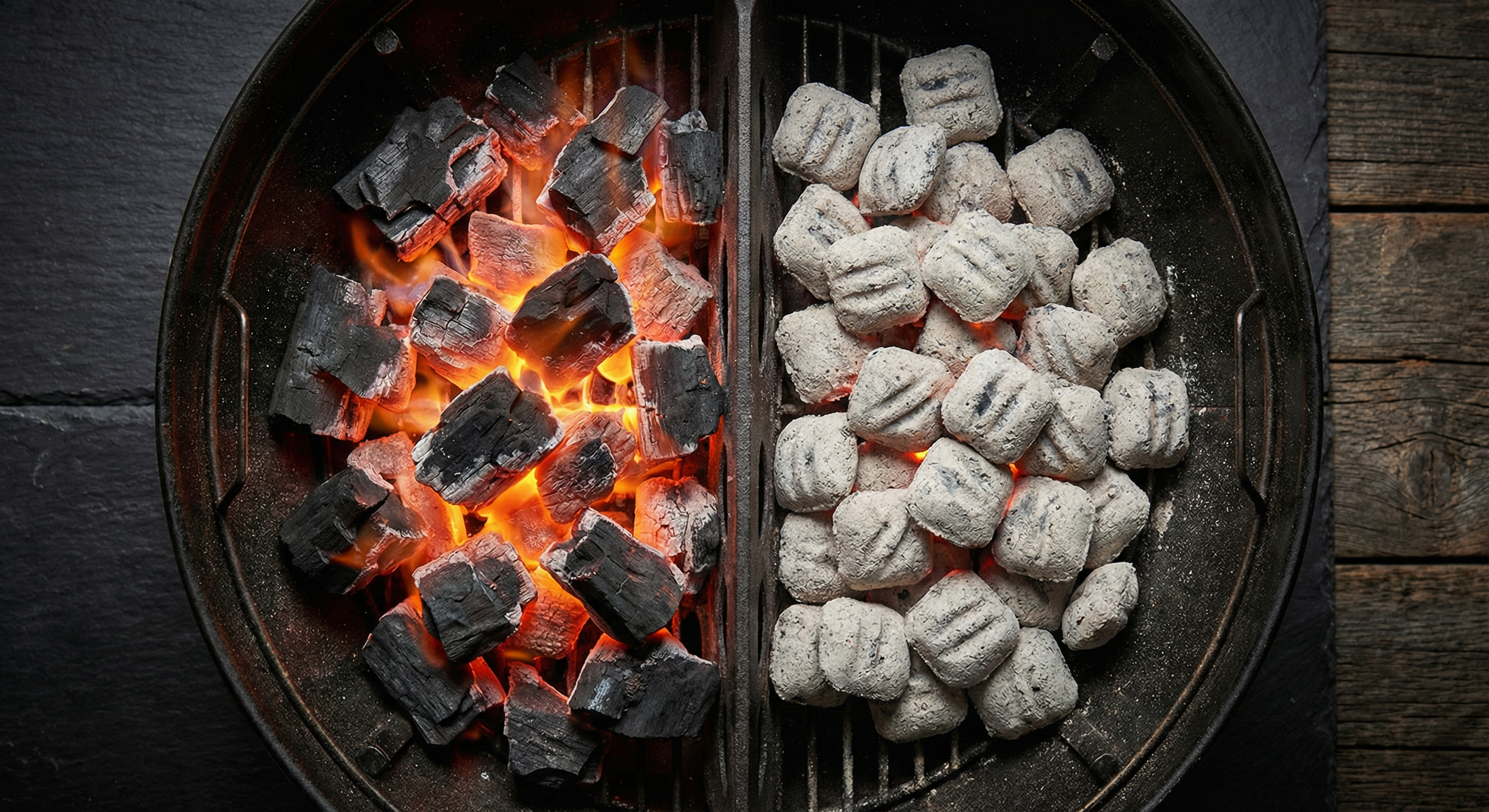
Walk into any grilling forum and you will find this debate raging with religious intensity. Lump charcoal loyalists call briquettes "chemical bricks." Briquette fans call lump users "inconsistent amateurs." Both sides are wrong about some things and right about others.
The truth is that lump charcoal and briquettes are engineered for different purposes, burn with measurably different characteristics, and each excels in specific applications. This guide covers the actual science — combustion chemistry, thermal output data, ash production, and flavor impact — so you can make an informed decision instead of picking a tribe.
What Is Lump Charcoal?
Lump charcoal is wood that has been burned in a low-oxygen environment (pyrolysis) until the volatile compounds — water, sap, resins, and organic acids — have been driven off. What remains is nearly pure carbon in the original shape of the wood.
The process is ancient and simple. Wood is loaded into a kiln or retort, heated to 800–1,000°F with restricted airflow, and held until the smoke stops. The result is charcoal that is roughly 75–90% fixed carbon by weight, with the rest being residual volatiles and mineral ash.
Because lump charcoal retains the structure of the original wood, every piece is a different size and shape. A bag of lump might contain fist-sized chunks, thin slivers, and dust. This irregularity is the defining characteristic of lump — and the source of both its advantages and disadvantages.
What Are Briquettes?
Charcoal briquettes are an engineered product. They were invented in the 1920s by Ellsworth Zwoyer and later commercialized by Henry Ford, who used wood scraps from his automobile factories as raw material. (Ford Charcoal eventually became Kingsford, still the dominant briquette brand today.)
Briquettes are made by grinding charcoal (or partially carbonized wood) into powder, mixing it with binders and additives, and compressing the mixture into uniform pillow-shaped blocks. A typical briquette contains:
- Charcoal or char (wood carbon): 50–70% — the primary fuel
- Starch binder: 5–10% — typically cornstarch, holds the shape
- Limestone (calcium carbite): 2–5% — creates the characteristic white ash color
- Borax: 1–2% — helps release from the mold during manufacturing
- Sodium nitrate: <1% — accelerates ignition
- Sawdust: Variable — additional fuel filler
The "chemical additives" that lump purists complain about are real, but they burn off during the lighting phase and are present in trace amounts. More on this in the flavor section below.
Burn Temperature: Lump Wins for Peak Heat
Lump charcoal reaches higher peak temperatures than briquettes. This is a direct consequence of its higher carbon purity and lower ash content.
When carbon combusts with oxygen, it produces heat proportional to the purity of the fuel. Lump charcoal, being 75–90% fixed carbon, has more combustible material per unit weight than briquettes (50–70% carbon). The non-carbon components in briquettes — binders, limestone, borax — absorb heat without contributing energy. They are thermal dead weight.
Measured peak temperatures in a controlled chimney starter test:
- Premium lump (Jealous Devil, FOGO): 1,200–1,400°F at the coal surface
- Standard lump (Royal Oak): 1,100–1,300°F
- Premium briquettes (Kingsford Professional): 900–1,100°F
- Standard briquettes (Kingsford Original): 800–1,000°F
This 200–400°F difference matters for high-heat searing. If you are chasing the hottest possible fire for a 60-second steak sear or wok cooking, lump charcoal is the superior fuel. The higher temperatures accelerate the Maillard reaction and produce more intense crust development in less time.
Burn Duration: Briquettes Win for Consistency
Briquettes burn longer and more predictably than lump charcoal. This advantage comes from two factors:
1. Uniform Density
Every briquette is compressed to the same density, which means each piece burns at the same rate. This predictability is why briquette manufacturers can print cooking times on the bag — "20 briquettes for 45 minutes of cooking" — and have it be reasonably accurate.
Lump charcoal varies wildly in density and size within a single bag. A dense chunk of oak lump might burn for 90 minutes. A thin sliver of the same oak might burn out in 15 minutes. This makes lump inherently less predictable for long cooks.
2. Lower Burn Rate
The non-carbon fillers in briquettes slow combustion. Limestone and starch do not burn — they absorb heat and create a thermal buffer that moderates the reaction rate. This is the trade-off: briquettes peak lower but sustain longer.
Measured burn times in a standard kettle grill (half chimney, single layer, all vents open):
- Kingsford Original briquettes: 45–60 minutes of usable cooking heat
- Royal Oak lump charcoal: 30–45 minutes of usable cooking heat
- FOGO Premium lump: 35–50 minutes (denser hardwood burns longer)
For low-and-slow barbecue sessions lasting 8–16 hours, briquettes are the practical choice. Their uniform size makes the Minion method (unlit fuel surrounding a small pile of lit fuel) reliable and repeatable. Attempting the Minion method with irregular lump charcoal produces erratic temperature spikes as different-sized pieces ignite unpredictably.
Ash Production: Lump Wins Decisively
Lump charcoal produces significantly less ash than briquettes. This is one of the most practical differences between the two fuels.
Briquette ash comes primarily from the limestone filler and mineral content of the binders. The white ash that coats spent briquettes is largely calcium carbonate — the same compound in limestone and chalk. This ash accumulates on the coal bed, insulating the remaining fuel from oxygen and gradually choking the fire.
In a kamado-style grill (Big Green Egg, Kamado Joe), excess ash can block the lower vent and suffocate the fire entirely. This is why kamado manufacturers universally recommend lump charcoal — the tight airflow control of a kamado depends on minimal ash buildup.
In a kettle grill, briquette ash accumulates on the charcoal grate and must be shaken off periodically during long cooks. Lump charcoal produces so little ash that this step is rarely needed.
Measured ash output (percentage of starting weight):
- Lump charcoal: 2–5% ash by weight
- Briquettes: 15–25% ash by weight
This fivefold difference in ash production has real consequences for airflow management, cleanup effort, and long-cook performance.
Flavor Impact: More Nuanced Than You Think
The flavor debate generates more heat than light (pun intended). Here is what the chemistry actually says:
Lump Charcoal Flavor
Lump charcoal retains trace amounts of the original wood's volatile compounds — the same compounds responsible for wood smoke flavor. When lump burns, it releases small quantities of lignin-derived phenols, guaiacol, and syringol, the aromatic molecules that define "smoky" flavor.
The amount of residual smoke flavor depends on how thoroughly the wood was carbonized. Lightly charred lump (lower carbon content) produces more smoke. Fully carbonized lump (higher carbon content, nearly pure carbon) produces almost no smoke — just clean heat.
Premium lump brands typically identify the wood species: oak, hickory, mesquite, binchotan (Japanese white oak). The wood type influences whatever residual smoke flavor remains, though the contribution is subtle compared to adding actual wood chunks or chips.
Briquette Flavor
The common claim that briquettes impart "chemical" flavor is overstated. The sodium nitrate, borax, and starch in briquettes burn off during the lighting phase — typically the first 15–20 minutes when the briquettes are ashing over. If you cook over briquettes before they are fully lit (still black, still smoking heavily), you will taste acrid, off-flavors. These are from the binders combusting, not from the charcoal itself.
The rule: Never cook over briquettes until they are fully ashed over (covered in white-gray ash, no visible flame from the briquette itself). At this point, the binders have burned off and the remaining fuel is essentially plain charcoal. Flavor contribution from properly lit briquettes is neutral — you taste the meat and any wood chunks you have added, not the briquettes.
Practical Flavor Advice
If smoke flavor is important to your cook, do not rely on either charcoal type to provide it. Add wood chunks or chips on top of whatever charcoal you use. The smoke from wood chunks is 10–50x more flavorful than the trace volatiles from lump charcoal. The charcoal's job is heat. The wood's job is smoke. Separate the functions.
Lighting Speed: Lump Wins
Lump charcoal lights faster than briquettes because it has more exposed surface area (irregular shapes) and higher carbon purity (ignites at a lower temperature).
In a chimney starter:
- Lump charcoal: Fully lit in 12–15 minutes
- Briquettes: Fully ashed over in 20–25 minutes
This 10-minute difference matters when you want to grill quickly after work. It also matters for restaurant operations where turnaround time is critical.
Cost Comparison
Briquettes cost less per pound and per hour of cooking time. Lump charcoal costs more but burns hotter.
Approximate retail pricing (2026, US average):
- Kingsford Original (20 lb): $15–18 ($0.75–0.90/lb)
- Royal Oak Lump (15.4 lb): $15–20 ($1.00–1.30/lb)
- Premium lump (FOGO, Jealous Devil, 17.6 lb): $25–35 ($1.40–2.00/lb)
When you factor in burn duration and heat output, briquettes deliver more cooking time per dollar. But if you need maximum temperature or minimal ash, the premium on lump is worth it.
Which Should You Use? The Decision Matrix
Use Lump Charcoal When:
- Searing steaks: You want the highest possible temperature for Maillard crust development. Lump's 1,200–1,400°F peak temperature is 200–400°F hotter than briquettes.
- Cooking in a kamado: Minimal ash is essential for airflow control. Briquette ash can choke a kamado's vents.
- Quick weeknight grilling: Lump lights faster (12–15 minutes vs 20–25 minutes).
- You want cleaner burns: No binders, no fillers, no additives. Just carbonized wood.
- Wok cooking or high-heat applications: Maximum BTU output matters.
Use Briquettes When:
- Low-and-slow barbecue: The Minion method requires uniform fuel. Briquettes deliver consistent, predictable burn rates for 8–16 hour cooks.
- Snake method (fuse method): A ring of briquettes around the grill perimeter, lit at one end, provides hours of controlled heat. This only works with uniform-sized fuel.
- You need temperature consistency: Briquettes burn at a steady temperature. Lump can spike when a large piece catches or drop when small pieces burn out.
- Budget matters: Briquettes cost 30–50% less per hour of cooking.
- You are a beginner: Briquettes are more forgiving. Consistent size means consistent results as you learn temperature management.
The Best of Both Worlds
Many experienced grillers use both. Start with a base of briquettes for sustained, even heat. Add lump charcoal on top for the final sear or when you need a temperature boost. This hybrid approach gives you the consistency of briquettes with the peak heat of lump when you need it.
For two-zone grilling, you can fill the hot zone with lump for maximum searing power and use briquettes on the indirect side for steady low heat. Different fuels for different jobs within the same cook.
Charcoal Quality: Not All Bags Are Equal
Within each category, quality varies enormously:
Lump Charcoal Quality Indicators
- Piece size: Good lump has mostly fist-sized or larger chunks. Bags with excessive small pieces and dust indicate poor handling or low-quality wood. Some premium brands (FOGO Super Premium, Jealous Devil) sort and screen for large pieces.
- Wood species: Hardwoods (oak, hickory, maple, quebracho) make better charcoal than softwoods. Quebracho and binchotan are among the densest and longest-burning lump charcoals available.
- Sparking: Low-quality lump can spark and pop when lit, sending embers outside the grill. This typically indicates insufficient carbonization — residual moisture or volatiles in the wood exploding as they vaporize. Premium lump should light cleanly without excessive sparking.
- Foreign objects: Budget lump bags occasionally contain rocks, metal fragments, or non-charcoal debris. This is a quality control issue — premium brands inspect and sort.
Briquette Quality Indicators
- Ash color: White ash indicates proper limestone content and complete combustion. Gray or brown ash suggests incomplete burning or inferior fillers.
- Crumbling: Briquettes should hold their shape until they ash over. Crumbly briquettes have too much filler and not enough binder.
- Ignition additives: "Match-light" or "instant-light" briquettes are soaked in lighter fluid. Avoid them — the petroleum compounds can impart off-flavors and are unnecessary with a chimney starter.
- All-natural briquettes: Brands like Kingsford Professional and Royal Oak Ridge offer briquettes without borax or sodium nitrate, using only starch and charcoal. These are a middle ground between standard briquettes and lump.
Environmental Considerations
Both charcoal types have environmental footprints worth considering:
- Lump charcoal requires whole pieces of hardwood, which means trees must be cut and processed. Sustainable sourcing matters — look for FSC-certified or domestic hardwood lump. Some tropical lump charcoal is produced from illegally harvested mangrove forests.
- Briquettes can use sawmill waste, scrap lumber, and other wood byproducts as raw material, which is arguably more resource-efficient. However, the mining of limestone and borax additives adds to the environmental footprint.
- Carbon emissions are roughly similar for both when burned, since both are fundamentally carbon fuels. The production process for briquettes is more energy-intensive (grinding, mixing, pressing, drying) than the simpler kiln process for lump.
The Bottom Line
Lump charcoal burns hotter, lights faster, produces less ash, and contains no additives. Briquettes burn longer, more consistently, cost less, and are better for low-and-slow cooking. Neither is objectively "better" — they are optimized for different use cases.
The best grillers do not pick a side. They pick the right fuel for the cook. Steaks tonight? Lump. Brisket tomorrow? Briquettes. Competition ribs on Saturday? Briquettes with wood chunks. It is that simple.
Frequently Asked Questions
Is lump charcoal better than briquettes?
Neither is universally better. Lump charcoal burns hotter (1,200-1,400°F vs 800-1,100°F) and produces less ash, making it ideal for searing and kamado grills. Briquettes burn longer and more consistently, making them better for low-and-slow barbecue. Many experienced grillers use both depending on the cook.
Do briquettes have chemicals in them?
Standard briquettes contain starch binder, limestone, borax, and trace sodium nitrate in addition to charcoal. These additives burn off during the lighting phase (first 15-20 minutes). Once briquettes are fully ashed over (covered in white-gray ash), the binders have combusted and the remaining fuel is essentially plain charcoal. All-natural briquettes are available without borax or nitrate.
Why does lump charcoal burn hotter than briquettes?
Lump charcoal is 75-90% pure carbon, while briquettes are only 50-70% carbon. The non-carbon components in briquettes (limestone, starch, borax) absorb heat without contributing energy. More carbon per unit weight means more combustion energy and higher temperatures.
Can you mix lump charcoal and briquettes?
Yes, and many experienced grillers do. A common approach is using briquettes as a base for consistent heat and adding lump charcoal on top for high-heat searing. For two-zone grilling, you can use lump in the hot zone and briquettes in the indirect zone.
Which charcoal is better for a Big Green Egg?
Lump charcoal is strongly recommended for kamado-style grills like the Big Green Egg. Briquettes produce 3-5x more ash, which can block the kamado lower vent and suffocate the fire. Kamado manufacturers universally recommend lump charcoal for proper airflow control.
How long do briquettes burn compared to lump?
In a standard kettle grill with all vents open, briquettes provide 45-60 minutes of usable cooking heat versus 30-45 minutes for standard lump charcoal. Premium dense-hardwood lump (like quebracho) can match briquette duration at 35-50 minutes while still burning hotter.
More Expert Guides
Steak Doneness Temperature Guide: The Science of Every Level from Rare to Well Done
Every degree matters. This science-backed guide covers the exact internal temperatures for every steak doneness level, why each temperature produces a different texture, and how to nail your target every time.
14 min readDirect vs Indirect Heat Grilling: The Science of Two-Zone Cooking
Direct heat sears. Indirect heat roasts. Understanding the physics of each — and when to combine them — is the foundation of every great grilling technique.
14 min readResting Meat After Cooking: The Science of Why It Makes Every Steak Juicier
Resting meat after cooking is not optional — it is physics. Here is exactly what happens inside the steak during those crucial minutes and how long to rest every cut.