How to Prevent Flare-Ups on the Grill: The Science of Fat, Fire & Control
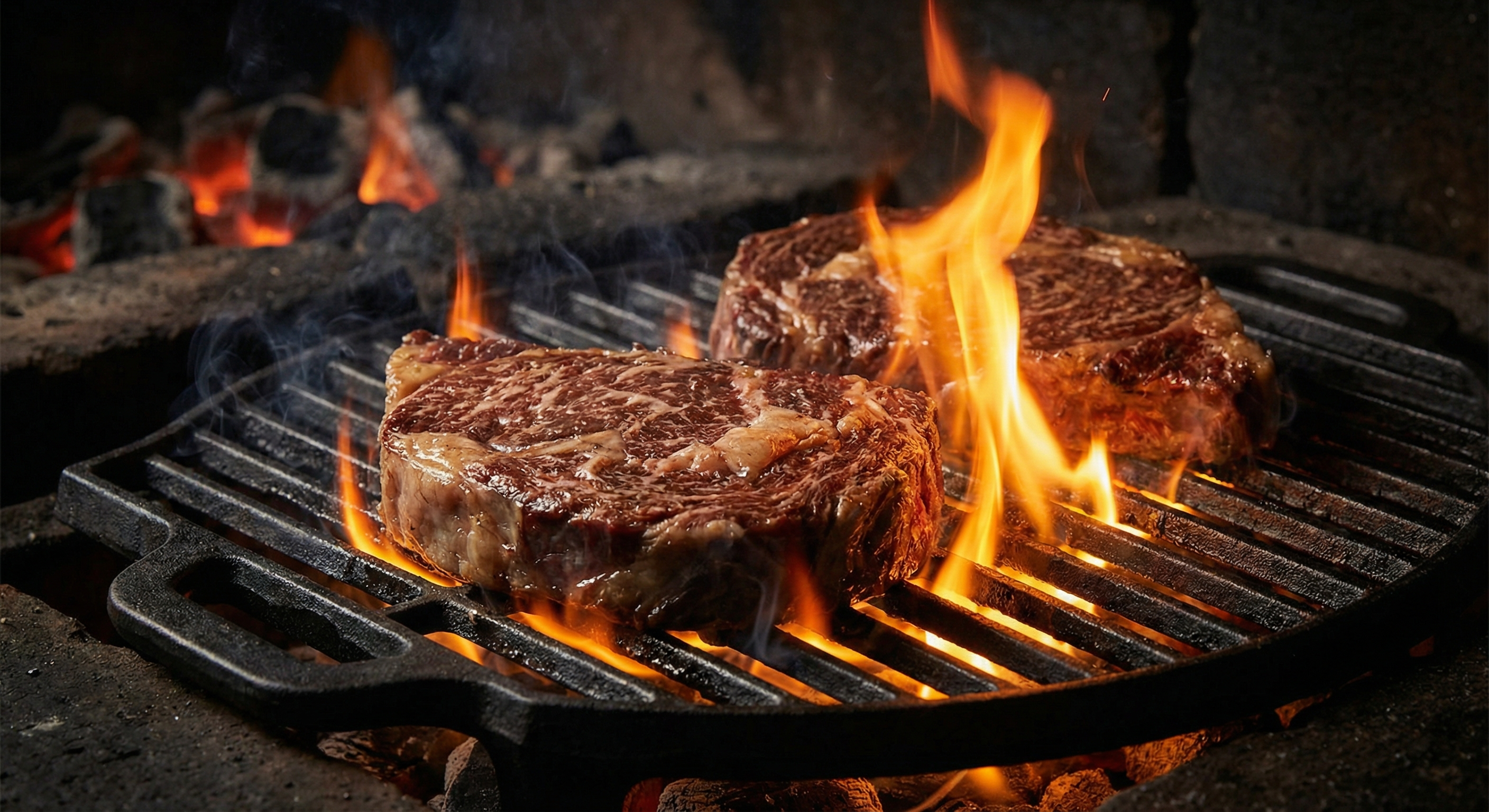
How to Prevent Flare-Ups on the Grill: The Science of Fat, Fire & Control
Every griller has experienced the sudden burst of flame that engulfs a steak, blackens the exterior, and deposits a layer of acrid, sooty flavor that no amount of seasoning can mask. Flare-ups are the single most common cause of ruined food on a grill — and they are entirely preventable once you understand the combustion chemistry behind them.
I've spent years studying thermal dynamics and combustion in cooking environments. Flare-ups are not random. They follow predictable physical laws. Fat drips onto a heat source, vaporizes, reaches its ignition temperature, and combusts. Every variable in that chain can be controlled. Here's how.
The Combustion Chemistry of a Flare-Up
A flare-up is a brief, intense combustion event. It requires three elements — the classic fire triangle:
- Fuel: Rendered fat and meat juices that drip from your food
- Heat: The hot coals, burners, or flavorizer bars below the cooking grate
- Oxygen: Airflow through the grill's vents and openings
Remove any one element, and the flare-up cannot occur. That's the entire prevention strategy in three words: control the triangle.
What Happens at the Molecular Level
When fat drips from a steak onto hot coals (typically 800–1,200°F at the surface), several things happen in rapid succession:
- Vaporization: The fat droplet contacts the hot surface and instantly vaporizes. Animal fats have boiling points around 300–400°F — far below coal temperature. The liquid fat becomes a gas.
- Pyrolysis: The fat vapor breaks down into smaller hydrocarbon molecules — volatile organic compounds (VOCs) that are highly flammable.
- Ignition: When the concentration of vaporized hydrocarbons in the air reaches the lower flammable limit (roughly 1–6% by volume for most cooking fats) and the temperature exceeds the auto-ignition point (~450–500°F for most animal fats), combustion begins spontaneously.
- Flame propagation: The flame travels upward along the column of vaporized fat, creating the visible flare-up. The flame temperature can exceed 1,800°F — far hotter than normal grilling temperatures.
The entire sequence takes less than one second. That's why flare-ups feel sudden and unpredictable — the chemistry is fast.
Why Some Foods Flare More Than Others
The primary variable is fat content and fat location. Foods with more surface or drippable fat produce more fuel for combustion.
High Flare-Up Risk
- Chicken thighs and wings (skin-on): Chicken skin is 40–50% fat by weight. As it renders during grilling, large volumes of liquid fat drip continuously.
- Fatty beef cuts: Heavily marbled steaks like ribeyes (especially American wagyu ribeyes) and short ribs render significant fat during cooking.
- Burgers: Ground beef with 20–30% fat content releases rendered fat from every surface.
- Sausages: Fat renders from inside the casing and drips when the casing splits.
- Marinated foods: Oil-based marinades add additional fuel that drips before food proteins even begin to cook.
Low Flare-Up Risk
- Vegetables: Minimal fat content unless heavily oiled.
- Lean fish (cod, halibut): Low fat, though oiled grates can still flare.
- Lean beef cuts (filet mignon, eye of round): Less intramuscular fat means less dripping.
- Skinless chicken breast: Very lean once the skin is removed.
The 7 Science-Backed Methods to Prevent Flare-Ups
1. Use a Two-Zone Fire Setup
This is the single most effective flare-up prevention technique. A two-zone fire creates a hot direct zone (coals or lit burners) and a cool indirect zone (no coals or unlit burners). When flare-ups occur, simply move the food to the indirect zone. The flame dies immediately because there's no heat source below to ignite dripping fat.
For charcoal: Bank all coals to one side of the grill. The opposite side is your safe zone.
For gas: Light only half the burners. The unlit side is your safe zone.
This technique doesn't prevent fat from dripping — it gives you an escape route when it does. Every experienced griller uses a two-zone setup as their default configuration.
2. Trim Excess External Fat
The physics are simple: less fat dripping means less fuel for combustion. Trim any external fat caps to 1/4 inch or less before grilling. You want enough fat to baste the meat during cooking, but thick caps (1/2 inch or more) render massive volumes of liquid fat that overwhelm the grill's ability to vaporize it cleanly.
Note: intramuscular fat (marbling) is not the problem. Marbling renders slowly and is absorbed by the surrounding muscle tissue. It's the external fat caps and large fat pockets that produce the heavy dripping that causes flare-ups.
3. Control Airflow Through Vent Management
Oxygen is the third leg of the fire triangle, and you control it with your grill's vents. More open vents = more oxygen = more intense flare-ups. Partially closing the intake (bottom) vent reduces the oxygen available for combustion.
Charcoal grills: Close the bottom vent to 50% during high-fat cooks. This reduces oxygen flow to the coals, lowering their temperature and reducing the intensity of any flare-ups. You can also close the lid — the enclosed environment depletes oxygen and smothers flames.
Gas grills: Closing the lid helps, but gas burners supply their own oxygen through venturi tubes. Your primary control on gas is reducing burner output or moving food away from the flame.
4. Keep Your Grill Clean
Accumulated grease and carbonized food residue on grill grates, flavorizer bars, and drip pans are additional fuel sources. Old grease can ignite independently of fresh drippings, creating sustained grease fires (not just momentary flare-ups).
Before each cook: Brush grates with a grill brush after preheating (the heat loosens residue). Empty the grease trap/drip pan.
Periodically: Deep clean flavorizer bars, heat plates, and the firebox interior. Caked-on grease is a fire hazard.
5. Avoid Oil-Heavy Marinades (Or Pat Dry Before Grilling)
Oil-based marinades are a flare-up multiplier. The oil doesn't absorb into the meat — it sits on the surface and immediately drips onto the heat source when the food hits the grill. The result is an instant, intense flare-up before the first minute of cooking.
Better approaches:
- Dry rubs and dry brines instead of wet marinades
- If you must marinate, shake off excess and pat the surface dry with paper towels before grilling
- Apply oil to the grill grates (lightly, with a paper towel) rather than to the food
6. Use a Drip Pan for Fatty Cuts
For extremely fatty foods (whole chickens, pork shoulders, racks of ribs), place a disposable aluminum pan on the indirect side of the grill directly below the food. The pan catches rendered fat before it can reach the heat source. This is standard practice in indirect/low-and-slow cooking, but many grillers overlook it for direct grilling.
Add 1/2 inch of water or beer to the drip pan — the liquid cools the drippings below ignition temperature and adds humidity to the grill environment (which helps with moisture retention in the meat).
7. Manage Grill Temperature Strategically
Hotter heat sources vaporize and ignite fat more aggressively. While you need high heat for Maillard browning, you don't need maximum heat for the entire cook.
The strategy: Use high heat (500°F+) only for the sear phase — the final 1–2 minutes per side. Cook the majority of the time at moderate temperatures (350–400°F) where fat drippings vaporize more gently and are less likely to ignite.
This approach aligns perfectly with the reverse sear method — the low-and-slow first phase produces minimal flare-ups because the temperature is too low for fat ignition, and the brief final sear limits the window for flare-up events.
What to Do When a Flare-Up Happens
Despite prevention, flare-ups will still occur occasionally — especially with high-fat foods. Here's the correct response:
DO: Move Food to the Indirect Zone
This is the immediate first response. Slide the food to the cool side of the grill. Without fuel dripping onto the heat source, the flame dies in 5–10 seconds.
DO: Close the Lid
Closing the grill lid restricts oxygen flow, smothering the flame. This works on both charcoal and gas grills. Combined with moving the food, this is usually sufficient to end the flare-up within seconds.
DO: Partially Close the Intake Vent (Charcoal)
If the flare-up is sustained (grease fire), close the bottom vent to starve the fire of oxygen. This is the nuclear option — it will also lower your cooking temperature, so reopen once the situation is under control.
DON'T: Spray Water
This is the most common bad advice. Spraying water onto hot coals creates a steam explosion that blasts ash onto your food. On a gas grill, water can crack hot ceramic briquettes or damage burner components. Water also doesn't address the root cause — the fat is still there, and it will reignite as soon as conditions permit.
DON'T: Remove the Food Entirely
Taking food off the grill isn't necessary if you have a two-zone setup. The indirect zone is perfectly safe. Removing food means you lose cooking momentum and potentially expose yourself to open flames while reaching across the grill.
DON'T: Panic
A momentary flare-up (2–5 seconds) causes minimal damage. The exterior may blacken slightly, but the interior is unaffected. The real damage comes from sustained exposure to flare-up temperatures — which is why moving the food quickly is more important than extinguishing the flame.
The Difference Between Flare-Ups and Grease Fires
These are critically different events that require different responses:
Flare-up: A brief flame caused by fat dripping onto hot coals or burners. Lasts 2–15 seconds. Normal and manageable. Move food, close lid, continue cooking.
Grease fire: A sustained fire fueled by accumulated grease in the drip pan, firebox, or on flavorizer bars. Can last minutes and produce intense heat. This is a safety hazard. Close all vents and the lid to starve oxygen. On a gas grill, turn off all burners immediately. Do NOT open the lid until you're confident the fire is out. If the fire doesn't extinguish within 30 seconds, use a fire extinguisher (Class B rated for grease fires).
Grease fires are almost always caused by poor grill maintenance — months of accumulated grease igniting at once. Regular cleaning prevents them entirely.
Special Considerations by Grill Type
Charcoal Grills
Charcoal produces the most intense radiant heat and has the least built-in flare-up mitigation. The coals sit directly below the food with no barrier. Your primary controls are: two-zone fire setup, vent management, and coal quantity (fewer coals = lower temperature = less aggressive fat ignition).
Pro tip: For fatty foods on charcoal, build a smaller fire than you think you need. You can always add coals; you can't take them away.
Gas Grills
Most gas grills have flavorizer bars (angled metal plates above the burners) designed to deflect drippings away from the flame. These reduce flare-ups significantly — but only if they're clean. Grease-caked flavorizer bars become fuel sources themselves.
Pro tip: Check that flavorizer bars are angled correctly (they should slope toward the grease tray, not sit flat). Replace them if they're warped — warped bars pool grease instead of shedding it.
Pellet Grills
Pellet grills have the lowest flare-up risk because the heat source (burning wood pellets) is separated from the cooking chamber by a heat diffuser plate. Fat drips onto the diffuser, not into open flame. However, grease can accumulate in the firepot or on the diffuser and cause a grease fire during high-temperature cooks. Clean the firepot regularly.
Kamado Grills (Big Green Egg, Kamado Joe)
Kamados are extremely efficient at airflow control thanks to their ceramic construction and tight seals. Closing the vents can smother a flare-up faster than any other grill type. However, the deep firebox design means fat drips directly onto coals with no deflection — so the two-zone setup with a heat deflector plate is essential for fatty foods.
The Flavor Impact of Flare-Ups
Brief flare-ups (under 3 seconds) actually contribute positively to grilled flavor. The vaporized fat undergoes combustion and pyrolysis, creating volatile flavor compounds that deposit on the food's surface. This is a significant component of what people describe as "grilled flavor" — it's distinct from smoke flavor and from Maillard browning.
The problem starts when flare-ups are sustained or repeated. Prolonged flame contact deposits soot (carbon particles) and polycyclic aromatic hydrocarbons (PAHs) on the food surface. PAHs are the same carcinogenic compounds found in cigarette smoke and exhaust fumes. The blackened, sooty deposits from extended flare-ups are not just unpleasant-tasting — they're genuinely unhealthy.
The goal isn't to eliminate all fat drippings and vaporization — some is desirable for flavor. The goal is to prevent the drippings from igniting into sustained open flame.
Summary: The Flare-Up Prevention Checklist
- Always set up a two-zone fire — your escape route is pre-built
- Trim external fat to 1/4 inch maximum
- Keep your grill clean — grates, flavorizer bars, drip pan
- Pat marinated foods dry before they hit the grill
- Use a drip pan with water for extremely fatty foods
- Manage vents — partially close to reduce oxygen during high-fat cooks
- If a flare-up occurs: move food to indirect zone, close the lid, wait 10 seconds
- Never spray water on a grease flare-up
Flare-ups are physics, not fate. Control the fuel, manage the heat, regulate the oxygen. Master the fire triangle and you master the grill.
Frequently Asked Questions
Why does my grill flare up so much?
Flare-ups are caused by rendered fat dripping onto a hot heat source and igniting. The most common causes are: cooking high-fat foods (skin-on chicken, ribeyes, sausages) directly over maximum heat, excess oil from marinades dripping into the fire, and accumulated grease on flavorizer bars or in the firebox. Set up a two-zone fire, trim excess fat, and keep your grill clean to reduce flare-ups significantly.
Should I spray water on grill flare-ups?
No. Spraying water on hot coals creates a steam explosion that blasts ash onto your food. On gas grills, water can crack ceramic briquettes and damage burner components. Instead, move the food to the indirect (cool) zone of your grill and close the lid. This removes the fuel source and restricts oxygen, extinguishing the flame within seconds.
What is the difference between a flare-up and a grease fire?
A flare-up is a brief (2–15 second) flame caused by fresh fat dripping onto hot coals or burners — normal and manageable. A grease fire is a sustained fire fueled by accumulated old grease in the drip pan, firebox, or on flavorizer bars. Grease fires can last minutes and are a serious safety hazard. Close all vents and the lid immediately. If the fire persists beyond 30 seconds, use a Class B fire extinguisher.
How do I prevent flare-ups when grilling chicken?
Skin-on chicken is the worst flare-up offender because chicken skin is 40–50% fat. Use a two-zone fire and cook the chicken primarily on the indirect side with the lid closed. Only move to direct heat for brief crisping at the end. Alternatively, remove the skin before grilling or use a drip pan with water beneath the cooking grate to catch rendered fat.
Do flare-ups make food taste bad?
Brief flare-ups (under 3 seconds) actually add desirable "grilled flavor" from vaporized fat compounds. Sustained flare-ups, however, deposit soot and polycyclic aromatic hydrocarbons (PAHs) on the food — creating bitter, acrid flavors and compounds linked to health risks. The goal is to allow some fat vaporization for flavor while preventing ignition into sustained open flame.
Are flare-ups worse on charcoal or gas grills?
Charcoal grills produce more flare-ups because fat drips directly onto exposed hot coals with no barrier. Gas grills have flavorizer bars that deflect most drippings away from the burners. However, dirty flavorizer bars on a gas grill can become fuel sources themselves. Both grill types benefit from a two-zone fire setup and regular cleaning.
More Expert Guides
Steak Doneness Temperature Guide: The Science of Every Level from Rare to Well Done
Every degree matters. This science-backed guide covers the exact internal temperatures for every steak doneness level, why each temperature produces a different texture, and how to nail your target every time.
14 min readDirect vs Indirect Heat Grilling: The Science of Two-Zone Cooking
Direct heat sears. Indirect heat roasts. Understanding the physics of each — and when to combine them — is the foundation of every great grilling technique.
14 min readResting Meat After Cooking: The Science of Why It Makes Every Steak Juicier
Resting meat after cooking is not optional — it is physics. Here is exactly what happens inside the steak during those crucial minutes and how long to rest every cut.