The Science of Plancha Grilling: How High Heat and Flat Surfaces Create Superior Crust
The Science of Plancha Grilling: How High Heat and Flat Surfaces Create Superior Crust
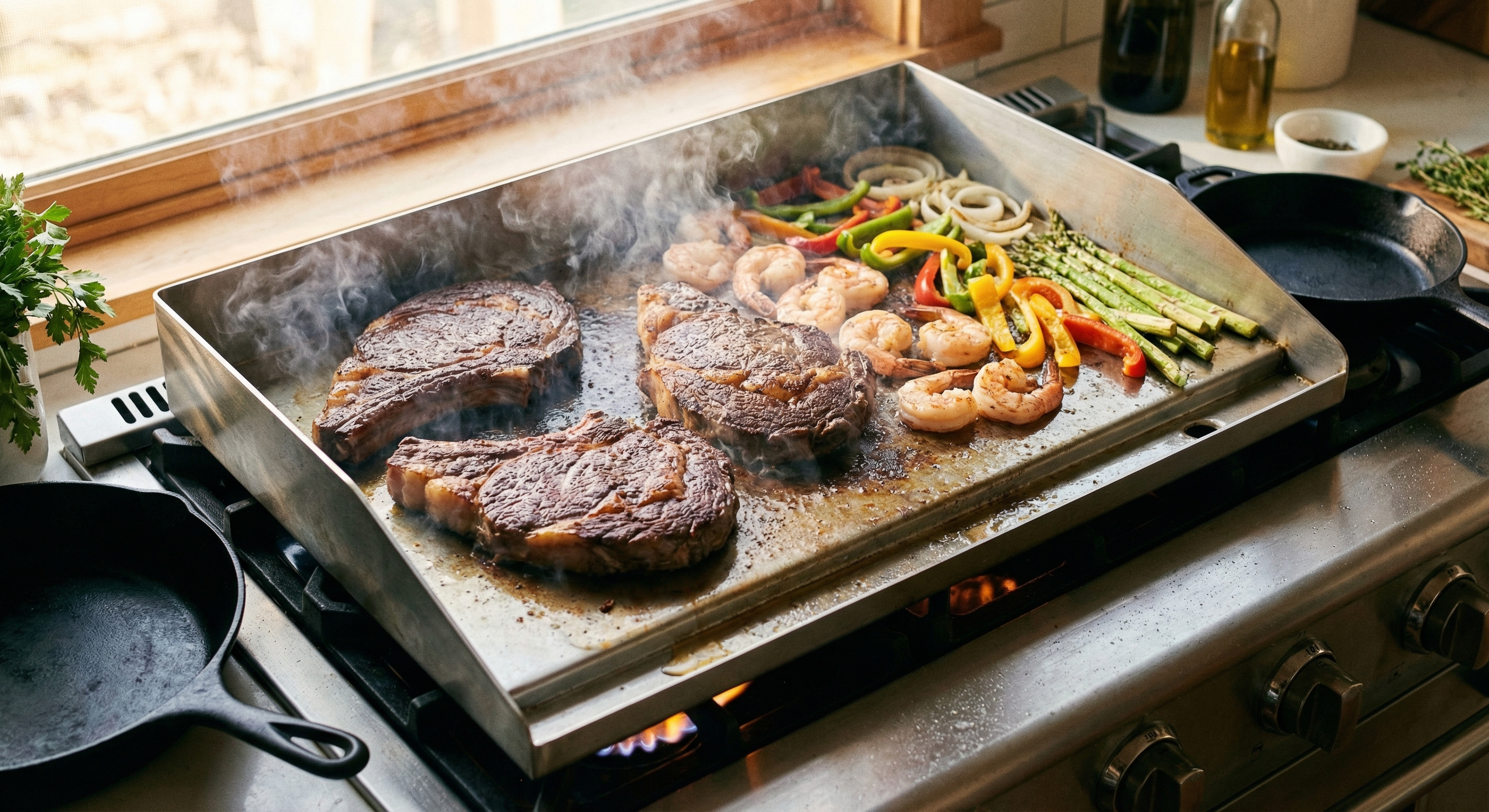
A perfectly seared steak from a traditional grill has distinct grill marks and lightly browned stripes. A steak from a plancha has edge-to-edge mahogany crust with no pale gaps in between.
The difference is not technique. It is physics.
Plancha grilling — cooking on a flat, ultra-hot metal surface — creates more crust, faster browning, and deeper flavor than grill grates. The method originated in Spain and Japan, where it is used in high-end steakhouses and street food stalls alike. It is now gaining traction in American grilling because the science is undeniable: more surface contact means more heat transfer, and more heat transfer means better crust.
What Is a Plancha?
A plancha is a flat, thick metal cooking surface — typically stainless steel, carbon steel, or cast iron — heated to extremely high temperatures (500-700°F). Unlike a griddle, which is designed for moderate heat and even cooking, a plancha is built for searing.
The key characteristics of a plancha are:
- Flat surface — no grates, no gaps, 100% metal-to-meat contact
- Thick metal — retains heat and resists temperature drops when cold food hits the surface
- High heat capability — can sustain 600°F+ for rapid Maillard reaction
- Smooth finish — polished or seasoned surface prevents sticking and promotes even browning
In Spain, the plancha is used for everything from gambas a la plancha (grilled shrimp) to thin-cut beef. In Japanese teppanyaki restaurants, chefs use similar flat-top surfaces for precision control and theatrical presentation. American grill manufacturers now offer plancha inserts and standalone units designed for backyard use.
The Science of Surface Contact: Why More Is Better
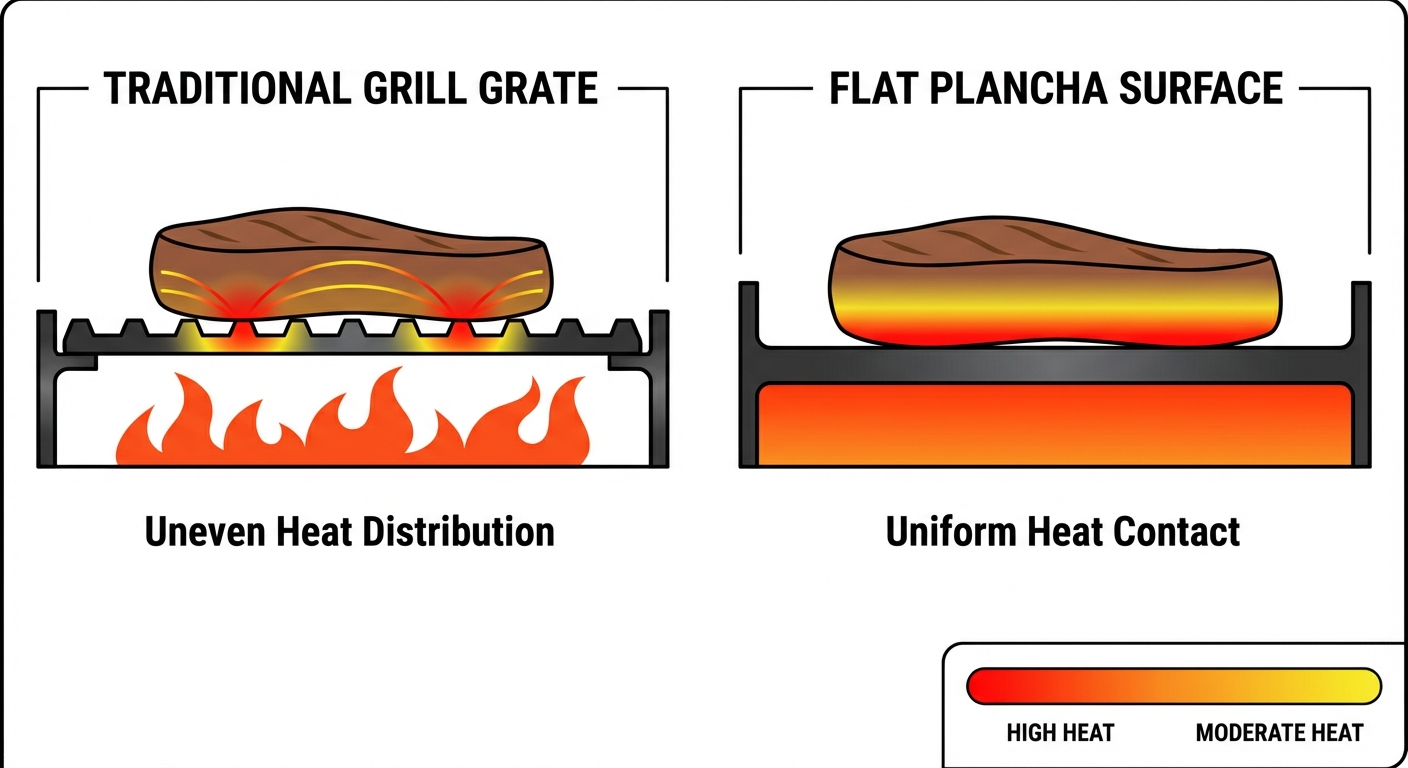
When you grill a steak on a traditional grate, the metal bars make contact with approximately 10-20% of the meat's surface area. The rest of the steak hovers above the grate, receiving heat through radiant energy and hot air (convection), but not direct conduction from the metal.
On a plancha, 100% of the meat's surface touches hot metal.
Conduction vs. Convection and Radiation
Heat transfer occurs through three mechanisms:
- Conduction — direct contact between two solid surfaces (most efficient)
- Convection — heat carried by moving air or liquid (moderate efficiency)
- Radiation — heat emitted as electromagnetic waves (least efficient for searing)
On a grill grate, the grill marks receive conductive heat where the metal touches the meat. The rest of the surface relies on convection from hot air and radiation from the charcoal or burners below. These methods are slower and less intense than conduction.
A plancha eliminates the reliance on convection and radiation by providing continuous conductive heat transfer across the entire cooking surface. This means faster temperature rise, more rapid Maillard reaction, and deeper browning.
Thermal Mass and Temperature Recovery
A thick plancha has high thermal mass — it stores a large amount of heat energy in the metal. When a cold steak hits the surface, the plancha's stored heat compensates for the temperature drop, maintaining searing temperatures.
Thin grill grates have low thermal mass. When meat touches the grate, the metal cools rapidly, slowing the Maillard reaction and increasing the risk of sticking.
This is why professional steakhouses use thick cast iron grates or flat-top griddles instead of thin wire grates. Thermal mass is the key to consistent high-heat searing.
The Maillard Reaction and Plancha Cooking
The Maillard reaction is the chemical process that creates the brown crust, savory flavor, and aromatic compounds on seared meat. It occurs when amino acids (from proteins) react with reducing sugars at temperatures above 285°F.
The rate of the Maillard reaction increases exponentially with temperature. At 400°F, browning is slow. At 500°F, it accelerates. At 600°F, a deep crust forms in under 60 seconds.
A plancha can sustain surface temperatures of 600-700°F because of its high thermal mass and direct flame or burner contact. This creates ideal conditions for rapid Maillard browning.
Grill grates, by contrast, lose heat quickly when meat touches them, and the gaps between the bars allow heat to escape. The result is slower browning, longer cook times, and more internal moisture loss.
With a plancha, you get maximum crust with minimum interior cooking — the holy grail of steak searing.
Why Plancha Grilling Prevents Sticking
One of the most common frustrations with grilling is meat sticking to the grates. This happens because:
- The grate cools when meat touches it, causing proteins to bond to the metal
- The uneven surface creates pressure points where sticking is more likely
- Insufficient Maillard crust formation leaves the surface tacky instead of releasing naturally
A properly heated plancha solves all three problems:
- High thermal mass maintains searing temperature, preventing the surface from cooling
- Smooth, flat surface distributes pressure evenly, reducing sticking points
- Rapid crust formation creates a barrier layer that releases cleanly from the metal
The key is preheating the plancha to full temperature (600°F+) and using a thin layer of high smoke-point oil (avocado, grapeseed, or refined peanut oil). The oil fills microscopic gaps between the meat and metal, maximizing thermal contact and preventing adhesion.
The Role of Moisture Evaporation in Crust Development
For the Maillard reaction to occur, the surface of the meat must be dry. Moisture on the surface creates a steam barrier that prevents the temperature from rising above 212°F (the boiling point of water).
On a grill grate, moisture can pool in the valleys between grill marks, slowing evaporation and delaying browning.
On a plancha, the flat, continuous surface promotes rapid moisture evaporation. As soon as water molecules boil off, the dry surface can climb to Maillard-reaction temperatures (300°F+). The result is faster crust formation with less interior moisture loss.
This is why plancha-cooked steaks often have thinner gray bands (the overcooked layer beneath the crust) compared to grill-cooked steaks. The shorter sear time means less heat penetration into the interior.
Best Foods for Plancha Grilling
Not all foods benefit equally from plancha cooking. The method is best suited for:
Thin-Cut Steaks
Steaks under 1 inch thick (flank steak, skirt steak, flat iron, sirloin tips) develop perfect crust in 2-3 minutes per side without overcooking the interior. Thick steaks require longer cook times, which can lead to excessive gray band formation unless you use a reverse sear or two-zone method.
Seafood
Scallops, shrimp, squid, and thin fish fillets are ideal for plancha cooking. The high heat creates a crisp exterior while keeping the interior tender and moist. Delicate fish like sole or flounder benefit from the even surface, which prevents tearing.
Vegetables
Sliced peppers, onions, mushrooms, zucchini, and asparagus char beautifully on a plancha. The flat surface prevents small pieces from falling through grill grates, and the high heat caramelizes sugars quickly.
Burgers and Smash Burgers
Pressing a burger onto a screaming-hot plancha creates a lacey, crispy crust known as "frico" — browned fat and protein that crisps at the edges. This technique is the foundation of the modern smash burger.
Plancha vs. Cast Iron Skillet: What's the Difference?
Both planchas and cast iron skillets provide flat, high-heat cooking surfaces. The main differences are:
- Size — A plancha is larger, allowing you to cook multiple items simultaneously without crowding
- Heat source — A plancha sits directly over grill burners or open flame, while a skillet sits on a stovetop or grill grate
- Ventilation — Plancha cooking produces significant smoke and steam, which vents outdoors; indoor skillet cooking can overwhelm kitchen ventilation
- Temperature capability — A plancha can reach 700°F+ with direct flame contact; a cast iron skillet on a stovetop typically maxes out at 500-550°F
If you have access to outdoor grilling space, a plancha offers superior performance. If you are cooking indoors, a cast iron skillet is the best alternative.
How to Set Up and Use a Plancha
Choosing a Plancha
Planchas come in three main materials:
- Stainless steel — durable, easy to clean, does not require seasoning, but can be prone to sticking without oil
- Carbon steel — develops a nonstick seasoned surface over time, excellent heat retention, requires maintenance to prevent rust
- Cast iron — maximum heat retention, heavy, requires seasoning, prone to cracking if dropped
For home use, a stainless steel plancha offers the best balance of performance, durability, and ease of maintenance. Carbon steel is ideal if you want a naturally nonstick surface and are willing to maintain the seasoning.
Preheating the Plancha
Preheat the plancha over high heat for 10-15 minutes until the surface reaches 600°F or higher. Use an infrared thermometer to verify temperature.
If the plancha is not hot enough, the meat will steam instead of sear, and it will stick to the surface.
Oiling the Surface
Apply a thin layer of high smoke-point oil to the plancha surface just before cooking. Use a paper towel to spread the oil evenly. Avoid pouring oil directly onto the hot surface, as it can ignite.
Cooking Technique
- Place the meat on the plancha and do not move it for 60-90 seconds (for thin cuts) or until a crust forms
- Flip once and repeat on the second side
- For thicker cuts, sear both sides and then move to a cooler zone or finish in an oven
Deglazing and Cleaning
Immediately after cooking, pour a small amount of water onto the hot plancha surface. The water will boil and steam, loosening stuck-on food particles. Use a metal spatula or grill brick to scrape the surface clean.
Wipe with a damp cloth and apply a thin layer of oil while the plancha is still warm. This prevents rust and maintains the seasoning (for carbon steel or cast iron surfaces).
Common Mistakes and How to Avoid Them
Not Preheating Long Enough
If the plancha is not at full temperature, the meat will stick and steam instead of sear. Always verify surface temperature with an infrared thermometer before cooking.
Overcrowding the Surface
Placing too much food on the plancha at once lowers the surface temperature, reducing browning. Leave space between items to maintain high heat.
Using the Wrong Oil
Oils with low smoke points (butter, extra virgin olive oil) burn at plancha temperatures, creating bitter flavors and smoke. Use avocado oil (520°F smoke point), grapeseed oil (420°F), or refined peanut oil (450°F).
Skipping the Deglaze
Stuck-on food particles carbonize and make the surface sticky. Always deglaze with water while the plancha is hot, then scrape clean.
The Verdict: Is Plancha Grilling Worth It?
If your goal is maximum crust with minimal interior cooking, plancha grilling is the most effective method available. The combination of 100% surface contact, high thermal mass, and extreme heat creates faster, deeper Maillard browning than any grill grate.
For thin steaks, seafood, vegetables, and burgers, a plancha delivers superior results. For thick steaks, the plancha is best used for the initial sear, followed by indirect heat or oven finishing.
The science is clear: flat surfaces, high heat, and continuous conduction are the keys to perfect crust. A plancha is not a replacement for all grilling methods, but for searing, it is unmatched.
Related Guides
- The Maillard Reaction and Grilling: The Science Behind the Perfect Crust
- Reverse Sear Steak Science: Why Low and Slow First Produces Better Results
- Grill vs. Cast Iron for Steak: Which Method Produces Better Results?
- Grilling Heat Transfer Methods: Conduction, Convection, and Radiation Explained
- Steak Doneness Temperature Guide: The Science of Perfect Internal Temps
- When to Salt Steak: The Science of Timing for Maximum Flavor and Crust
- Grilling Thick Steaks: The Science of Even Cooking Without Overcooking the Edges
- Resting Meat Science: Why Letting Meat Rest After Cooking Improves Juiciness
Frequently Asked Questions
What is the difference between a plancha and a griddle?
A plancha is designed for extremely high heat (500-700°F) with a smooth polished surface for searing, while a griddle typically runs cooler (300-450°F) with a rougher surface for pancakes and eggs. Planchas prioritize crust development; griddles prioritize even browning.
Why does a plancha produce better crust than a grill grate?
A plancha makes 100% surface contact with the meat versus 10-20% contact on grill grates. More contact area means more heat transfer, faster Maillard reaction, and deeper crust formation across the entire surface instead of just grill marks.
What temperature should a plancha be for cooking steak?
For optimal steak crust, preheat the plancha to 600-650°F. This temperature drives rapid Maillard browning while minimizing gray band formation. Use an infrared thermometer to verify surface temperature before cooking.
Does plancha cooking require oil?
Yes, a thin layer of high smoke-point oil (avocado, grapeseed, or refined peanut oil) prevents sticking and improves heat transfer. The oil fills microscopic gaps between the meat and metal, maximizing thermal contact.
What meats work best on a plancha?
Thin-cut steaks (under 1 inch), scallops, shrimp, squid, and thinly sliced vegetables excel on a plancha. The high heat and full surface contact develop intense crust before overcooking interiors. Thick steaks benefit from reverse sear or two-zone methods.
How do I clean a plancha grill surface?
Deglaze the hot surface with water immediately after cooking, scrape with a metal spatula or grill brick, then wipe with a damp cloth. Season with a thin coat of oil while still warm. Never use soap on a seasoned plancha surface.
More Expert Guides
Grill Vent Management: The Science of Airflow and Temperature Control
Oxygen controls fire. Fire controls temperature. Vents control oxygen. Master your vents and you master your grill.
12 min readHow Often to Flip Steak: The Science of Multiple Flips vs Single Flip
The traditional advice to flip your steak only once is wrong. Science shows that flipping every 30 seconds produces better crust, more even doneness, and 30% faster cooking through improved heat transfer.
14 min readWhen to Salt Steak: The Science of Timing, Osmosis, and Flavor Development
Salt your steak 40+ minutes before cooking, or salt it right before it hits the pan. Never salt it 3-40 minutes before. The difference is osmosis, diffusion, and water activity — and understanding the science turns every steak into a perfectly seasoned, deeply flavored piece of meat.